

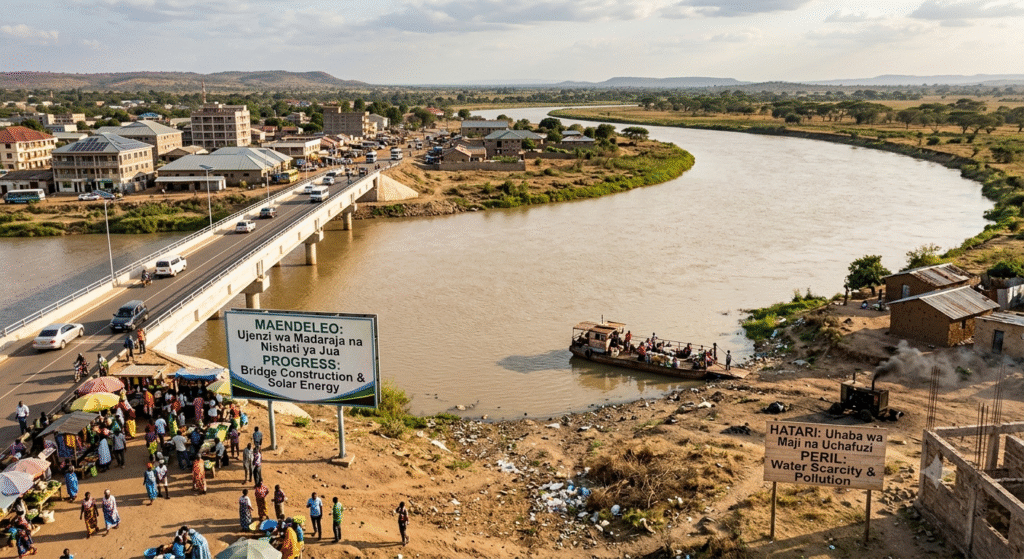
The rivers of East Africa are the region’s lifeblood, yet they are also a source of intensifying conflict, environmental degradation, and urgent humanitarian crises. This week, the news from the region’s waterways paints a picture of stark contrasts: a landmark victory for hydropower, a looming legal battle over environmental justice, and a worsening drought that threatens millions.
The Grand Renaissance Dam: A Milestone and a Flashpoint
The most significant development is the official inauguration of the Grand Ethiopian Renaissance Dam (GERD) on the Blue Nile . For Ethiopia, this is a monumental achievement. Prime Minister Abiy Ahmed described the $4 billion project as a “great achievement for all black people,” a unifying symbol for a nation beset by internal conflict, and a key to its economic transformation .
The dam, already boosting domestic power supply from 44% to 54%, is expected to eventually generate over 6,000 megawatts—more than doubling the country’s current output . Beyond the numbers, it represents a correction of historical injustices. As one Ethiopian official noted, the project addresses the “colonial-era water use agreements established by Egypt, Sudan, and colonial power England” that excluded Ethiopia .
This narrative, however, is directly contested. Egypt, which relies on the Nile for over 97% of its water, sees the GERD as a direct threat to its national security . Cairo has called the dam’s completion “unlawful” and criticized Ethiopia for a lack of political will to reach a binding agreement, accusing Addis Ababa of attempting to “impose water hegemony” . The absence of a deal, after 13 years of negotiations, leaves critical questions about water release during droughts unresolved, keeping the specter of conflict alive.
A New Era of Hydro-Hegemony
While the GERD dominates the headlines, another major project is quietly reshaping East Africa’s energy landscape. In Tanzania, construction of the main body of the Julius Nyerere Hydropower Project has been completed . The $2.9 billion dam, built by an Egyptian consortium on the Rufiji River, is set to generate 2,115 megawatts of clean power for over 60 million Tanzanians .
This project represents a new form of regional cooperation, with Egypt exporting its expertise in water management. The irony is palpable: while Cairo is locked in a bitter dispute with Ethiopia over the Nile, it is simultaneously constructing an even larger dam on a tributary of the same river system. This development highlights a key dynamic—the ability to challenge the historical status quo is no longer limited to downstream nations.
Environmental Justice and the EACOP Project
Away from the dams, a different kind of battle is being waged in the courts. Four Ugandan farmers have filed a lawsuit in London’s High Court against the French energy giant TotalEnergies, seeking to block the East African Crude Oil Pipeline (EACOP) .
The 1,400-kilometer pipeline, which would transport oil from Uganda’s Lake Albert region to Tanzania’s coast, is a climate and environmental flashpoint . The plaintiffs argue the project threatens their water sources and livelihoods . One farmer, Racheal Tugume, stated: “Oil leaks will flow into our water sources and seep into our soil! Wherever the EACOP crude oil goes, it will bring injustice” .
This case is the latest in a series of legal challenges against the project, which has already seen 25 international banks refuse to finance it . It shifts the battlefield to London, using a mechanism based on Ugandan law. While the first hearing isn’t expected until 2027, the case underscores the growing tension between resource extraction and environmental sustainability in the region.
A Dry Forecast and a Precarious Future
The intensity of these struggles is heightened by a dire hydrological forecast. Experts from the Nile Basin Initiative and the IGAD Climate Prediction Centre predict a high probability of below-average rainfall across much of the basin, including South Sudan, Uganda, Rwanda, western Kenya, and the Ethiopian Highlands .
South Sudan, where almost the entire country lies within the Nile Basin, faces an over 80% chance of below-normal rainfall and an over 85% chance of above-normal temperatures . This grim outlook threatens water availability, food security, and energy generation for millions . The expected deficit compounds the challenges of a region already grappling with drought in countries like Ethiopia and Uganda . The warning is clear: the rivers that sustain life are under immense pressure, and the coming months will test the resilience of both the people and the ecosystems that depend on them.
