

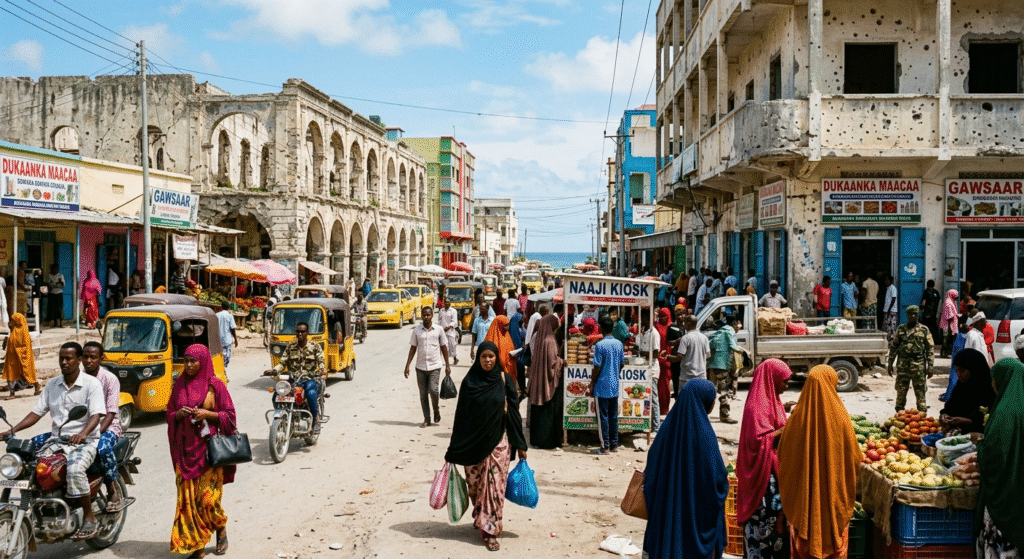
Mogadishu, the heart of Somalia, faces a starkly dual reality as of August 2026. On one hand, the city is a nerve center of tentative progress, marked by significant infrastructure projects and political dialogue. On the other, it is a city under siege, grappling with persistent terrorist violence, a devastating humanitarian crisis, and deep-rooted political tensions that threaten to unravel hard-won gains.
A City Under Attack: Security and Violence
The security situation in Mogadishu remains the most pressing challenge. Al-Shabaab, the Al-Qaeda-affiliated militant group, continues its relentless campaign to destabilize the government. Just weeks ago, the city was rocked by a car bomb on the Maka Al-Mukarama road, killing four people and injuring five others, a grim reminder of the group’s capacity to strike at will . This attack was part of a broader surge in violence, with police checkpoints having been increased across the capital in response to the heightened threat .
The prison system itself has become a battleground. In a dramatic incident in mid-July, an attempted breakout at Mogadishu’s main prison, located near the port, left five Al-Shabaab inmates dead after they managed to acquire weapons and engage in a firefight with security forces . This incident underscores not only the danger posed by these detainees but also the significant security challenges within the city’s most fortified institutions.
The United States has responded by intensifying its military campaign against the militants. A major air strike in late July, the largest in nearly two years, killed approximately 60 Al-Shabaab fighters in the Harardhere area . This escalation, permitted by loosened constraints on the U.S. military, is a key part of efforts to degrade the group’s ability to plan attacks on Mogadishu and other urban centers .
The Humanitarian Crisis and Infrastructure Collapse
Beyond the immediate threat of violence, Mogadishu is at the epicenter of a profound humanitarian catastrophe. The city, like the rest of the country, is reeling from the effects of severe drought, which has left nearly six million people facing crisis-level hunger . A staggering number, close to two million children, are acutely malnourished, with nearly half a million suffering from severe acute malnutrition .
The crisis is compounded by the systematic collapse of the healthcare system. Since January 2026, around 500 primary healthcare facilities have been forced to close across the country due to severe funding shortfalls . This includes nearly 50 CARE-supported centres, leaving pregnant women and children without access to critical maternal care and treatment for preventable diseases like cholera and measles . Rising costs of therapeutic supplies, driven by global supply disruptions, have made it even harder to provide lifesaving care .
This humanitarian disaster is driving mass displacement. An estimated 3.4 million people are already internally displaced within Somalia . Many of these families, seeking food and water, have ended up in overcrowded, unsanitary camps on the outskirts of Mogadishu, where living conditions are dire and access to basic rights is severely limited .
Political Tensions and a Path Forward
Against this backdrop of violence and scarcity, political tensions remain high. Earlier this year, the UN Secretary-General voiced alarm over reports of violence in Mogadishu, calling on all parties to resolve their political differences through dialogue and avoid actions that could incite further violence . The UN mission had issued warnings about the risk of repeating the crisis of 2021, which arose from a political deadlock over the electoral roadmap .
In a positive step, the federal government and opposition representatives have agreed to continue political dialogue to ease tensions . A meeting held in Mogadishu in July was described as a “friendly atmosphere,” and both sides expressed appreciation to Turkey for facilitating the negotiations . This commitment to an inclusive dialogue process is seen as essential for strengthening political stability and national development.
A Glimmer of Hope: Economic Ambition
Despite the overwhelming challenges, there are signs of long-term ambition. Somalia is actively working on the “New Mogadishu” development agenda, which includes plans for a major new maritime port approximately 35 kilometers north of the capital . The New Mogadishu Maritime Port (NMMP) is being structured to attract long-term investment, with Phase One estimated at about $718 million . This project, alongside a new airport and a special economic zone, aims to transform Mogadishu into a regional logistics hub .
Furthermore, the city is at the center of a new USD 12 million urban resilience project launched by the government in partnership with UNDP. This initiative is expected to benefit over 850,000 people by improving climate resilience across 17 cities, including Mogadishu, and promoting a transition to a green economy . These projects signal an intention to move beyond emergency crisis response and build sustainable infrastructure for the future.
Conclusion
Mogadishu today is a city of profound contradictions. The sound of construction and political negotiation competes with the roar of explosions and the cries of the hungry. While the capital’s leaders are planning a future of modern ports and resilient cities, many of its residents are struggling to survive without access to basic healthcare or clean water. The city’s future rests on its ability to manage the immediate security and humanitarian crises while keeping the promise of long-term development alive.
