

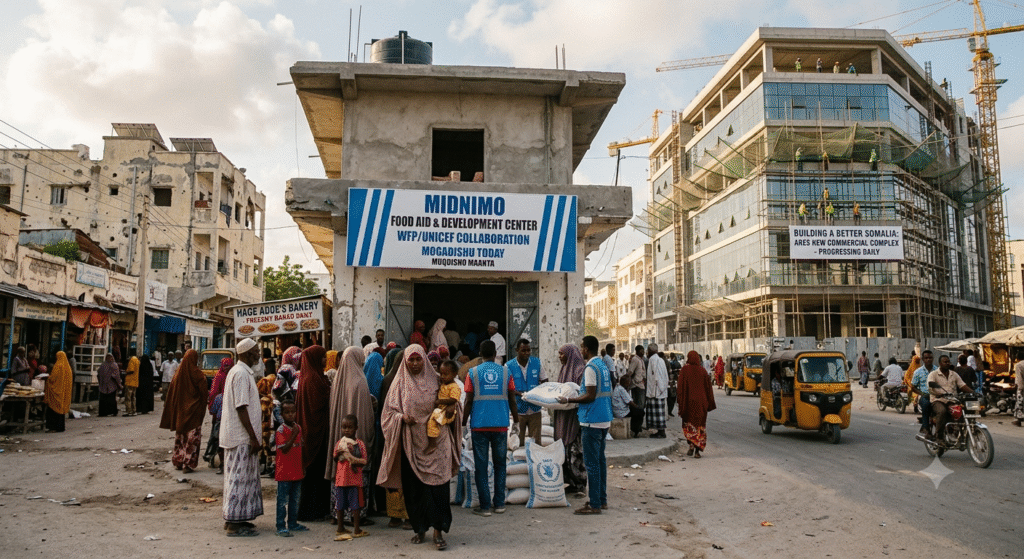
In early September 2026, Mogadishu is a city of profound contrasts, a place where the machinery of government and international diplomacy is in high gear, even as a devastating humanitarian crisis deepens in the surrounding region. The Somali capital is simultaneously hosting high-level security conferences to chart its future while confronting a reality where millions of its citizens are on the brink of famine.
🏛️ A Nation’s Security at a Crossroads
The defining event this week is the National Internal Security Conference in Mogadishu, a crucial two-day summit bringing together top officials to reimagine the country’s security framework.
The timing is critical. With the African Union Support and Stabilization Mission in Somalia (AUSSOM) scheduled to conclude at the end of 2026, Somalia is pushing for a “Somali-led security system” that is efficient, accountable, and, crucially, sustainable within the country’s economic realities. This move signals a significant step away from long-term reliance on international forces.
Minister of Defence Ahmed Moallim Fiqi, who addressed the conference, emphasized the need to “translate strategic decisions into measurable outcomes” by strengthening oversight and improving coordination between the federal government and federal member states. While the conference projects an image of progress and planning, the path is fraught with political hurdles. Adding to the political tension, a motion of no confidence was submitted against Interior Minister Ali Yusuf Ali Hosh on the same day the conference opened. His critics accuse him of failing to manage internal security challenges and the delicate relationship between the central government and regional states. This political friction underscores the deep divisions that challenge federal unity.
🥘 A Humanitarian Catastrophe Unfolds
The solemn discussions at the security conference were underscored by a looming humanitarian disaster. Recent figures paint a devastating picture of the humanitarian situation across Somalia:
- 6 million people (31% of the population) are facing acute food insecurity.
- 1.9 million children are projected to suffer from acute malnutrition in 2026.
- 500,000 of those children urgently require treatment for severe acute malnutrition, the deadliest form of hunger.
These numbers are not abstract; they represent a crisis that is accelerating due to a combination of factors: consecutive failed rainy seasons, conflict, and severe cuts in humanitarian funding. The WFP has warned it has only a fraction of the resources it had in 2022 when it helped avert famine.
UK Minister for Development Kirsty McNeill visited Mogadishu this week to see the situation firsthand, receiving a stark briefing that highlighted a “credible risk of famine in five areas by late 2026”. The crisis has had a devastating impact on healthcare, with UNICEF reporting a 32% increase in children admitted to stabilization centres with severe acute malnutrition and a 30% reduction in health and nutrition coverage due to funding cuts. The closure of 205 nutrition facilities has forced mothers to travel further for life-saving care, leading to delayed treatment and preventable deaths.
📈 A City Feeling the Squeeze
The crisis in the countryside is felt acutely in the capital. Mogadishu is currently facing a shortage of cooking gas, with prices for a 13-kilogram cylinder surging by over 40% in recent days, from $24 to $34. Traders attribute this to depleted reserves and a delay in the arrival of a new shipment. This spike in the cost of a basic necessity adds to the misery for families already grappling with skyrocketing food prices, which WFP analysis shows have surged by 70% in some regions due to the conflict in the Middle East affecting global supply chains.
🔮 Looking Ahead
Mogadishu is a city on a precipice. It is working with international partners to build a self-sufficient national security apparatus, a monumental task made more difficult by political infighting. Simultaneously, it is the epicenter of one of the world’s worst humanitarian emergencies, a crisis that threatens to push hundreds of thousands of its most vulnerable citizens to the brink of famine.
President Hassan Sheikh Mohamud continues to assert that his administration is constitutionally legitimate, insisting that election discussions must wait until after planned regional votes. This intransigence, coupled with the no-confidence motion against the Interior Minister, suggests the political turbulence in Mogadishu is far from over, even as its people face a fight for survival.