

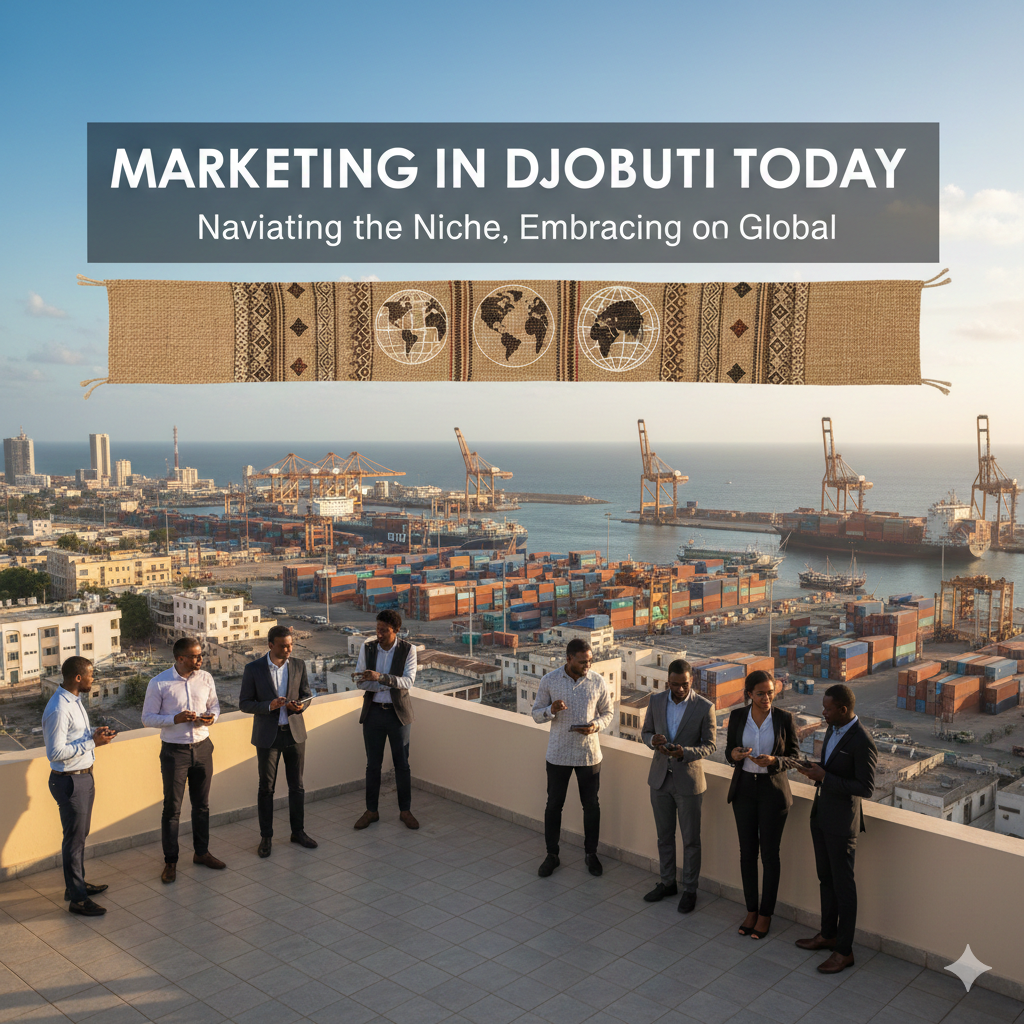
In the bustling, hyper-connected world of 21st-century marketing, the conversation is dominated by strategies for billion-consumer markets in Asia, personalization engines in the West, and the digital gold rush of Sub-Saharan Africa. Yet, in a strategic corner of the Horn of Africa, a unique and compelling marketing landscape is emerging, defying simple categorization. Marketing in Djibouti today is a fascinating study in contrasts, where global logistics giants meet resilient local entrepreneurs, and where demographic scarcity is offset by monumental geopolitical relevance. For the savvy marketer, it presents a niche of exceptional opportunity, requiring a playbook distinct from its regional neighbors.
The Macro-Canvas: Djibouti’s Unique Value Proposition
To understand marketing here, one must first grasp the nation’s core identity. Djibouti is less a mass consumer market and more a critical logistics and geo-strategic hub. Its marketing environment is shaped by two dominant, interconnected economies:
- The Ports & Logistics Economy: Home to the primary maritime gateway for landlocked Ethiopia, multi-purpose ports (Doraleh), and major military bases (US, China, France, Japan, others), Djibouti attracts a B2B (Business-to-Business) and B2G (Business-to-Government) audience of global significance. Marketing here targets port operators, shipping executives, diplomats, military procurement officers, and international contractors. It is high-stakes, relationship-driven, and built on long-term contracts and demonstrations of impeccable reliability.
- The Local Consumer Economy: With a population of just over one million, the domestic market is small but distinct. It is concentrated overwhelmingly in Djibouti City, youthful, and characterized by a sharp income disparity. Marketing must cater to a premium segment (expatriates, local elite, political class) with high purchasing power, and a much larger segment focused on value and necessity. The growing middle class, though modest in size, is aspirational and digitally aware.
The Digital Leap: Connectivity as a Catalyst
A decade ago, marketing in Djibouti was almost exclusively traditional: word-of-mouth, radio, billboards, and direct engagement. The game-changer has been the arrival of high-speed submarine internet cables and widespread 4G coverage. This has triggered a rapid, if still nascent, digital transformation:
- Social Media Supremacy: For the local consumer market, social media—primarily Facebook, Instagram, and WhatsApp—is the digital marketplace. Platforms like “Djibouti Shopping” on Facebook function as vibrant e-commerce hubs where businesses post catalogues, negotiate via comments, and arrange delivery via independent moto-taxis. Instagram is the visual portfolio for restaurants, cafes, salons, and fashion boutiques targeting the urban youth and expat community. WhatsApp Business is the universal CRM and customer service channel.
- Mobile Money Maturity: While not as diversified as Kenya’s M-Pesa, Djibouti’s mobile money services (launched by telecom operators like Evatis) are well-integrated and facilitate cashless transactions for both utility bills and social commerce. Marketing campaigns increasingly include “Pay with Mobile Money” as a key call-to-action.
- The Website Credibility Gap: A professionally designed, French-Arabic-English website remains a crucial marker of legitimacy and scale for businesses aiming at the international or premium local clientele. For B2B ventures, it is non-negotiable.
The Marketing Mix: A Hybrid Model
Successful marketing strategies in Djibouti today must therefore be hybrid, blending the old and the new, the global and the hyper-local.
For the Global/Logistics B2B Sector:
- Relationship-First: Success is built on presence. This means sustained diplomatic networking, participation in high-level forums like the Djibouti International Trade Fair, and investment in long-term trust. Content marketing focuses on white papers, port efficiency data, and case studies showcasing security and reliability.
- Precision & Exclusivity: Marketing channels are targeted—specialized industry publications, LinkedIn strategy for connecting with decision-makers, and high-quality corporate branding that communicates stability and global standards.
For the Local Consumer Market:
- Hyper-Local Social Commerce: The winning strategy is an agile, visual, and conversational presence on social platforms. Flash sales announced on Instagram Stories, customer testimonials shared via WhatsApp, and interactive Facebook Live sessions for product launches are highly effective.
- Influencer & Community Marketing: Given the small size of the capital, identifying and partnering with key local influencers (fashion icons, food bloggers, respected community figures) yields disproportionate returns. Micro-communities are powerful.
- Experiential & Physical Presence: Despite digital growth, the physical experience remains paramount. A clean, air-conditioned shop, an attractive menu, or a well-branded event at a local hotel carries immense weight. Billboards on key routes like the Boulevard de la République still capture eyeballs.
- Linguistic & Cultural Nuance: Marketing must seamlessly navigate French (the language of business and formal education), Arabic (the language of religion and culture), and Somali (the most spoken vernacular). Imagery and messaging must respect the nation’s conservative Islamic heritage while appealing to modern aspirations.
The Challenges: Navigating the Terrain
The path is not without obstacles. Marketers must contend with:
- Scale Limitations: The small population caps the ceiling for mass-market FMCG (Fast-Moving Consumer Goods) growth. Strategies must focus on value, premiumization, or import/export models.
- Infrastructure Gaps: While digital connectivity is strong, last-mile logistics and national postal services are underdeveloped, making delivery a constant operational challenge for e-commerce.
- Cost of Living: High costs for rent, utilities, and imported goods squeeze business margins and consumer disposable income, making pricing strategy critical.
- Regulatory Environment: Bureaucracy can be slow-moving, and navigating business regulations requires local legal partnership.
The Future: Hub of Potential
The future of marketing in Djibouti is tied to its role as a testing ground and gateway. For multinationals, it’s a strategic base for regional operations. For marketers, it offers a tightly-knit, connected community where campaign impact can be directly measured and relationships deeply forged.
Emerging trends point towards:
- The Rise of Data-Driven Localization: As digital penetration deepens, so will the ability to gather data and tailor offers to Djibouti’s unique micro-segments.
- Sustainability as a Premium Value: Given the nation’s vulnerability to climate change, marketing that highlights environmental responsibility (in packaging, sourcing, operations) will resonate with both global partners and a conscious local elite.
- Content as Cross-Border Currency: Djibouti-based businesses that create high-quality digital content (in French and English) can position themselves as regional experts for the wider Francophone African and logistics worlds.
Conclusion: The Djiboutian Formula
Marketing in Djibouti today cannot be a scaled-down version of a Kenyan or Nigerian strategy. It requires a bespoke approach—a “Djiboutian Formula.”
This formula is: (Global Strategic Relevance + Hyper-Local Social Intimacy) x Digital Connectivity.
It demands that marketers think like diplomats for one client segment and like community shopkeepers for another. It is a landscape where a single well-executed Instagram campaign can saturate the local youth market, and where a successfully landed B2B contract can be worth hundreds of millions. For those willing to move beyond the fascination with mass markets and delve into a niche defined by outsized influence and rapid digital adoption, Djibouti presents not a challenge, but a masterclass in precision marketing. It is a reminder that in our globalized world, the most compelling opportunities are often found not in the crowded centers, but in the strategic niches.