

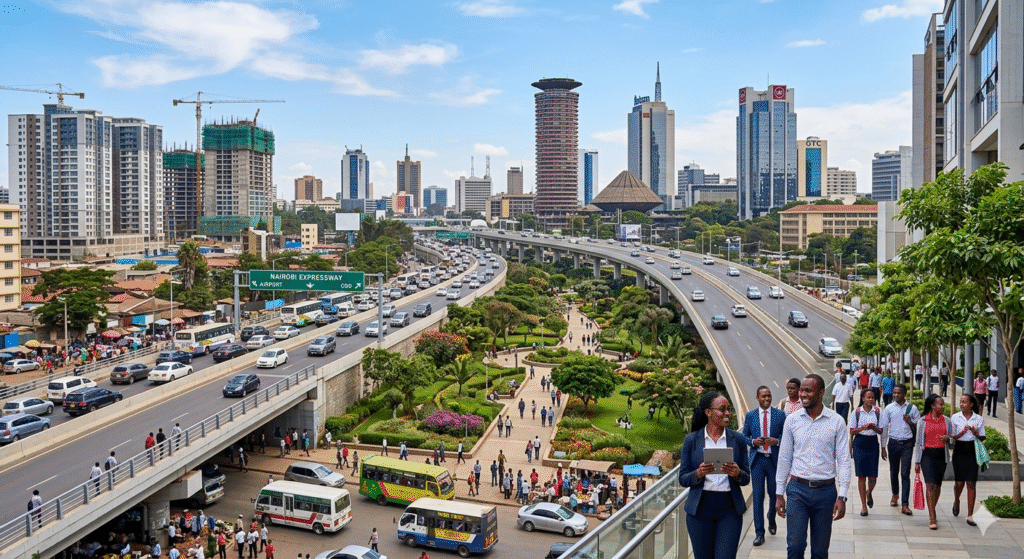
As Kenya steps into April 2026, the nation finds itself navigating a complex landscape of global economic shocks, domestic infrastructure challenges, and ambitious development plans. From President William Ruto’s aggressive measures to shield the economy from the Middle East conflict to a major new real estate development on the coast, the country is demonstrating both vulnerability and strategic foresight. Here is a comprehensive look at Kenya today.
Government Moves to Cushion Economy from Gulf Crisis
The ongoing conflict in the Middle East, which escalated in late February following strikes against Iran and subsequent disruptions to shipping through the Strait of Hormuz, has sent shockwaves through global energy markets. For Kenya, a net importer of petroleum products, the implications are significant.
On March 29, President William Ruto announced a raft of measures aimed at shielding Kenya’s economy from the ripple effects of the geopolitical tensions . Following a high-level briefing with key government agencies and private sector players, the President assured Kenyans that the government is closely monitoring international oil prices and has put in place mechanisms to cushion consumers from sharp increases.
Central to this strategy is the government-to-government (G2G) fuel procurement arrangement. According to President Ruto, this framework has already helped stabilise prices and guarantee supply, acting as a buffer against immediate global price shocks . “Rising international oil prices are already affecting consumers globally. However, the government-to-government fuel procurement arrangement has cushioned Kenyans from immediate shocks,” the President stated.
Beyond energy, the government has moved to reassure farmers and the agricultural sector. The President confirmed that fertiliser supplies remain sufficient to support the ongoing rainy season through to September, alleviating fears of input shortages that could compromise food production .
Trade performance has also shown resilience despite global uncertainties. While concerns had been raised over potential disruptions in key export markets, particularly for tea, the latest data indicates robust performance. The President noted that 81 percent of tea offered at auction this month was sold, an improvement from 75 percent recorded in March last year . This resilience is attributed to market diversification and strengthened export channels developed in recent years.
The Port of Mombasa and the Port of Lamu are recording increased activity, highlighting Kenya’s growing strategic role in regional and global logistics. Notably, the Port of Lamu has handled more than 4,000 high-value motor vehicles destined for Gulf markets for onward transshipment . However, the President acknowledged that the meat export sector has been adversely affected by logistical and freight challenges linked to the disruptions, with the Ministries of Trade and Agriculture working together to explore alternative solutions to support exporters .
Infrastructure Development and Scheduled Power Maintenance
As the government works to insulate the economy from external shocks, domestic infrastructure development continues to take centre stage. A major Africa-wide infrastructure summit is set to take place in Nairobi later this month, underscoring Kenya’s role as a hub for continental development finance.
The Africa Finance Corporation (AFC) is hosting the inaugural “Africa We Build Summit” in Nairobi from April 23 to 24, 2026, in partnership with the Government of Kenya. Under the theme “Infrastructure as the Engine of Industrialisation,” the summit will convene Africa’s leading infrastructure financiers, fund managers, and investors to redirect the continent’s substantial domestic capital into large-scale industrial and infrastructure development .
AFC President Samaila Zubairu framed the summit’s purpose around a fundamental reframing of how Africa’s financing challenge is understood. “Africa is not capital-poor; it is capital-trapped. The opportunity now is to channel that capital into infrastructure and industry at scale, transforming resources into productivity, jobs, and long-term prosperity,” he said .
President William Ruto is scheduled to deliver the keynote address. The summit will also launch the State of Africa’s Infrastructure Report 2026, described as the most comprehensive assessment of the continent’s cross-continental investment landscape to date. Key regional projects such as the Northern Corridor—connecting the Port of Mombasa to Uganda, Rwanda, eastern Democratic Republic of Congo, and South Sudan—will be highlighted as models of regional connectivity .
Meanwhile, on the ground, Kenyans are bracing for scheduled power interruptions as Kenya Power undertakes routine maintenance across several counties. On Wednesday, April 1, the utility company announced planned outages affecting eight counties, including Nairobi, Nakuru, Kisumu, Kakamega, and Uasin Gishu .
In Nairobi, parts of Westlands and Kayole will be affected from 9:00 am to 5:00 pm, including sections of General Mathenge, Ring Road, and Komarock estates. In Kakamega, outages will begin as early as 8:00 am, affecting the West Kenya Sugar area, Malava, and Shamberere National Polytechnic . Kenya Power stated that the interruptions are part of routine maintenance to ensure reliable electricity supply, following similar recent announcements by the company .
Diani Beach: A New Luxury Real Estate Frontier
While infrastructure development dominates policy discussions, the private sector is forging ahead with ambitious projects that signal confidence in Kenya’s long-term economic trajectory. A significant new development is taking shape along the country’s southern coastline.
CityBlue Hotels has announced the launch of a high-end residences concept in Diani Beach, in partnership with The Diar Group and Staroot Real Estate . The project, branded Diani Residences by CityBlue, was officially unveiled at the Future Hospitality Summit Africa in Nairobi on April 1, 2026.
Designed as a premium lifestyle destination, the project will span approximately five acres and combine private residential living with hotel-style services. The development is expected to include between 400 and 500 modern apartments, with a mix of one-bedroom and two-bedroom layouts . These residences are being tailored to meet the needs of international property investors and individuals seeking a sophisticated coastal home.
The project’s defining feature is its integration into the Residences by CityBlue platform, which brings hospitality-led management into residential settings. Residents will benefit from professional services such as maintenance, security, and concierge-style support, creating a model that appeals to buyers looking for both lifestyle advantages and rental income opportunities .
Amenities will include multiple swimming pools, a fully equipped fitness centre, a dedicated wellness area with spa facilities, and conference rooms and meeting spaces to accommodate remote work. Family-friendly features such as children’s play areas, open recreational spaces, and a signature restaurant will anchor the community experience.
Jameel Verjee, Founder and CEO of CityBlue Hotels, noted: “Diani continues to emerge as one of East Africa’s most attractive coastal destinations. This project represents an exciting opportunity to create a vibrant, hospitality-led residential community that delivers long-term value for investors while enhancing the destination’s global appeal” .
Urban Renewal: Tackling Nairobi’s Garbage Crisis
On the urban front, the government is preparing to launch a major initiative to address one of Nairobi’s most persistent challenges. On February 1, President Ruto announced that the national government would collaborate with the Nairobi County Government and residents from April 1 to find a lasting solution to the city’s long-standing garbage and waste management challenges .
Speaking during a Sunday service in Nairobi, President Ruto emphasized the importance of a coordinated approach involving government agencies, local authorities, and residents to address the perennial sanitation issues affecting the capital. “The partnership aims to ensure Nairobi streets remain clean, promote public health, and create a sustainable system for solid waste management,” the President said .
The initiative will focus on streamlining garbage collection, promoting waste recycling, and engaging communities to foster a shared responsibility for the city’s sanitation. Officials indicated that detailed plans and timelines for the program would be released ahead of the April launch .
Economic Pressures and Inequality Concerns
Despite these positive developments, Kenya’s economic trajectory continues to face scrutiny from civil society. Reports released in late 2025 by the Kenya Human Rights Commission (KHRC) painted a concerning picture of the country’s economic direction, warning that current policies are hurting ordinary citizens and deepening inequality .
According to the KHRC report “The Economics of Repression,” 68 percent of all ordinary revenue now goes into paying public debt and government salaries, leaving less than a third of the budget for health, education, food security, water, sanitation, housing, and social protection. In just four years, interest on public debt has jumped to 25 percent from 18 percent of total spending, draining money from essential services .
The report highlighted shrinking support for vulnerable populations, with funding for older persons decreasing to Sh15 billion from Sh18 billion, and resources for persons with severe disabilities declining in real terms. In Nairobi alone, real health spending has dropped to Sh7 billion from Sh8 billion, despite a population of over 5.7 million residents .
A second report, “Who Owns Kenya?”, revealed extreme land inequality, noting that fewer than two percent of Kenyans own more than half of the country’s arable land. The report called for progressive land taxation, estimating that wealth taxation in Kenya could generate up to Sh125 billion—nearly double the current budget for social protection .
KHRC Executive Director Davis Malombe urged the government to rethink how the country raises and spends its resources. “Kenya needs economic decisions that put people first, protect rights, and ensure fair distribution of national resources,” he said .
Outlook
Kenya today presents a study in contrasts. On one hand, the government is demonstrating agility in responding to global economic shocks, securing fuel supplies, and launching infrastructure initiatives aimed at long-term growth. The AFC summit and the Diani Beach development signal confidence from both multilateral financiers and private investors in Kenya’s economic trajectory.
On the other hand, persistent structural challenges—from urban sanitation to extreme inequality—remain unresolved. The KHRC reports serve as a reminder that economic resilience at the macro level does not automatically translate into improved well-being for ordinary citizens.
As April unfolds, the success of the government’s economic cushioning measures, the progress of the Nairobi garbage initiative, and the outcomes of the AFC summit will provide early indicators of whether Kenya can navigate the turbulent global environment while addressing the deep-seated inequalities that continue to shape the lives of its citizens.
