

July 10, 2026
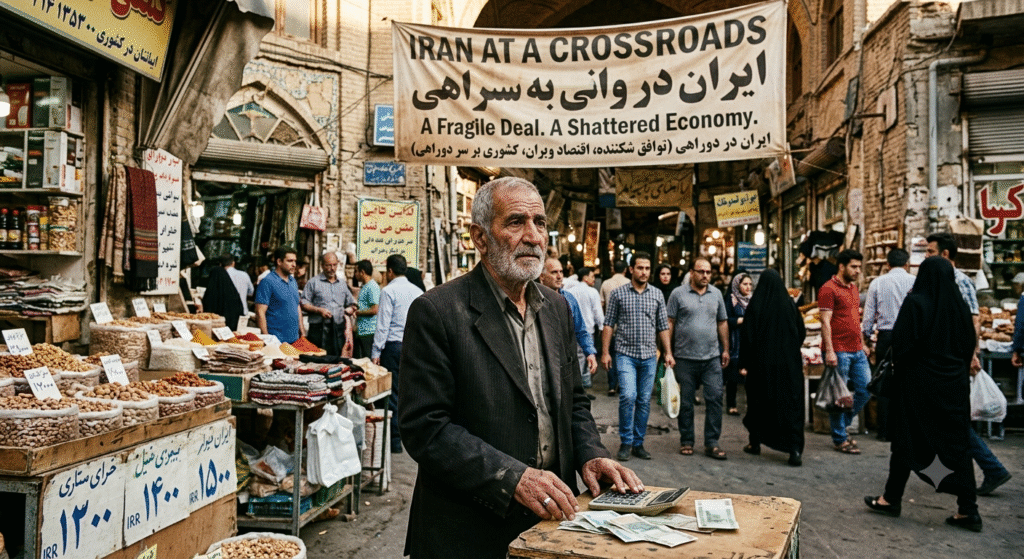
Just days after the signing of a landmark 14-point memorandum of understanding to end the war with the United States, Iran today finds itself in a state of profound paradox . The fighting has stopped, the naval blockade has been lifted, and the Strait of Hormuz has been reopened . Yet, the country is contending with an economy in ruins, a nuclear program under intense scrutiny, and a population whose rage and desperation for relief could yet topple the regime.
A Deal Under Strain
The preliminary peace agreement, electronically signed by President Donald Trump and his Iranian counterpart Masoud Pezeshkian on June 18, was designed to halt the US-Israeli campaign against Iran and address the nuclear issue through a 60-day negotiation window . However, the nascent deal has immediately come under pressure.
Planned technical talks in Switzerland were postponed, and fighting flared between Israel and Hezbollah, underscoring the fragile nature of the arrangement . Iran’s Supreme Leader, Mojtaba Khamenei, publicly approved the accord only “out of desperation,” while a top negotiator warned that Tehran stands ready to deliver a “decisive response” in the event of any US “breach of contract” .
The deal has also triggered a major diplomatic rupture with Israel, whose officials have warned the US that it is on a “collision course” with Tel Aviv . US Vice President JD Vance issued a scathing rebuke to these Israeli critics, telling them to “wake up and smell the reality” and warning them not to alienate their “only powerful ally” .
Economic Catastrophe
While the political and diplomatic jockeying continues, the reality on the ground for ordinary Iranians is one of disaster. The conflict, which began with the joint US-Israeli Operation Epic Fury on February 28, has left the country’s economy in tatters .
Estimates suggest the war cost Iran approximately $144 billion—roughly 40% of its pre-war GDP—with some Iranian officials putting the figure as high as $270 billion . The damage includes:
- Oil and Petrochemicals: Strikes on the South Pars gas complex and other hubs resulted in billions in losses . The US naval blockade was so effective that Iran exported zero crude oil in May 2026 .
- Industrial Base: Around 20% of Iran’s production base—more than 20,000 factories and industrial units—were damaged or destroyed, leading to the collapse of the steel industry and the shutdown of 50 petrochemical complexes .
- Currency and Inflation: The Iranian rial hit a record low, plunging to approximately 1.9 million per US dollar. Annual inflation soared to 57.7%, with food prices—bread, meat, and dairy—increasing by more than 100% year-on-year .
- Jobs: At least one million direct job losses were confirmed by the government, with economists warning that 10 to 12 million jobs—half the workforce—are at risk .
The long-term impact has been compared to the economic “structural adjustment” of the 1990s, and rebuilding the country could take more than a decade .
The Nuclear Question
As the 60-day period for negotiations on the nuclear file begins, the IAEA reports that Iran has continued to expand its nuclear capacities. Iran has told the agency it is installing more centrifuge cascades at the Natanz and Fordow facilities . This comes despite the IAEA board passing a resolution by European states criticizing Iran for non-compliance .
The US has claimed that Iran has agreed to allow nuclear inspectors back into the country, a claim that Tehran denies . Despite this, key technological challenges remain, as any agreement to remove or reduce Iran’s highly enriched uranium stockpile has been complicated by Iran’s fortification of its nuclear sites .
A Nation Awaiting a Dividend
Perhaps the most critical challenge for Iran’s rulers is managing the expectations of a war-weary and impoverished population. While hardliners are energized by the confrontation, seeing it as a victory and prioritizing rearmament, ordinary Iranians are desperate for any economic relief .
The public expects that any financial windfall from suspended sanctions or restored assets will be used to boost the economy. Iran’s leadership is keenly aware that if they cannot deliver a peace dividend, they could face an explosion of renewed protests . The “double-edged sword” of the deal has left the regime facing competing demands from a hardline base and an angry populace, with the Revolutionary Guards left to manage the dissent and prioritize military might .
As Iran navigates the immediate post-war period, the coming weeks will be critical. The survival of the regime may ultimately depend not on its military strength, but on whether it can meet the economic expectations of its people .
