

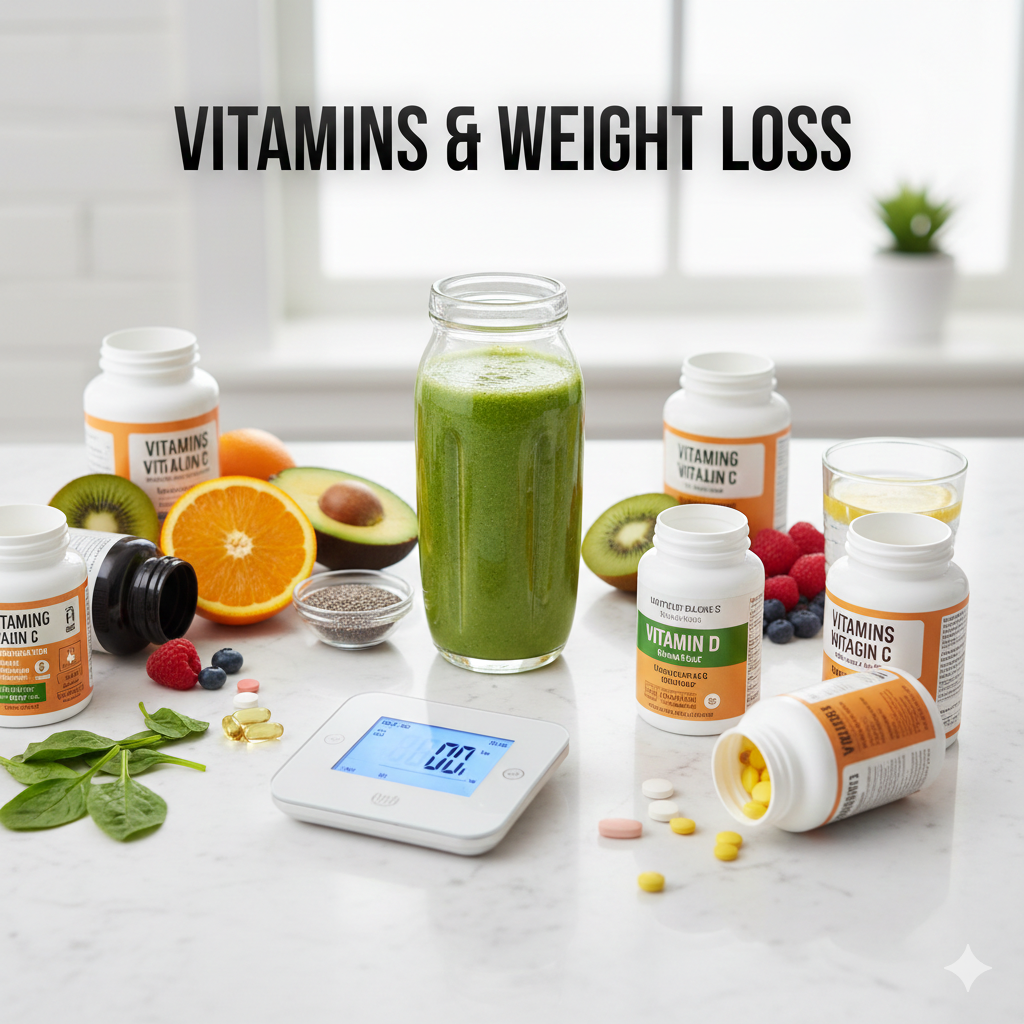
The Missing Piece of the Puzzle: Why Vitamins Are Crucial for Weight Loss
In the modern quest for weight loss, the narrative is often dominated by two main characters: diet and exercise. Calories in versus calories out. Cardio versus strength training. Keto versus intermittent fasting. Yet, lurking in the background, often overlooked, is a critical supporting cast that can make or break your metabolic success: vitamins.
We are constantly told to eat less and move more. But what if your body is literally unable to burn fat efficiently because it lacks the microscopic tools required to do so? In 2024, as weight loss medications like Ozempic dominate headlines and “metabolic health” becomes a household term, scientists are taking a closer look at the intricate biochemical dance that turns food into fuel. The conclusion is clear: you cannot outrun, out-hunger, or out-exercise a vitamin deficiency.
The Metabolic Engine: Why Micronutrients Matter
To understand the link between vitamins and weight loss, you must first understand the mitochondria. Often called the powerhouses of the cell, mitochondria are responsible for converting the food you eat into energy your body can use (ATP). If your metabolism is a car engine, the mitochondria are the combustion chamber. Vitamins and minerals are the spark plugs.
If your spark plugs are faulty or missing, the engine might sputter, misfire, or fail to ignite the fuel entirely. In the human body, this translates to fatigue, sluggish metabolism, and an inability to efficiently burn calories. If your cells cannot produce energy effectively because they lack essential micronutrients, the body adapts by slowing down metabolic processes and storing incoming calories as fat, assuming it is in a state of scarcity.
This is where the modern diet fails us. The rise of ultra-processed foods has given us “empty calories”—energy devoid of the vitamins needed to process that energy. You can consume 2,000 calories a day and still be, biochemically, starving for nutrients. This condition, sometimes called “overfed but undernourished,” can paradoxically lead to weight gain because the body, starved of specific vitamins, hoards calories waiting for the necessary co-factors to arrive.
The Vitamin D Deficit and Stubborn Fat
Perhaps the most significant link between a single vitamin and weight loss is found in Vitamin D. Often called the “sunshine vitamin,” it is actually a hormone that influences the expression of genes involved in fat storage and metabolism.
Recent studies have highlighted a frustrating cycle: the more overweight a person is, the more likely they are to be deficient in Vitamin D. Because Vitamin D is fat-soluble, it gets sequestered in adipose tissue (body fat) and becomes less bioavailable for the rest of the body to use.
This deficiency then makes weight loss harder. Low levels of Vitamin D are associated with increased levels of parathyroid hormone, which promotes the storage of fat and inhibits the breakdown of fat cells. Furthermore, Vitamin D plays a role in the synthesis of serotonin, the “feel-good” neurotransmitter. Low serotonin can lead to depression and emotional eating, creating a feedback loop that sabotages diet efforts.
Correcting a Vitamin D deficiency is rarely a magic bullet for massive weight loss on its own, but it is often the key that unlocks the door. In clinical settings, individuals with adequate Vitamin D levels who are placed on a calorie-restricted diet tend to lose more abdominal fat than those who are deficient.
The B-Team: Energy Extractors
If there is a “weight loss committee” in your body, the B-vitamin complex is the chairperson. This family of eight water-soluble vitamins—including B1 (thiamine), B2 (riboflavin), B3 (niacin), B5 (pantothenic acid), B6 (pyridoxine), B7 (biotin), B9 (folate), and B12 (cobalamin)—is essential for converting dietary energy into ATP.
When you restrict calories to lose weight, you paradoxically reduce your intake of these crucial B-vitamins. This can leave you feeling exhausted, foggy-headed, and demotivated—the exact opposite state you need to be in to stick to an exercise regimen.
B12 is particularly critical. It is involved in the metabolism of fatty acids and amino acids. A deficiency in B12 can lead to pernicious anemia, characterized by profound fatigue. It is incredibly difficult to maintain the energy deficit required for weight loss if you are struggling to get off the couch. While B12 shots have become a trendy addition to weight loss clinics, their primary benefit is likely not a direct fat-melting effect, but rather the restoration of energy levels, enabling the patient to move more.
Biotin (B7) and other B-vitamins also play a role in regulating genes that control fat storage, helping to ensure that the fats and carbohydrates you eat are used for immediate energy rather than being diverted to long-term storage in adipose tissue.
The Antioxidant Army: Fighting Inflammation
Weight loss is not just about shrinking fat cells; it is about calming the body. Adipose tissue, particularly visceral fat (the dangerous fat around the organs), is metabolically active. It secretes inflammatory compounds called cytokines. The more overweight a person is, the more inflamed their body becomes. This chronic, low-grade inflammation is a hallmark of metabolic syndrome and insulin resistance.
This is where antioxidant vitamins—C and E—enter the chat.
Vitamin C is a potent antioxidant that helps neutralize the oxidative stress caused by inflammation. Furthermore, Vitamin C is essential for the synthesis of carnitine, a molecule that transports fatty acids into the mitochondria to be burned for energy. Without enough Vitamin C, this transport system slows down, and fat burning grinds to a halt.
Studies have shown that people with adequate Vitamin C levels oxidize (burn) 30% more fat during moderate exercise than those with low levels. This suggests that simply ensuring you have enough Vitamin C can directly enhance the results of your workout.
Similarly, Vitamin E protects cell membranes from oxidative damage. When inflammation is high, cells become “sticky” and resistant to the hormonal signals—like insulin—that tell them to release energy. By reducing oxidative stress, Vitamin E helps restore cellular sensitivity, making it easier for the body to access and burn stored fat.
The Stress Factor: Cortisol and Magnesium
While not a vitamin, Magnesium is a mineral so vital to weight loss that it deserves mention alongside its vitamin counterparts. Magnesium is involved in over 300 enzymatic reactions, including those that regulate blood sugar and insulin sensitivity.
In the context of weight loss, magnesium is a natural relaxant. It helps regulate the body’s stress-response system. Chronic stress leads to elevated cortisol, a hormone that signals the body to hold onto fat, particularly in the abdominal region. Magnesium helps to blunt the release of cortisol.
Furthermore, many people who struggle with weight loss are unknowingly insulin resistant. Magnesium plays a key role in helping insulin unlock cells to allow glucose to enter and be used for energy. When magnesium is low, blood sugar remains high, prompting the body to release more insulin, which is a fat-storage hormone.
The Supplement Trap: Food First?
Given these links, it is tempting to rush out and buy a cabinet full of supplements. However, the supplement industry is largely unregulated, and popping pills is rarely a substitute for a healthy diet. The synergy between nutrients is complex; isolated vitamins often do not work as well as those consumed within whole foods.
For example, the fat-soluble vitamins (A, D, E, K) need dietary fat to be absorbed. Drinking a glass of skim milk with a Vitamin D pill is less effective than eating salmon with avocado. The fiber in vegetables also slows down the absorption of sugars, working in tandem with the vitamins to regulate metabolism.
The safest and most effective approach is to focus on nutrient density. Instead of just counting calories, count micronutrients. Replace empty calories (white bread, sugary drinks) with colorful vegetables, lean proteins, and healthy fats. This approach naturally corrects deficiencies without the risk of toxicity that comes with high-dose supplements.
For many, however, the depleted soils of modern farming and the stress of daily life create gaps that diet alone cannot fill. In these cases, targeted supplementation—based on blood work, not guesswork—can be a game-changer.
Conclusion: The Holistic View
Weight loss is rarely about a single magic trick. It is a complex interplay of behavior, psychology, and biology. As we look at the obesity epidemic in 2024, it is clear that the “eat less, move more” mantra is insufficient.
If your body is a car running on empty calories and deficient in Vitamin D, B12, C, and Magnesium, it is running on three cylinders. It will sputter, it will stall, and it will store fuel (fat) because it cannot process it.
The path to sustainable weight loss, therefore, requires looking beyond the scale and looking into the microscope. It requires asking not just “How many calories am I eating?” but “What am I feeding my mitochondria?” By treating your body with the micronutrient respect it deserves, you provide it with the tools it needs to shed weight naturally, efficiently, and healthily. Before you start your next diet, consider feeding your cells what they have been starving for.