

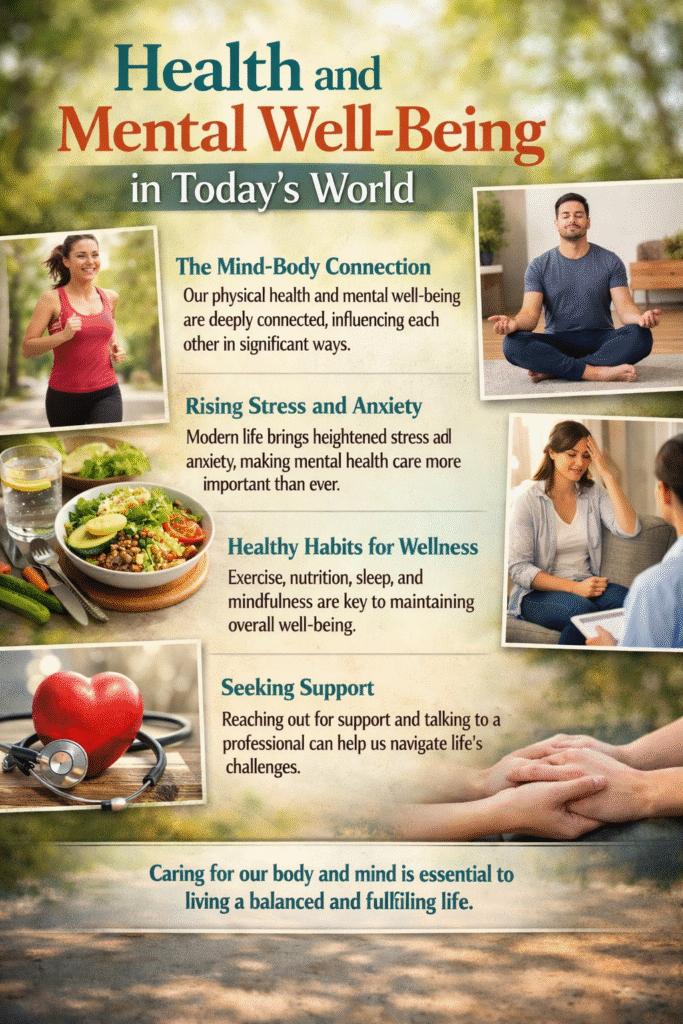
Health and Mental Well-Being Today
Introduction
In today’s fast-paced and highly connected world, health is no longer understood as the absence of illness alone. Modern health emphasizes a balance between physical, mental, emotional, and social well-being. Among these, mental health has gained increasing attention as people recognize its deep connection to overall quality of life, productivity, relationships, and long-term physical health.
Understanding Mental Health
Mental health refers to our cognitive, emotional, and social well-being. It affects how we think, feel, act, and make decisions. Good mental health helps individuals cope with daily stress, work productively, and contribute positively to society. Mental health conditions—such as anxiety, depression, stress-related disorders, and burnout—are common and can affect anyone regardless of age, gender, or background.
Importantly, mental health is not static. It changes over time due to life events, biological factors, social environments, and lifestyle habits. Recognizing early signs of mental distress and seeking help are key steps toward maintaining well-being.
The Link Between Physical and Mental Health
Physical and mental health are deeply interconnected. Regular physical activity, balanced nutrition, quality sleep, and preventive healthcare all contribute to better mental health. At the same time, poor mental health can increase the risk of physical illnesses such as heart disease, weakened immunity, and chronic conditions.
Exercise releases endorphins that improve mood and reduce stress. Nutritious food supports brain function, while adequate sleep helps regulate emotions and cognitive performance. Caring for the body is therefore a fundamental part of caring for the mind.
Mental Health Challenges in Today’s World
Modern life presents unique challenges that affect mental well-being:
- Digital overload: Constant connectivity, social media pressure, and information overload can increase anxiety and comparison.
- Work-related stress: High expectations, job insecurity, and burnout are increasingly common.
- Social isolation: Despite digital communication, many people experience loneliness and reduced face-to-face interaction.
- Global uncertainty: Economic instability, health crises, and social changes contribute to chronic stress.
These factors highlight the need for stronger mental health awareness and support systems.
Promoting Mental Well-Being
Maintaining mental health requires intentional daily practices and supportive environments. Effective strategies include:
- Practicing mindfulness, meditation, or relaxation techniques
- Maintaining healthy routines for sleep, exercise, and meals
- Building strong social connections and seeking support
- Setting boundaries around work and digital use
- Talking openly about emotions and mental health concerns
Professional help—from counselors, psychologists, or medical professionals—is essential when stress or emotional difficulties become overwhelming.
Reducing Stigma and Increasing Awareness
One of the most important developments today is the growing conversation around mental health. Reducing stigma allows people to seek help without fear or shame. Schools, workplaces, and communities play a crucial role by promoting mental health education, inclusive policies, and accessible support services.
Conclusion
Health and mental well-being today require a holistic approach that values both body and mind. As society evolves, prioritizing mental health is no longer optional—it is essential. By fostering awareness, compassion, healthy lifestyles, and open dialogue, individuals and communities can build a healthier, more resilient future for all.
