

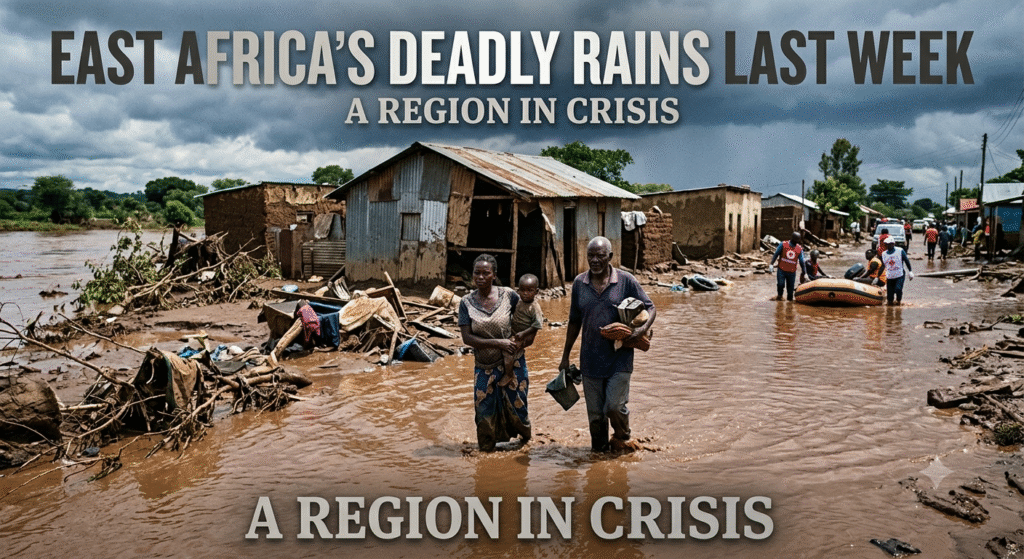
Over the past week, East Africa has been caught in a devastating weather crisis as heavy rainfall and flooding have swept across the region, compounding an already dire humanitarian situation. The deluge, which follows months of severe drought, has claimed dozens of lives, displaced tens of thousands, and triggered a cascade of emergencies across multiple countries .
A Region Under Water
The intensity of the rainfall has been nothing short of catastrophic. In Kenya, the situation is particularly grave, with the death toll rising to at least 62, including eight children, according to police reports . The capital, Nairobi, has been the hardest hit, recording 33 deaths as flash floods turned major thoroughfares into raging rivers and inundated thousands of homes and businesses . The scale of the emergency was so severe that flights from Jomo Kenyatta International Airport, East Africa’s largest aviation hub, were disrupted, and Kenya Airways was forced to divert several flights to Mombasa .
The crisis is not confined to Kenya. Neighbouring Ethiopia has been even more severely affected, with at least 80 people killed in floods that swept through multiple regions. The heavy rains caused widespread destruction and triggered landslides, leaving dozens more missing and prompting the government to declare three days of national mourning . In a further blow, the World Health Organization reported that the floods have displaced thousands of people, and rapid response teams have been deployed to assist overwhelmed local health authorities . The Ethiopian Human Rights Commission reported that a further 3,461 people were displaced by the landslides triggered by the flooding .
The Scars of Climate Whiplash
The sheer destructiveness of these rains is a stark manifestation of a phenomenon scientists call “climate whiplash”—a rapid and extreme shift between prolonged, severe drought and devastating floods . East Africa has just emerged from five consecutive failed rainy seasons, which fueled the worst drought in 40 years. This dry spell left soils parched and unable to absorb the sudden, intense downpours, dramatically increasing the risk of flash floods and landslides .
Research shows that anthropogenic climate change is making this “climate whiplash” more frequent and severe. Warmer global temperatures enable the atmosphere to hold more moisture, leading to more intense storms . A rapid attribution study of similar flooding events in 2024 found that such an event has become about twice as likely and 5% more intense in today’s climate . The problem is exacerbated by rapid, unplanned urbanization, particularly in cities like Nairobi, where construction on floodplains and inadequate drainage systems create a recipe for disaster .
A Regional Emergency
The humanitarian consequences of the rains extend far beyond the immediate death toll. In Kenya, more than 2,000 families have been displaced, while the Kenyan Red Cross reports hundreds of households in neighbouring counties have also been affected, with vast swathes of farmland destroyed . This is a devastating blow to a region that was already facing critical food insecurity after years of drought.
The crisis is a regional one, with the recent heavy rains affecting much of East Africa . Already, the United Nations has reported that over 750,000 people across Burundi, Kenya, Tanzania, and Somalia have been impacted by the severe flooding and heavy rainfall . This comes as the Intergovernmental Authority on Development (IGAD) had warned of a 45% chance of above-average rainfall for the season across most countries in the region .
A Precarious Outlook
While the immediate crisis is flooding, the region’s troubles are far from over. Global climate models indicate an 80% chance of El Niño developing in the coming months, which is expected to bring drier-than-normal conditions to many parts of East Africa . This could spell disaster for the next planting season, deepening the food insecurity crisis. In fact, the crisis is already unfolding, with reports emerging from Uganda this week that at least 16 people have died from acute food shortages caused by a prolonged drought in the semi-arid Karamoja region .
The EU’s Joint Research Centre has warned that the humanitarian consequences of five years of drought are still unfolding and that the recent rains, while bringing some short-term relief to the soil, will not undo the long-term damage to agriculture. The failure of most Deyr-season crops in Somalia and the degrading pastoral vegetation in the south are already fueling a severe food crisis .
As East Africa grapples with the aftermath of this week’s deadly floods, the situation underscores the urgent need for both immediate humanitarian aid and long-term investment in climate resilience. The UN has reported that the impact of this El Niño episode is going to get worse and affect communities well into next year, and has called for immediate action to prevent another major crisis on its hands .
