

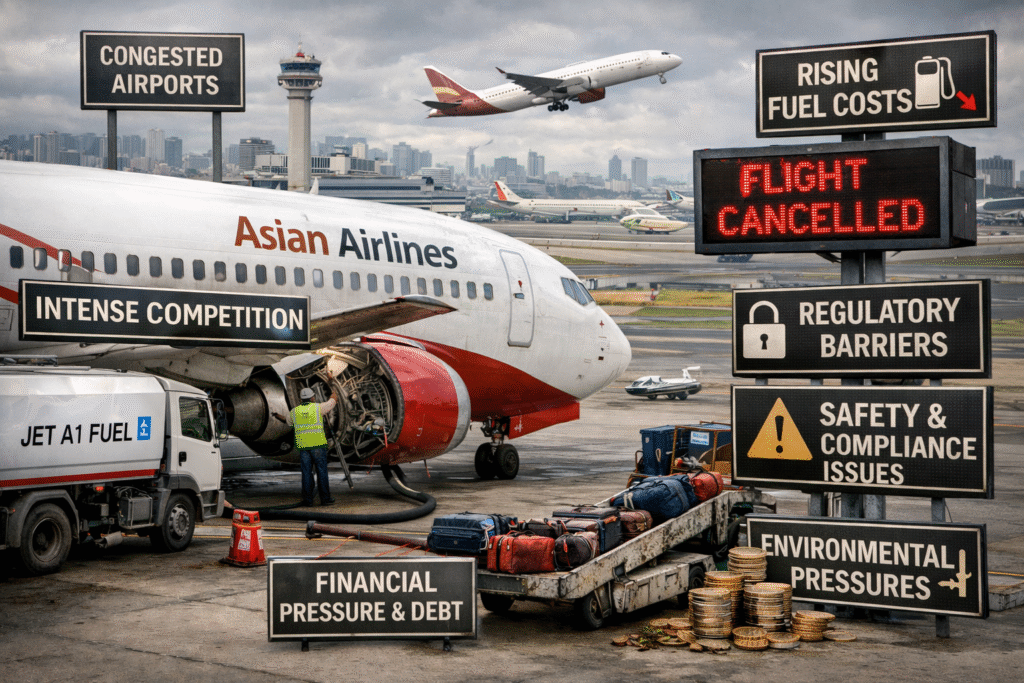
Major Problems Facing Airlines in Asia Today
Asia is home to some of the world’s fastest-growing aviation markets, connecting major business hubs and supporting tourism and trade. Despite this growth, airlines across Asia face a number of serious challenges that affect their operations, profitability, and sustainability. These problems vary from region to region but share many common factors.
1. Rising Fuel Costs
Fuel remains the single largest operating expense for Asian airlines. Fluctuating global oil prices and currency instability increase costs, especially for airlines in developing Asian economies. Higher fuel expenses often lead to increased ticket prices, reducing passenger demand.
2. Intense Competition
Asia has a highly competitive airline market, with numerous full-service carriers and low-cost airlines competing on the same routes. Price wars are common, especially in Southeast and South Asia, which reduces profit margins and places financial strain on airlines.
3. Congested Airports and Airspace
Major Asian airports such as those in Tokyo, Mumbai, Bangkok, and Jakarta suffer from congestion. Limited runway capacity, air traffic delays, and overcrowded terminals lead to flight disruptions, poor passenger experience, and increased operational costs.
4. Regulatory and Political Challenges
Airline operations in Asia are affected by complex government regulations, restrictive bilateral agreements, and political instability in some regions. Sudden policy changes, airspace closures, and security restrictions can disrupt airline schedules and reduce investor confidence.
5. Financial Pressure and Debt
Many Asian airlines operate with high debt levels due to fleet expansion, aircraft leasing costs, and infrastructure investments. Economic downturns, pandemics, or geopolitical tensions often push airlines into financial distress or bankruptcy.
6. Safety and Compliance Issues
While many Asian airlines meet international safety standards, some regions struggle with regulatory oversight, pilot shortages, and maintenance challenges. Inadequate training and weak enforcement of aviation rules can harm airline reputations and passenger trust.
7. Labor Shortages and Industrial Disputes
The industry faces shortages of skilled pilots, engineers, and air traffic controllers. Labor disputes, strikes, and rising wage demands further increase operational costs and cause service disruptions.
8. Environmental and Sustainability Pressures
Airlines in Asia are under growing pressure to reduce carbon emissions and comply with international environmental standards. Investing in fuel-efficient aircraft and sustainable aviation fuel is expensive, particularly for smaller carriers.
Conclusion
Although Asia’s aviation industry continues to grow, airlines face significant challenges including high fuel costs, intense competition, congestion, regulatory barriers, and financial pressure. Addressing these problems requires strong government support, better infrastructure planning, improved management, and regional cooperation. Overcoming these challenges will allow Asian airlines to achieve sustainable growth and continue supporting economic development across the continent.
