

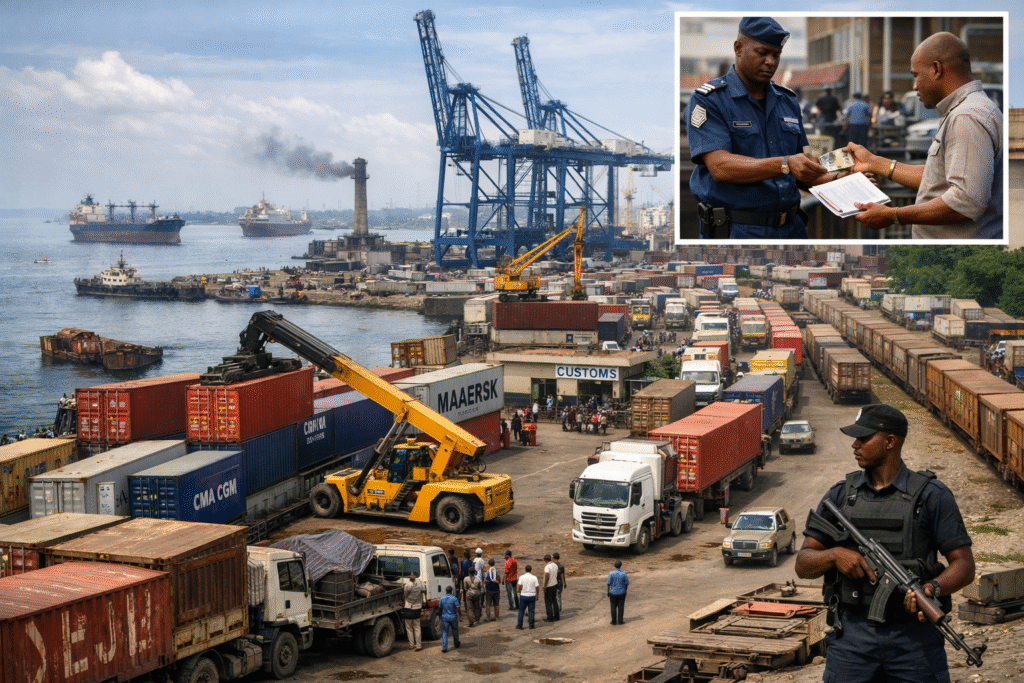
Ports are the lifelines of African economies. Over 80% of Africa’s international trade by volume moves through seaports, making them critical to economic growth, regional integration, and global connectivity. Despite their importance, many African ports face persistent and complex challenges that limit their efficiency and competitiveness. These problems increase the cost of doing business, slow trade, and weaken Africa’s position in global supply chains. Today, the most pressing problems facing African ports can be grouped into infrastructure deficits, congestion, governance and corruption, high costs, weak hinterland connectivity, security risks, technological gaps, and environmental pressures.
1. Inadequate Infrastructure
One of the biggest challenges confronting African ports is poor and outdated infrastructure. Many ports were built decades ago and were not designed to handle modern shipping demands such as large container vessels and high cargo volumes. Shallow harbors, limited berth space, old cranes, and insufficient storage facilities reduce operational efficiency. As global shipping increasingly relies on mega-ships, ports that cannot accommodate them lose direct shipping routes and depend on costly transshipment through foreign ports. This limits trade competitiveness and raises import and export costs.
2. Port Congestion and Delays
Port congestion is a widespread problem across Africa. Ships often wait days or even weeks to berth, while cargo can remain stuck in ports long after unloading. Congestion is caused by a combination of limited capacity, inefficient operations, weak coordination among port actors, and slow customs procedures. Delays increase demurrage and storage fees, which are ultimately passed on to consumers. For landlocked countries that rely heavily on coastal ports, congestion can severely disrupt supply chains and economic activity.
3. Inefficient Customs and Bureaucracy
Complex and time-consuming customs procedures remain a major bottleneck at many African ports. Paper-based documentation, multiple inspections, and overlapping government agencies slow cargo clearance. Importers and exporters often deal with numerous authorities, each requiring separate approvals. These bureaucratic processes reduce transparency and create opportunities for rent-seeking behavior. While some countries have adopted single-window systems and digital platforms, implementation remains uneven across the continent.
4. Corruption and Weak Governance
Corruption is another critical problem affecting port performance in Africa. Informal payments, favoritism, and lack of accountability increase the cost of port services and discourage investment. Weak governance structures and limited oversight allow inefficiencies to persist. In some ports, politically connected operators dominate services, reducing competition and service quality. Corruption also undermines trust in public institutions and reduces government revenue that could otherwise be reinvested in port development.
5. High Cost of Port Services
Compared to global standards, port costs in Africa are generally high. Shipping lines, freight forwarders, and traders face expensive handling charges, storage fees, and administrative costs. These high costs make African exports less competitive and increase the price of imported goods. Several factors contribute to this problem, including monopoly service providers, inefficient operations, poor infrastructure, and lack of regulatory oversight. For small and medium-sized enterprises, high port costs can be a major barrier to participating in international trade.
6. Poor Hinterland Connectivity
Ports do not operate in isolation; they depend on efficient connections to roads, railways, and inland logistics networks. In many African countries, hinterland connectivity is weak or poorly maintained. Roads linking ports to industrial zones and neighboring countries are often congested or in poor condition, while railway networks are limited or obsolete. As a result, moving goods from ports to inland destinations is slow and expensive. This problem is particularly severe for landlocked countries such as Uganda, Mali, and Zambia, which rely heavily on transit through neighboring ports.
7. Security and Safety Challenges
Security concerns remain a serious issue for African ports. Problems such as cargo theft, smuggling, piracy, and terrorism threaten port operations and regional trade. In some regions, especially parts of the Gulf of Guinea, maritime insecurity has raised insurance costs and discouraged shipping lines. Inadequate port security systems and limited enforcement capacity further compound the issue. Ensuring compliance with international security standards, such as the ISPS Code, remains a challenge for several ports.
8. Limited Use of Technology and Innovation
Digitalization is transforming ports worldwide, but many African ports lag behind in adopting modern technologies. Manual processes, limited data integration, and weak ICT infrastructure reduce efficiency and transparency. Automated cargo tracking, electronic documentation, and port community systems are still not widely used. This technological gap makes African ports less competitive and limits their ability to integrate into global logistics networks. Where reforms have been introduced, progress is often slowed by lack of skills, funding, or institutional support.
9. Environmental and Climate Challenges
African ports are increasingly vulnerable to environmental and climate-related risks. Rising sea levels, coastal erosion, flooding, and extreme weather events threaten port infrastructure and operations. At the same time, environmental regulations and sustainability requirements are becoming stricter globally. Many African ports lack the resources to invest in green technologies, waste management systems, and climate-resilient infrastructure. Failure to address these issues may limit future port expansion and international partnerships.
Conclusion
African ports are central to the continent’s economic development, yet they face numerous challenges that hinder their performance. Infrastructure gaps, congestion, inefficient governance, high costs, poor connectivity, security risks, technological limitations, and environmental pressures all contribute to underperformance. Addressing these problems requires coordinated action by governments, port authorities, private investors, and regional organizations. Investments in modern infrastructure, digitalization, transparency, and sustainable practices are essential. If these challenges are effectively addressed, African ports can become powerful engines of trade, regional integration, and economic transformation in the years ahead.
