

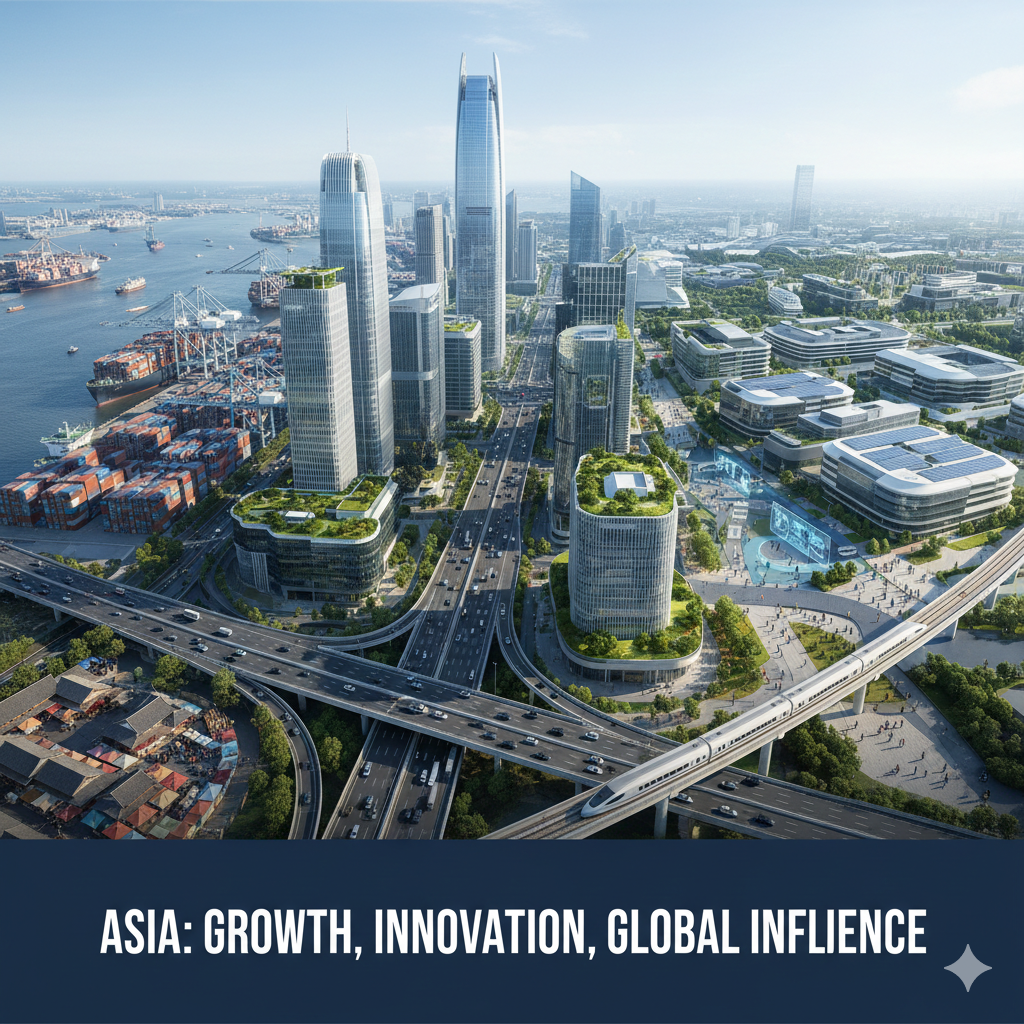
Business Today in Asia
Business today in Asia is marked by rapid growth, innovation, and increasing influence in the global economy. As the world’s largest and most diverse continent, Asia plays a central role in international trade, manufacturing, finance, and technology. From advanced economies such as Japan and South Korea to fast-growing markets like India, Vietnam, and Indonesia, Asia presents a complex and dynamic business landscape shaped by demographic trends, digital transformation, and regional cooperation.
One of the most important drivers of business growth in Asia is economic diversity. The continent includes developed, emerging, and developing economies, each contributing differently to regional and global markets. China remains a global manufacturing powerhouse and a major exporter, while India is becoming a key center for information technology, services, and startups. Southeast Asian nations are emerging as alternative manufacturing hubs, attracting global companies seeking to diversify supply chains.
Technology has become a defining feature of business in Asia today. The continent is home to some of the world’s largest technology companies and fastest-growing digital markets. E-commerce platforms, digital payments, artificial intelligence, and fintech solutions are transforming the way businesses operate and consumers shop. Countries such as China, India, Singapore, and South Korea have built strong digital ecosystems that support innovation, entrepreneurship, and global competitiveness.
Manufacturing continues to play a vital role in Asia’s economic strength. Asia produces a significant share of the world’s electronics, machinery, textiles, and consumer goods. Advances in automation, robotics, and smart manufacturing are improving productivity and product quality. Governments are investing in industrial parks, infrastructure, and skills training to support sustainable industrial growth and reduce dependence on low-cost labor.
Trade is another cornerstone of business in Asia today. The region is deeply interconnected through supply chains and trade agreements. Regional partnerships such as the Regional Comprehensive Economic Partnership (RCEP) aim to promote trade liberalization and economic cooperation among Asian countries. Major ports, logistics hubs, and transport networks support Asia’s role as a global trading center, linking producers and consumers across continents.
Small and medium-sized enterprises (SMEs) are the backbone of Asian economies. These businesses create employment, drive innovation, and support local markets. Governments across Asia are introducing policies to support SMEs through access to financing, digital tools, and training programs. Startup ecosystems are thriving in cities such as Bangalore, Singapore, Shenzhen, and Seoul, where entrepreneurs develop solutions for both regional and global challenges.
Foreign direct investment (FDI) continues to shape the business environment in Asia. Multinational companies invest heavily in Asian markets due to large consumer bases, skilled labor, and expanding infrastructure. At the same time, Asian companies are increasingly investing abroad, expanding their presence in Africa, Europe, and the Americas. This two-way investment flow reflects Asia’s growing economic confidence and global integration.
Despite its success, business in Asia faces several challenges. Economic inequality between countries and within societies remains significant. Political tensions, trade disputes, and geopolitical rivalries can disrupt markets and supply chains. Environmental concerns, including pollution and climate change, pose serious risks to long-term economic sustainability. Businesses must adapt by adopting responsible practices and investing in green technologies.
Sustainability is becoming a major focus of business strategy in Asia today. Many Asian governments and corporations are investing in renewable energy, electric vehicles, and sustainable infrastructure. Solar and wind energy projects are expanding, while businesses are adopting environmental, social, and governance (ESG) standards. Balancing economic growth with environmental protection is increasingly recognized as essential for future prosperity.
The role of consumers in shaping business trends in Asia is also growing. A rising middle class with increased purchasing power is driving demand for quality goods, services, and experiences. Changing lifestyles are influencing industries such as retail, healthcare, education, and tourism. Businesses that understand local cultures and consumer preferences are better positioned to succeed in Asia’s competitive markets.
In conclusion, business today in Asia reflects a powerful combination of tradition and transformation. The continent’s economies continue to grow, innovate, and integrate into global markets despite ongoing challenges. Through technological advancement, regional cooperation, and sustainable development, Asia is strengthening its position as a leading force in the global economy. The future of business in Asia will depend on its ability to balance growth with inclusiveness, stability, and environmental responsibility, ensuring long-term success for both businesses and societies.