

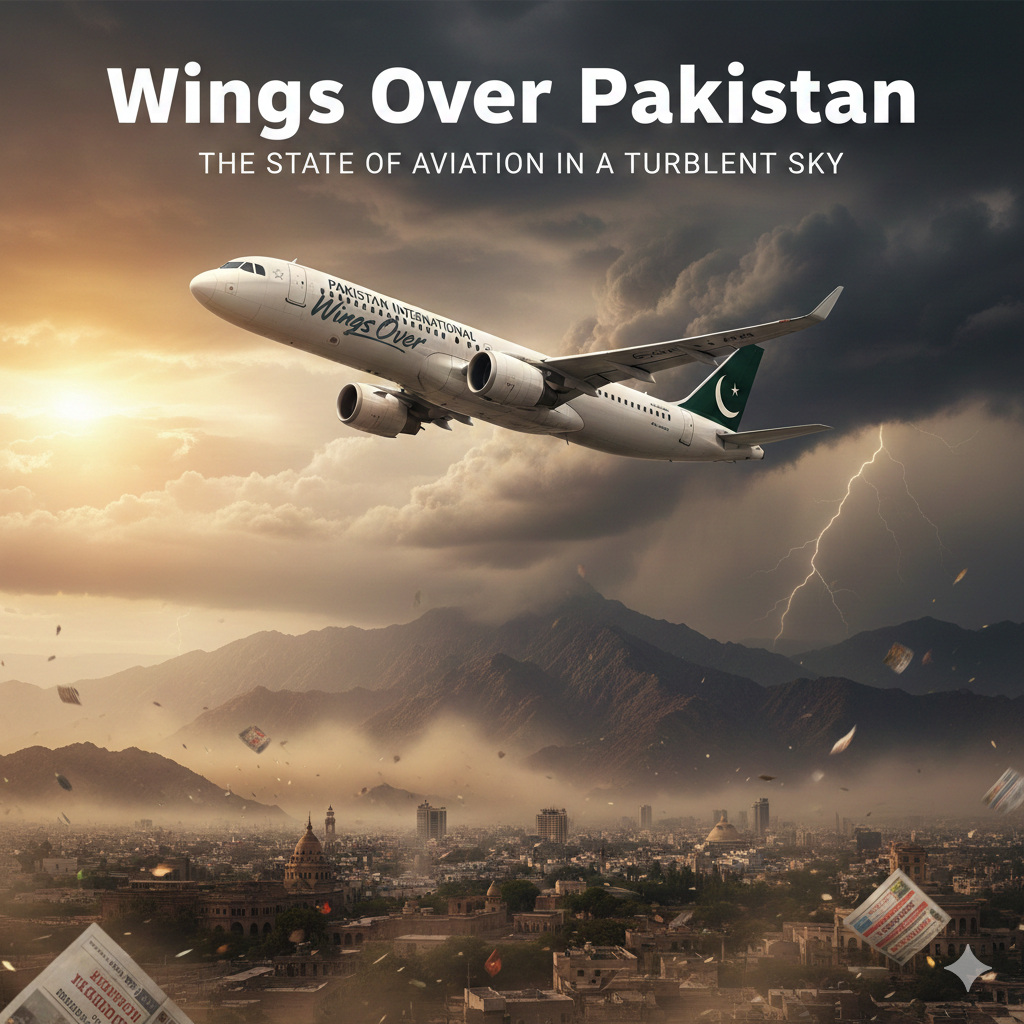
KARACHI, Pakistan – In a nation where geography dictates isolation—with deserts to the east, towering mountains to the north, and a vast coastline to the south—aviation is not a luxury but a necessity. Pakistan’s airline industry today is a story of resilience, intense competition, and profound challenges, operating under the long shadow of past tragedies, economic headwinds, and a global reputation in need of repair. The quest to be the “best” airline in Pakistan is less about luxury and more about reliability, safety, and value in a market where passengers are both price-sensitive and deeply aware of the stakes every time they fly.
The National Flag Bearer: Pakistan International Airlines (PIA) – A Phoenix Grounded?
Any discussion of Pakistani aviation must begin with Pakistan International Airlines (PIA), once a proud symbol of the young nation’s ambition, famously dubbed “Great People to Fly With.” Today, PIA’s story is one of precipitous decline and a desperate struggle for survival. A devastating pilot license scandal in 2020 led to its outright ban from the European Union, the United Kingdom, and the United States, severing critical revenue routes. This, coupled with decades of mismanagement, political interference, and a bloated workforce, has left the airline financially crippled, operating a dramatically reduced network primarily to the Middle East and domestic destinations.
For domestic travelers, PIA remains a player due to its extensive route network to smaller cities like Gwadar, Turbat, and Moenjodaro. Its fares are often competitive, and a sense of national sentiment still attracts some passengers. However, chronic issues of delayed flights, aging Airbus A320 and Boeing 777 fleets (many grounded for lack of parts), and inconsistent service have eroded trust. The current government’s plan for its privatization or restructuring is a make-or-break endeavor. To call PIA the “best” in any conventional metric is currently impossible; its significance lies in its potential and the emotional hold it retains on the national psyche.
The Challenger King: AirBlue – Consistency in the Domestic Sphere
In the vacuum created by PIA’s troubles, AirBlue has carved out a reputation as Pakistan’s most reliable and customer-friendly private airline. Operating a modern, all-Airbus A320/A321 fleet, AirBlue focuses on the “Golden Triangle” of Karachi, Lahore, and Islamabad, along with other major cities. Its strengths are punctuality, clean aircraft, and straightforward service. It has largely avoided the scandals that have plagued its competitors and has built a loyal following among business travelers and families who prioritize predictability over the absolute lowest fare.
AirBlue’s model is lean and focused. It does not overextend itself with perilous international routes, instead maintaining a handful of profitable services to the Gulf (like Sharjah and Muscat). In a market hungry for normalcy, AirBlue’s consistency has made it a de facto “best” for many, even if its in-flight product is functional rather than luxurious. It represents the promise of what a professionally run Pakistani airline can be.
The Low-Cost Maverick: SereneAir – Aggressive Expansion on a Budget
Emerging as a fierce competitor is SereneAir. Founded with a more aggressive low-cost carrier (LCC) model, SereneAir has rapidly expanded its domestic network and ventured into international routes to the UK and Saudi Arabia. It often undercuts competitors on price, driving fare wars that benefit consumers. Operating a mix of Airbus A330s for long-haul and A320s for domestic routes, SereneAir’s appeal is unequivocally its affordability.
However, its rapid growth has come with growing pains. Passengers report more variability in service and punctuality compared to AirBlue. Its ambition is clear—to be the dominant volume player—but establishing a consistent reputation for reliability is its next challenge. For the budget-conscious traveler, particularly the vast Pakistani diaspora visiting family, SereneAir offers a critical and competitive option, making it a “best” for value.
The International Benchmarks: Emirates, Qatar Airways, and Turkish Airlines
For any Pakistani traveling beyond the Gulf, the true “best” airlines are often foreign carriers. Emirates, Qatar Airways, and Turkish Airlines dominate long-haul travel from Pakistan. They offer global connectivity, pristine safety records, modern fleets, and a service standard that Pakistani carriers currently cannot match. Their hubs in Dubai, Doha, and Istanbul are the true gateways for Pakistanis to the world.
Their presence sets a high bar and constantly reminds the local industry of the global standards it must meet to compete. For the Pakistani elite and a growing middle class, these airlines are the preferred choice for international travel, highlighting the competitive gap that domestic airlines must close.
The Safety Imperative: The Shadow of PK 8303
The single most important factor defining “best” in Pakistan today is safety. The haunting memory of the PIA Flight PK 8303 crash in Karachi in May 2020, followed by the license scandal, shattered public confidence. The subsequent international bans were not merely economic sanctions but a devastating verdict on regulatory oversight.
In this climate, the “best” airline is the one that most transparently demonstrates an uncompromising safety culture. This is where AirBlue has gained an edge and where SereneAir must invest relentlessly. It extends beyond maintenance logs to pilot training, fatigue management, and a corporate culture that prioritizes safety over profit or schedule. The Civil Aviation Authority (CAA) is undergoing painful reform under international scrutiny. An airline’s willingness to not just meet but exceed these evolving standards is paramount.
The Passenger Experience: What Matters in the Pakistani Market
Given the economic pressures, the Pakistani passenger’s definition of “best” is pragmatic:
- Punctuality: In a country where traffic and logistics are unpredictable, an on-time departure and arrival are highly valued.
- Cleanliness and Basic Comfort: A clean seat, functioning air conditioning, and a tidy cabin are non-negotiable basics that have not always been guaranteed.
- Transparent Pricing: Hidden fees and last-minute surcharges are met with anger. A clear, all-inclusive fare structure builds trust.
- Customer Service Recovery: How an airline handles inevitable delays or cancellations—providing information, accommodation, or rebooking—is a critical differentiator in a market known for operational disruptions.
Full-service amenities like gourmet meals or expansive lounges are secondary concerns for most. The experience is viewed through a lens of necessity and value.
The Future: Air Safari, Privatization, and a New Dawn?
The horizon holds potential for change. The government is moving forward with the privatization of PIA, a process that could attract a strategic investor with the capital and expertise to resurrect the brand, regain international access, and restore competition. Furthermore, the anticipated launch of Air Safari, a new airline reportedly planned by the powerful Army Welfare Trust, could introduce another well-capitalized player into the market, potentially setting new standards for service and efficiency from the outset.
Conclusion: The “Best” is Yet to Come
Today, there is no single, undisputed “best” airline in Pakistan. There is, instead, a clear hierarchy of trade-offs:
- For proven reliability and consistent service: AirBlue currently leads.
- For the lowest fares and expanding network: SereneAir is the aggressive contender.
- For sentimental loyalty and access to remote destinations: PIA remains an option, albeit a risky one.
- For international travel and global standards: Foreign carriers are the unambiguous choice.
The crown of “best” awaits the airline that can decisively combine the operational discipline of AirBlue, the ambitious pricing of SereneAir, and pass the ultimate test of restoring international confidence through demonstrable, world-class safety. That airline will not only dominate the Pakistani market but will also reclaim a piece of national pride. The skies over Pakistan are turbulent, but they are also filled with opportunity. The next chapter in Pakistani aviation will be written by whoever can navigate the storm with the most skill, integrity, and a steadfast commitment to putting the passenger, and safety, first. Until then, the competition for Pakistan’s trust continues, one flight at a time.
