

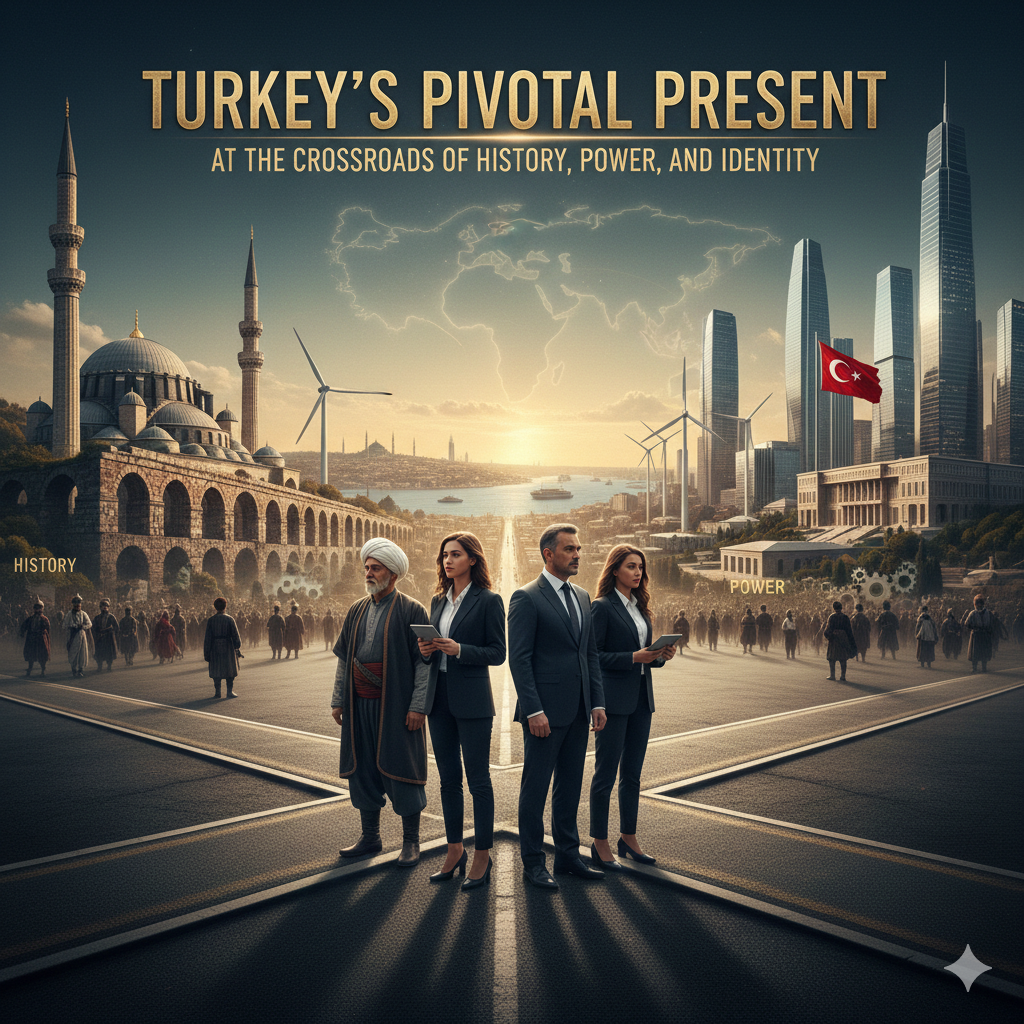
ANKARA, Turkey – In the heart of geopolitical storms, where continents and ideologies collide, the Republic of Turkey navigates a moment of profound historical reckoning. Under the two-decade leadership of President Recep Tayyip Erdoğan, the nation has pursued a transformative and contentious vision: to reclaim what it frames as its rightful status as a global power, rooted in Ottoman imperial grandeur and assertive Islamic and nationalist identity. This project, encapsulated in the slogan “Yeni Türkiye” (New Turkey), is reshaping the nation’s domestic fabric and its posture on the world stage, making the present a pivotal chapter in its century-long modern history.
The Legacy of Atatürk and the Rise of the “New Turkey”
Modern Turkey was forged from the ashes of the Ottoman Empire by Mustafa Kemal Atatürk, whose secular, Western-oriented republicanism defined the state for most of the 20th century. The military saw itself as the guardian of this secular legacy, staging coups in 1960, 1971, 1980, and 1997. The rise of Erdoğan’s Justice and Development Party (AKP) in 2002 represented a decisive break. Initially promoting liberal economics and EU accession, the AKP gradually consolidated power, taming the military through show trials and constitutional changes, and pivoting towards a more conservative, populist, and authoritarian model.
The 2016 failed coup attempt was the watershed. The state’s massive purge—targeting alleged followers of Fethullah Gülen in the judiciary, academia, military, and civil service—solidified executive control. The subsequent 2017 constitutional referendum abolished the prime minister’s office, creating a powerful executive presidency with few checks and balances. The “New Turkey” is characterized by centralized authority, a domestically assertive foreign policy, and the promotion of Sunni Muslim identity in public life, challenging the secular foundations of the Atatürk era.
Economic Ambition and Acute Distress
Erdoğan’s long rule was initially buoyed by a historic economic boom, with massive infrastructure projects—new airports, bridges, and a palatial presidential complex—symbolizing national resurgence. However, this model has hit severe turbulence. The president’s unorthodox insistence on low interest rates despite soaring inflation triggered a currency crisis, with the lira losing over 80% of its value in five years. Inflation, though easing from crippling peaks, remains the dominant concern for ordinary citizens, eroding incomes and savings.
The government has responded with heavy state intervention, currency controls, and a pivot towards attracting Gulf investment. While a sharp post-election U-turn toward orthodox monetary policy in 2023 has stabilized markets, the cost of living crisis fuels deep public discontent. The economy is now the AKP’s greatest vulnerability, testing the loyalty of its core constituency and proving that geopolitical swagger cannot easily substitute for economic stability.
A Pivotal, Assertive Foreign Policy: “The World is Bigger Than Five”
Turkey’s foreign policy under Erdoğan and Foreign Minister Hakan Fidan has been boldly independent and transactional, guided by the motto “the world is bigger than five”—a critique of the UN Security Council’s permanent members. Ankara plays all sides, a strategy that yields influence but also complexity and friction.
- NATO and the West: A critical NATO ally with the alliance’s second-largest army, Turkey remains a key player. Its blocking of Sweden’s NATO accession for over a year demonstrated its willingness to leverage its position for concessions (ultimately securing advanced F-16 fighter jets from the U.S.). Relations with the EU are strained over migration, human rights, and Cyprus, but a major trade relationship endures.
- Russia and Ukraine: Turkey performs a high-wire act, supplying armed drones to Ukraine while maintaining close economic and energy ties with Russia. It brokers grain deals and occasionally acts as a mediator, positioning itself as an indispensable power.
- The Middle East: After a decade of supporting Islamist movements, Turkey is now mending fences through a policy of “normalization.” It has restored ties with Saudi Arabia, the UAE, and Israel, driven largely by economic necessity. However, its core strategic concerns remain: combating Kurdish nationalist groups it designates as terrorists (like the PKK and its Syrian affiliate, the YPG) and maintaining a military presence in northern Syria and Iraq.
- The Eastern Mediterranean: Competing claims over maritime energy resources pit Turkey against a coalition of Greece, Cyprus, Egypt, and Israel. Naval standoffs and heated rhetoric underscore this as a potential flashpoint, with Ankara asserting its claims based on a controversial maritime pact with Libya’s former Government of National Accord.
Society at a Crossroads: Polarization and the Struggle for Identity
Turkish society is deeply polarized between the conservative, religious base of the AKP and a secular opposition that spans nationalists, liberals, and Kurds. The opposition’s surprise victories in major cities like Istanbul and Ankara in 2019 demonstrated its resilience, but its failure to unseat Erdoğan in the 2023 presidential election underscored his enduring political strength.
Key societal battles rage:
- Women’s Rights: Withdrawal from the Istanbul Convention on preventing violence against women and rising conservative rhetoric have sparked fears of a rollback in rights, fueling a vigorous women’s movement.
- The Kurdish Question: The conflict with the PKK simmers, with periodic crackdowns. Pro-Kurdish politicians face persistent legal pressure, keeping this central issue unresolved.
- Refugees: Hosting over 3 million Syrians, Turkey faces growing public backlash against refugees, making their status a potent political issue.
Looking Ahead: An Uncertain Inheritance
As Erdoğan, now 70, begins what is constitutionally his final term, questions of succession and the system’s sustainability loom large. The “New Turkey” project has restored a sense of historic agency and geopolitical weight for many citizens. Yet, it has come at the cost of democratic erosion, economic volatility, and deep social division.
The nation stands at a historical inflection point. It can leverage its unique position as a bridge between East and West, a diplomatic dealmaker, and a manufacturing hub. Alternatively, economic distress, foreign policy overreach, or internal strife could precipitate a crisis.
The ultimate chapter of this era is still being written. Will the “New Turkey” solidify into a durable model of illiberal democracy and regional hegemony? Or will economic and social pressures force a recalibration? The answer will determine not only Turkey’s fate but will significantly impact the balance of power in Eurasia and the Middle East. In the shadow of minarets and skyscrapers, Turkey continues its perpetual journey between its imperial past and its contested future, scripting one of the most consequential national stories of our time.
