

Subtitle: Operating in a State of Fragility, Innovation, and Unprecedented Potential
DATELINE: MOGADISHU, SOMALIA – To navigate the business landscape in Somalia today is to master a high-stakes calculus of risk, trust, and improvisation. In a nation where the formal state remains fragile and decades of conflict have shattered infrastructure, the Somali economy defies easy categorization. It is not a story of GDP growth charts or foreign direct investment inflows, but one of profound resilience, a bustling informal sector, and the rise of a new generation of entrepreneurs leveraging technology and diaspora capital. Business in Somalia exists in the space between ruin and rebirth, operating within systems of community trust (mag and xeer) that often hold more authority than government policy. It is an ecosystem built on remittances, mobile money, and a fierce, adaptive commercial spirit.
The Macro Landscape: Fragility, Currency, and the Remittance Lifeline
Somalia lacks the traditional markers of a stable business environment. The World Bank’s 2023 Doing Business report does not rank it. There is no functioning central bank with monetary policy control; instead, monetary stability is loosely managed by a Currency Committee. The Somali Shilling (SOS) exists in a bewildering array of notes, with massive counterfeiting and wildly differing values between regions—the “Mogadishu shilling” versus the “Somaliland shilling.” This currency chaos pushes most significant transactions into U.S. dollars.
The true central bank of Somalia is its diaspora. An estimated $2 billion annually flows into the country via remittances (xawilaad), primarily through venerable hawala networks like Dahabshiil, Amal, and Qaran Express. This capital is not just for subsistence; it is the seed funding for countless small businesses, from a new kiosk in Baidoa to a import-export startup in Bosaso. It is the nation’s most critical source of foreign exchange and liquidity, underpinning every sector. The resilience of this network, tested by compliance pressures from international banks fearing money laundering, is the single most important factor in Somalia’s economic survival.
Sectoral Deep Dive: Where the Hustle Happens
- Telecoms and Digital Finance: The Leading Edge
Somalia’s most advanced and competitive sector is telecommunications. Companies like Hormuud Telecom (south), Telesom (Somaliland), and Golis (Puntland) have achieved near-nationwide coverage in a country with no landlines, leapfrogging traditional infrastructure. Their real innovation, however, lies in mobile money. Hormuud’s EVC Plus and Telesom’s Zaad are not just payment systems; they are the foundational digital financial infrastructure. Salaries are paid, bills are settled, and commerce is conducted through phones. This ecosystem has spawned a wave of tech-savvy startups in mobile advertising, e-commerce logistics, and app-based services, making Mogadishu a surprising hub of digital hustle. - Trade, Import, and the Suuq Economy:
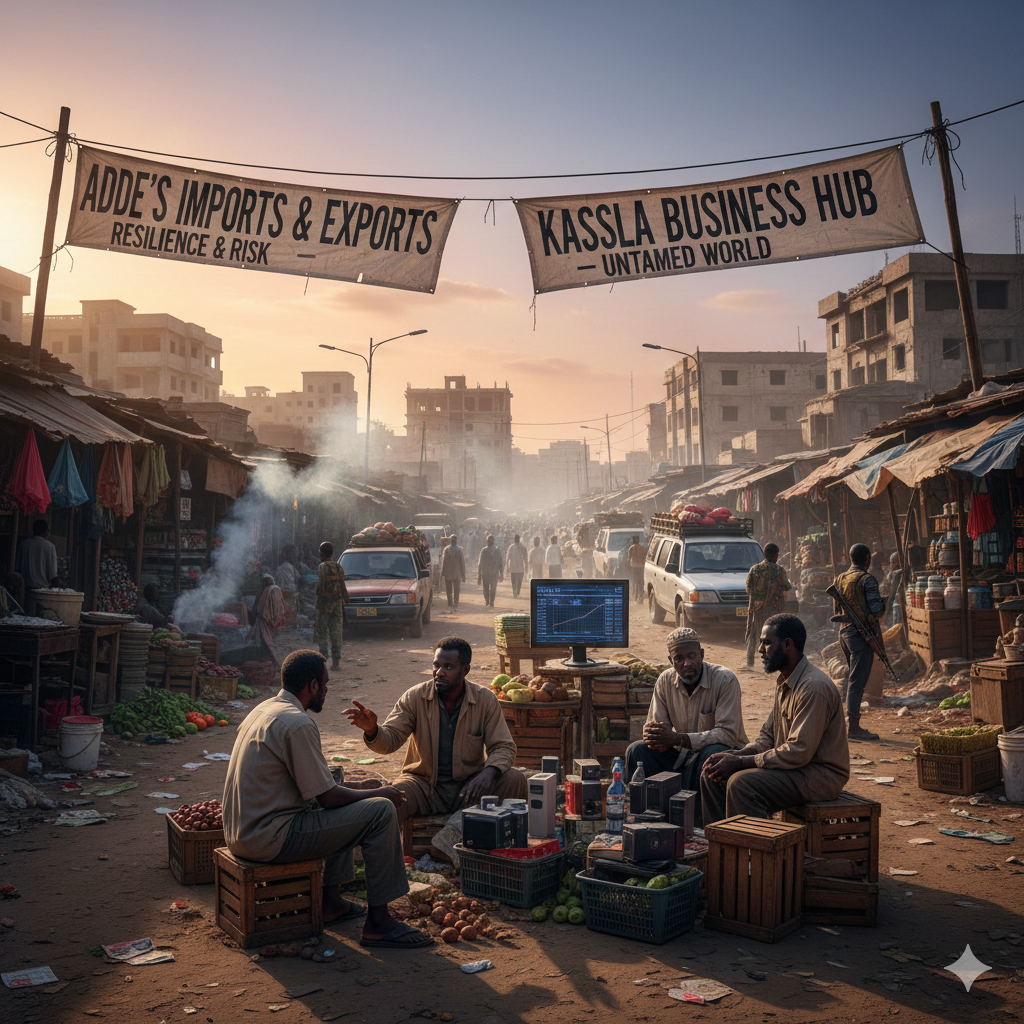
Somalia is a quintessential trading nation. Its businesses are arbitrageurs, connecting global markets to local demand. The port of Mogadishu, along with Bosaso and Berbera, are throbbing arteries through which everything from Chinese electronics and Turkish construction materials to Indonesian textiles and Indian pharmaceuticals flows. This import economy is dominated by powerful trading families with networks abroad. The goods flood into sprawling open-air markets (suuqs), where countless micro-enterprises and traders operate. The entire chain, from ship to stall, is financed through a complex mix of diaspora investment, clan-based credit, and trade finance from Middle Eastern partners. - Livestock and Agriculture: The Old Economy Endures
Despite urbanization, the traditional backbone—livestock exports to the Gulf—remains vital. The Berbera corridor is essential for Ethiopian sheep and goats, and Somali camels are highly prized. Recurrent climate shocks, however, from drought to locusts, make this a volatile sector. Similarly, agriculture in the fertile Shabelle and Juba river valleys shows potential but is hampered by insecurity, lack of modern inputs, and climate vulnerability. Agribusiness remains largely untapped. - Humanitarian and Construction: The “Crisis Economy”
The presence of a multi-billion dollar international humanitarian operation has created its own parallel economy. It demands housing, security, logistics, translation, and banking services, providing a significant revenue stream for a layer of Somali businesses. Simultaneously, the physical reconstruction of Mogadishu and other cities has fueled a construction boom. Real estate prices in secure enclaves of the capital rival those of stable regional capitals, funded by diaspora investment seeking a tangible stake in the homeland.
The Ecosystem of Trust: Clan, Contract, and Complication
In the absence of a strong judicial system, Somali business relies on alternative governance. Clan affiliation (qabil) remains a primary framework for establishing trust, guaranteeing contracts, and securing credit. Disputes are often settled through traditional elders (xeer) rather than courts. While this system enables commerce to function, it also reinforces fragmentation, can exclude outsiders, and complicates the creation of a unified national market. Navigating these social currents is as important as any business plan.
The Challenges: Navigating the Risk Matrix
The obstacles are formidable:
- Security: While Al-Shabaab has been pushed from major cities, it retains the ability to launch devastating attacks, extort businesses, and disrupt supply chains. Security costs are a significant overhead.
- Political Fragmentation: Different regions operate under different de facto authorities—the Federal Government in Mogadishu, Somaliland’s government in Hargeisa, and Puntland’s administration in Garowe. Each has its own regulations, taxes, and business climate, creating a labyrinth for inter-regional trade.
- Lack of Formal Banking: The absence of regulated commercial banks with SWIFT connections makes international transactions slow, expensive, and reliant on intermediary banks in Djibouti or Dubai.
- Weak Infrastructure: Unreliable electricity (making generators a major cost), damaged roads, and limited cold-chain storage dramatically increase operational costs.
The Opportunities: Green Shoots and Future Potential
For the daring, Somalia offers remarkable potential:
- The Blue Economy: Africa’s longest coastline is a resource of staggering, untapped wealth in fisheries, ports, and potentially offshore energy. Piracy’s decline has reopened this domain.
- Renewable Energy: With abundant sun and wind, Somalia is ideal for decentralized solar and wind power, a sector attracting increasing diaspora and foreign interest to solve the crippling energy deficit.
- Diaspora-Led Investment: The returning diaspora bring not only capital but also global skills, networks, and expectations of better services, driving innovation in sectors like education, healthcare, and hospitality.
- Regional Gateway: Somalia’s geographic position makes it a natural logistics hub for the Horn of Africa, a potential currently realized only in part by Berbera port.
Conclusion: The Hustle is the Economy
Business in Somalia today is not for the conventional investor seeking stability and clear regulation. It is for the agile, the networked, and the resilient. It is an economy built on social capital, digital adaptation, and the relentless flow of remittances. The Somali entrepreneur is the ultimate pragmatist, operating in a system they are simultaneously trying to survive and rebuild.
The future hinges on whether the incremental progress—the slow expansion of state authority, the growth of tech hubs, the infrastructure projects—can gradually lower the towering risk premium and channel the legendary Somali commercial energy into a more formal, inclusive, and peaceful economic order. For now, the story of Somali business is written daily in the bustling suuqs, on the screens of mobile money phones, and in the wire transfer receipts from Minneapolis and London—a testament to a nation trading its way out of fragility, one transaction at a time.