

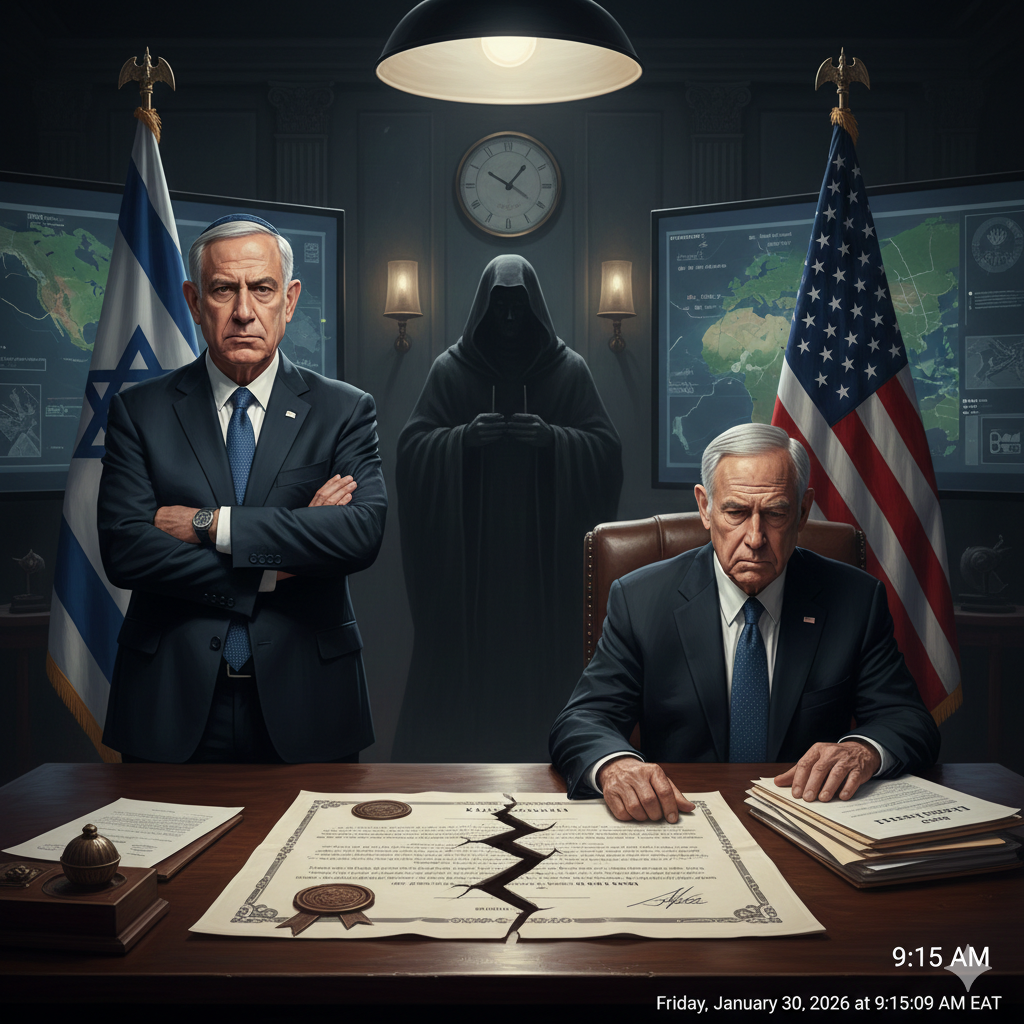
The relationship between the United States and Israel, long described as an “unbreakable” and “ironclad” bond, is undergoing its most severe public stress test in decades. The catalyst is the ongoing war in Gaza, but the fissures run deeper, exposing fundamental shifts in domestic American politics, strategic priorities, and the personal dynamics between two leaders. Today, the story of Israel and the U.S. is one of a historic alliance strained by a humanitarian catastrophe, diverging visions for the future, and a looming American election that could redefine the partnership entirely.
The Gaza War: The Breaking Point
The October 7th Hamas attacks, which killed approximately 1,200 Israelis and saw over 240 taken hostage, triggered an immediate and unconditional outpouring of American support. President Joe Biden’s “bear hug” strategy—deploying naval assets, rushing military aid, and staunchly defending Israel’s right to self-defense at the UN—was a classic demonstration of the alliance in action.
However, as Israel’s military campaign in Gaza progressed, the staggering Palestinian death toll (exceeding 35,000, per Gaza health officials), widespread destruction, and acute humanitarian crisis began to fracture the consensus. The gap between the U.S. and Israeli positions widened from a tactical crack into a strategic chasm.
- Public Scolding vs. Private Pressure: The Biden administration has moved from unwavering support to increasingly sharp public criticism. Biden himself has termed Israel’s military conduct as “over the top,” and Defense Secretary Lloyd Austin warned that Israel risked a “strategic defeat” by creating a “generation of terrorists.” The most dramatic moment came when President Biden explicitly threatened to condition future offensive weapons shipments if Israel launched a major invasion of Rafah, a red line he had repeatedly drawn. This public ultimatum, while likely intended to force Netanyahu’s hand, was a historic departure from unconditional backing.
- The Netanyahu Problem: The tension is deeply personalized in the figure of Israeli Prime Minister Benjamin Netanyahu. U.S. officials, reportedly including Biden, have long been frustrated with him, viewing him as a political survivor who prioritizes his own political coalition over strategic American interests. The U.S. sees a “day after” plan for Gaza as essential to any lasting security, advocating for a revitalized Palestinian Authority and a path to a two-state solution. Netanyahu has publicly and repeatedly rejected these pillars, insisting on indefinite Israeli security control and refusing to engage with Palestinian statehood, leaving the U.S. diplomatically exposed and frustrated.
The Domestic American Earthquake
The strain is not merely diplomatic; it is a powerful and disruptive force in American domestic politics, splitting the Democratic Party and energizing a new generation of voters.
- The Democratic Divide: The White House faces a mounting rebellion from its left flank. A significant portion of the Democratic base, particularly younger voters and key constituencies in cities like Detroit and Atlanta, are outraged by U.S. support for the war. Protests on college campuses and within the party itself have become a constant feature of the political landscape. The administration’s handling of the war is seen as a major liability for Biden’s re-election campaign, threatening to depress turnout among a crucial demographic.
- The Republican Gambit: Sensing opportunity, Republicans have sought to politicize the issue completely. They portray Biden’s criticism and conditional arms threats as a betrayal of the most loyal U.S. ally. They have invited Netanyahu to address Congress (a move seen as a direct snub to Biden) and frame the issue as a simple binary: you are either “pro-Israel” or “pro-Hamas.” This hardline stance aims to peel off traditionally Democratic pro-Israel voters and paint Biden as weak.
- A Changing U.S. Demographic: Underpinning the political shift is a deeper demographic and ideological evolution. Younger Americans, including young Jewish Americans, are more critical of Israeli government policies and more sympathetic to Palestinian rights than older generations. This is a long-term trend that suggests the bipartisan consensus supporting Israel is eroding, replaced by a more partisan and contentious debate.
Strategic Crossroads: Beyond the Immediate War
The current crisis is amplifying pre-existing strategic debates about the nature of the alliance itself.
- The China Pivot and Middle East Fatigue: A core tenet of U.S. grand strategy under both Trump and Biden has been the “pivot to Asia” to counter China. The Gaza war has sucked immense diplomatic and military attention back into the Middle East, a region many in Washington’s foreign policy establishment believe the U.S. should be de-emphasizing. The perception of Israel as a “strategic liability” in this context—complicating relations with Arab partners needed for a China strategy—has grown.
- The Iranian Deterrence Calculus: Israel and the U.S. remain united on the existential threat posed by Iran’s nuclear program and its proxy network. However, their tactics diverge. The U.S. seeks to avoid a full-scale regional war, while elements of the Israeli government believe a decisive military confrontation with Iran and Hezbollah may now be inevitable. The U.S. finds itself simultaneously trying to restrain Israel in Gaza while backing its defensive actions against Iran, a difficult balancing act.
- The Future of Military Aid: The debate over conditioning aid is no longer theoretical. A growing chorus in Congress, while still a minority, is pushing for enforceable human rights conditions on the $3.8 billion in annual U.S. military assistance. While such legislation is unlikely to pass soon, the mere fact it is being seriously debated marks a revolutionary shift in Washington.
The Path Ahead: An Alliance in Need of Renegotiation
The relationship is not headed for a break, but it is headed for a renegotiation. The post-October 7th status quo is unsustainable for both sides.
For the U.S., the challenge is to reconcile its moral authority, its changing domestic politics, and its strategic interests with its commitment to Israeli security. This will require moving beyond the “bear hug” to a more disciplined, conditional partnership that leverages aid to shape outcomes, not just signal support.
For Israel, the moment requires a painful reckoning. It can no longer rely on automatic, frictionless American backing regardless of its policies. The erosion of bipartisan support in the U.S. is a profound long-term threat. Israel must decide whether to continue down a path of deepening international isolation, supported only by an increasingly partisan American right, or to engage seriously with American diplomatic efforts, even those it finds distasteful.
Conclusion: The End of Automaticity
The “unbreakable” alliance is not broken, but its operating system—built on automatic support, shared democratic values, and a largely bipartisan American consensus—is crashing. What is emerging is a more transactional, contentious, and politically fraught partnership.
The 2024 U.S. election now looms as a potential watershed. A second Biden term would likely mean continued pressure for a ceasefire, a push for a two-state horizon, and a more conditional arms relationship. A Trump return would signal a return to the unconditional, “maximum pressure” approach of his first term, with likely accelerated Israeli settlement expansion and a more aggressive stance against Iran.
Regardless of the winner, the era of the blank check is over. The events since October 7th have proven that even the closest of allies have limits, and that public opinion, both in the U.S. and globally, can no longer be ignored. The U.S.-Israel relationship, forged in the Cold War and solidified by wars on terror, must now find a new footing in a more multipolar, scrutinized, and volatile world. The process will be painful, but it is necessary for an alliance that must endure not just through shared threats, but through shared values and a mutually acceptable vision for peace.