

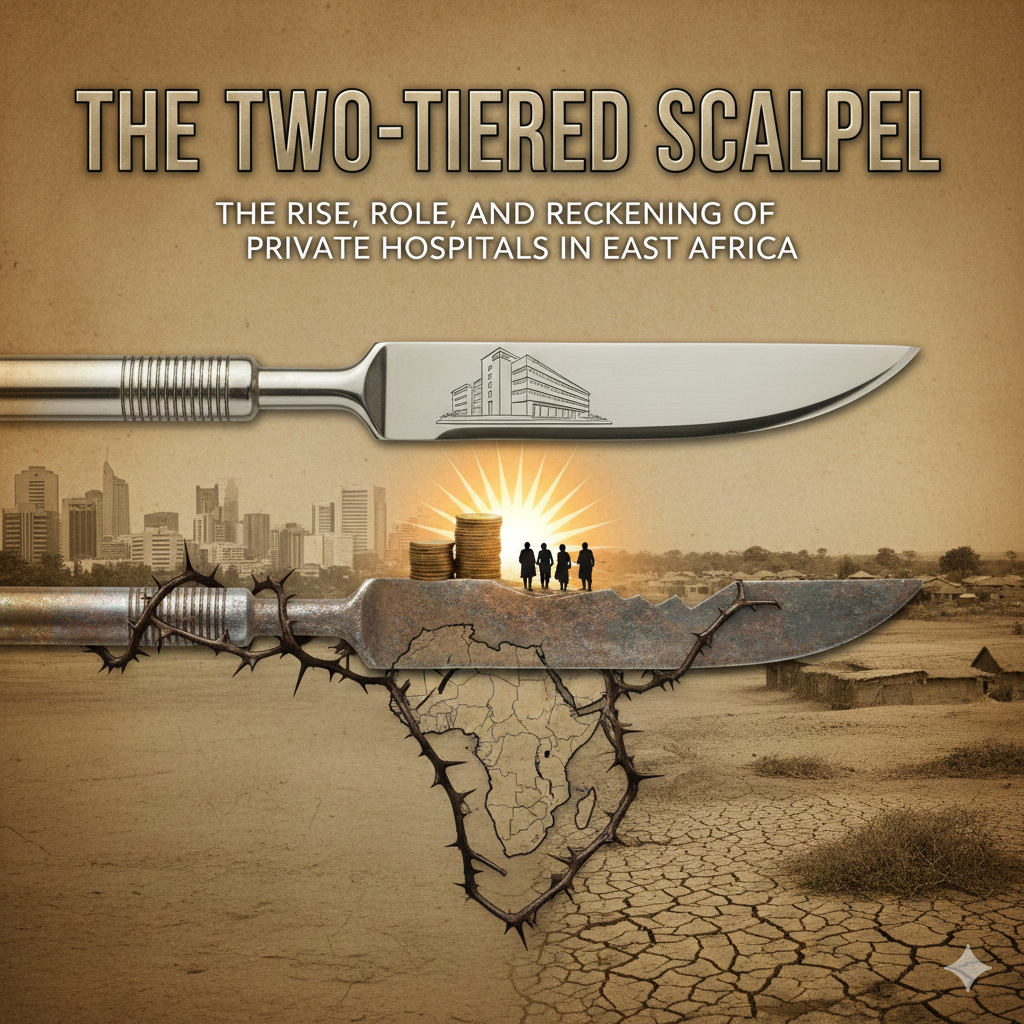
NAIROBI, KAMPALA, DAR ES SALAAM – Within the sprawling, congested cities of East Africa, a parallel healthcare universe is flourishing behind tinted glass, guarded gates, and gleaming marble lobbies. This is the world of the private hospital, an institution that has grown from a niche service for the elite and expatriates into a dominant, powerful, and controversial force in the region’s health landscape. Today, private hospitals represent both the zenith of medical aspiration and a stark symbol of deepening health inequality, offering world-class care for those who can pay while the public system groans under the weight of the masses. Their story is one of entrepreneurial triumph, medical innovation, and an ethical quandary at the heart of East Africa’s development.
The Ecosystem: From Boutique Clinics to Corporate Giants
The private hospital sector is not monolithic. It operates on a clear, market-driven hierarchy:
- The Corporate Chains & Flagship Institutions: At the apex are the regional powerhouses and international brands. In Kenya, The Aga Khan University Hospital in Nairobi is the undisputed gold standard, a tertiary-care, teaching, and research institution that rivals hospitals in the global north. Nairobi Hospital and MP Shah Hospital represent long-established, high-end charitable trusts with a corporate model. Across the region, chains like Medicare (Kenya) and Case Medical Centre (Uganda) are expanding their footprints. The entry of international players like Bangkok Hospital (in Kenya) signals the sector’s lucrative potential for medical tourism and affluent locals.
- The Mission & Faith-Based Hospitals: Occupying a crucial middle ground are long-standing institutions like Kenya’s Mater Misericordiae Hospital (Catholic) or Tanzania’s Kilimanjaro Christian Medical Centre (KCMC). They often blend charitable missions with fee-for-service models, providing more affordable, reliable care than the public sector and serving as critical training grounds. Their ethos complicates the purely commercial narrative, embedding a social mission within the private framework.
- The Proliferating Mid-Level and Specialized Clinics: This is the fastest-growing segment. Standalone surgical centers, maternity hospitals, renal dialysis units, and oncology clinics are mushrooming in urban and peri-urban areas. They cater to the emerging middle class seeking specific, timely procedures—a Caesarean section, a hip replacement, chemotherapy—without the wait times and uncertainty of public referral systems.
- The Informal “Nursing Homes”: At the bottom of the formal spectrum are countless small, often family-run nursing homes. Quality and regulation here are wildly inconsistent, but they fill a desperate need for accessible inpatient care in communities where public health centers are dysfunctional.
The Drivers of the Boom: Push, Pull, and Profit
The explosive growth of private healthcare is fueled by a powerful confluence of factors:
- The Collapse of Public Confidence: The single greatest driver is the failure of public health systems. Chronic underfunding leads to stock-outs of drugs and supplies, dilapidated infrastructure, and demoralized, underpaid staff. For anyone with means, the public hospital is a last resort, associated with long queues, risk of infection, and unpredictable care. The private sector sells certainty.
- A Growing, Aspirational Middle Class: East Africa’s economic growth has created a population with disposable income and health insurance (often provided by employers). This cohort demands quality, dignity, privacy, and prompt service—values the private sector is designed to deliver.
- The Rise of Medical Insurance and Corporate Contracts: The expansion of private health insurance (like Jubilee, APA, and Liberty) and corporate wellness programs has created a direct payment pipeline to private hospitals, insulating patients from crippling out-of-pocket costs and guaranteeing hospitals a steady revenue stream.
- Medical Tourism and Diaspora Demand: Hospitals like Aga Khan attract patients from across the region and the global diaspora, offering complex cardiac, orthopedic, and cancer treatments at a fraction of Western costs but with high standards.
- The “Brain Drain” Within Borders: Strikingly, the same doctors trained in public medical schools, often at taxpayer expense, are drawn to work in private hospitals for better salaries, working conditions, and equipment. This creates an internal brain drain that further weakens the public sector.
The Double-Edged Scalpel: Contributions and Criticisms
The impact of private hospitals is profoundly dualistic.
On the positive side, they:
- Set Quality Benchmarks: They introduce and maintain international standards in clinical care, hygiene, and customer service, creating a model for what is possible.
- Drive Medical Innovation: They are often the first to adopt new technologies (digital imaging, minimally invasive surgery, advanced lab diagnostics) and specialist services.
- Relieve Pressure on Public Systems: By absorbing paying patients, they theoretically free up public resources for the poor. They also manage non-communicable diseases (NCDs) like diabetes and hypertension for a significant portion of the population.
- Create Employment: They are major employers of clinicians, nurses, technicians, and administrative staff.
However, they face searing criticisms:
- The Epitome of Inequality: They materialize a two-tiered society where health outcomes are directly purchased. The gleaming private hospital and the crumbling public facility, often mere miles apart, represent the region’s starkest social divide.
- Skewing Medical Priorities: The profit motive prioritizes lucrative specialist, curative, and elective procedures (cosmetic surgery, IVF) over essential but less profitable primary care, preventive medicine, and public health. This distorts national health priorities.
- Fragmentation of Care: They operate as siloed businesses, with little incentive to integrate with public disease surveillance, referral networks, or national health information systems, undermining coherent health planning.
- Ethical Exploitation and Over-Servicing: Reports of inflated bills, unnecessary tests and procedures, and predatory practices during medical emergencies are not uncommon, exploiting the vulnerability of patients.
- Regulatory Failure: While they are licensed, oversight of clinical quality, pricing transparency, and ethical conduct is often weak, inconsistent, and susceptible to corruption.
The Pandemic Crucible and the Path Forward
The COVID-19 pandemic was a stark stress test. Initially, many private hospitals were reluctant to become COVID-19 treatment centers, fearing infection risk and the loss of lucrative routine business. However, they eventually became essential partners, providing ICU beds, oxygen, and testing capacity, often at premium prices, highlighting both their indispensable capability and their commercial nature.
The future of private hospitals in East Africa hinges on navigating several critical pathways:
- The Mandate for Public-Private Engagement (PPE): Governments can no longer ignore the sector. Structured PPEs are essential, where private capacity is contracted to deliver specific public health goals—such as cataract surgeries,