

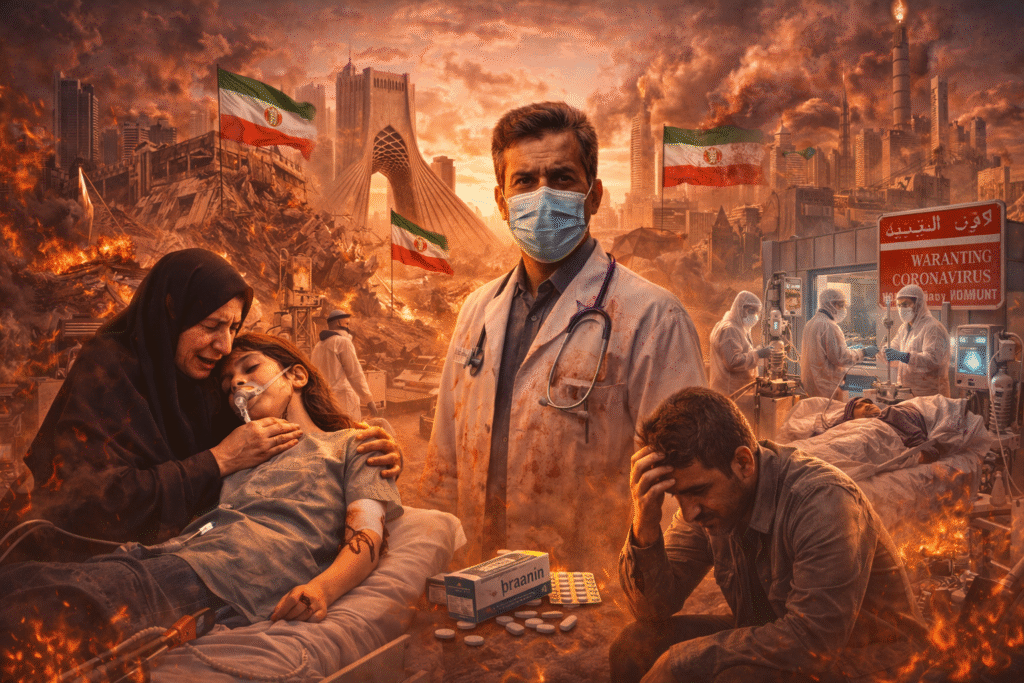
The state of health in Iran today is a story of two parallel realities. It is a system of remarkable sophistication, producing world-class specialists and medical research, while simultaneously buckling under the weight of economic sanctions, state mismanagement, and a population growing sicker, poorer, and more disillusioned. This duality defines a public health arena where groundbreaking cancer treatments exist alongside shortages of basic antibiotics, and where a legacy of strong primary care is being undone by a catastrophic brain drain of medical talent. To understand health in Iran is to witness the direct human cost of geopolitical strife and domestic policy failure, playing out in hospital wards and pharmacies across the nation.
The Legacy of Success and the Foundation of Crisis
For decades following the 1979 Revolution, Iran built a public health system that was the envy of the Middle East. Through a vast network of “Health Houses” in rural areas and a focus on primary care, it achieved dramatic improvements in life expectancy, infant mortality, and vaccination coverage. This legacy endures in infrastructure and institutional knowledge. However, this foundation is now cracking. The system’s undoing is driven by the “maximum pressure” campaign of U.S.-led sanctions, which have strangled Iran’s economy and, by extension, its ability to fund, supply, and sustain healthcare for its 85 million people.
The Sanctions Strangulation: A Medical Embargo
Sanctions are not an abstract economic policy; they are a direct, clinical attack on public health. While medicines and medical equipment are technically exempt from sanctions, the reality is a financial and logistical blockade. International banks refuse to process transactions for fear of penalties, making it nearly impossible for Iran to purchase pharmaceuticals, advanced medical equipment, and crucial raw materials for domestic drug production. This has led to severe, chronic shortages. Patients with cancer, multiple sclerosis, hemophilia, and thalassemia face life-threatening interruptions in treatment. Hospitals struggle to maintain and repair MRI machines, dialysis equipment, and surgical tools. The result is a system where the quality of care is increasingly dictated not by medical need, but by availability and a patient’s ability to pay on a burgeoning black market.
The Physician Exodus: A Hemorrhaging of Human Capital
Perhaps the most devastating long-term blow is the systematic brain drain of medical professionals. Iran trains excellent doctors, surgeons, and nurses, but it cannot keep them. Frustrated by low salaries (often less than $500 a month), impossible working conditions, lack of supplies, and a stifling political environment, thousands are leaving annually. They head to Europe, North America, and the Gulf states, where their skills are valued and compensated. This exodus is stripping Iran of its medical middle class, increasing the burden on those who remain, and creating a two-tier system: those who can afford elite private care from the remaining top specialists, and the vast majority reliant on an overstretched, understaffed public system.
The Double Burden: Infectious Disease and a Surging NCD Epidemic
Iran’s health profile reflects its economic and social strain. The nation faces a “double burden” of disease. On one hand, infectious diseases like tuberculosis, cutaneous leishmaniasis, and cholera are resurgent in poor provinces, often linked to water scarcity, malnutrition, and cross-border migration. On the other, non-communicable diseases (NCDs) are skyrocketing. Cancers, cardiovascular disease, diabetes, and hypertension now account for over 80% of all deaths. This surge is fueled by an aging population, economic stress, a shift towards processed foods, high smoking rates, and severe air pollution in major cities like Tehran, Isfahan, and Mashhad. The system, designed for acute and primary care, is ill-equipped for this chronic disease pandemic.
Mental Health: The Invisible, Unaddressed Epidemic
Beneath the physical ailments lies a vast, untreated mental health crisis. Decades of social restrictions, political repression, economic despair, and the trauma of events like the violent crackdown on protests have created a society in profound psychological distress. Depression, anxiety, and addiction rates are among the highest in the world. Yet, mental health services are scarce, underfunded, and stigmatized. The opioid crisis, in particular, is a national catastrophe, with Iran having one of the highest rates of opiate use globally—a tragic coping mechanism for a population in pain.
Environmental Health: The Air, Water, and Soil of Sickness
Environmental degradation is now a primary driver of illness. Chronic, suffocating air pollution, caused by traffic, industry, and dust storms, leads to soaring rates of respiratory and cardiovascular disease. A decades-long water crisis, resulting from mismanagement and climate change, forces communities to rely on contaminated sources, spreading gastrointestinal illnesses. Soil and water pollution from unregulated industry are linked to clusters of cancers in certain provinces. These are not isolated environmental issues; they are public health emergencies that the state lacks the resources or, critics argue, the political will, to address comprehensively.
Resilience and Resourcefulness: The Frontline Response
In the face of these cascading failures, the resilience of Iranian healthcare workers is extraordinary. Doctors and nurses perform near-miracles with limited resources, repurposing equipment, and developing workarounds for drug shortages. The domestic pharmaceutical industry, though hampered by a lack of imported active ingredients, strives to produce generic alternatives. Medical universities continue to conduct significant research, particularly in fields like stem cells and neurosurgery. This frontline resilience is the only barrier between a dire situation and a complete collapse.
The Political Determinants of Health
Ultimately, health in Iran is inextricably political. The state’s prioritization of military and security spending over public health investment is a clear policy choice. The enforcement of strict ideological codes, which restrict public health messaging on issues like sexual health and drug use, hinders effective prevention. Furthermore, the government’s frequent internet shutdowns and censorship disrupt access to health information, telemedicine, and communication between doctors and patients, turning digital tools into another battleground.
Conclusion: A System on Life Support
Iran’s healthcare system is on life support, maintained by the skill and dedication of its remaining staff and the desperate need of its population. The dual crises of sanctions and mismanagement have created a slow-motion humanitarian disaster. The exodus of doctors is a vote of no confidence with stethoscopes. The rise of preventable NCDs and the untreated mental health epidemic signal a society in deep distress. For the international community, the health of Iranians presents a moral quandary: sanctions intended to pressure the government are demonstrably crushing the sick and the vulnerable. For the Iranian state, it presents an existential challenge: a healthy population is fundamental to a functioning nation. Without a radical shift in both international policy and domestic priority, the prognosis for the health of Iran and its people remains critically grave.
