

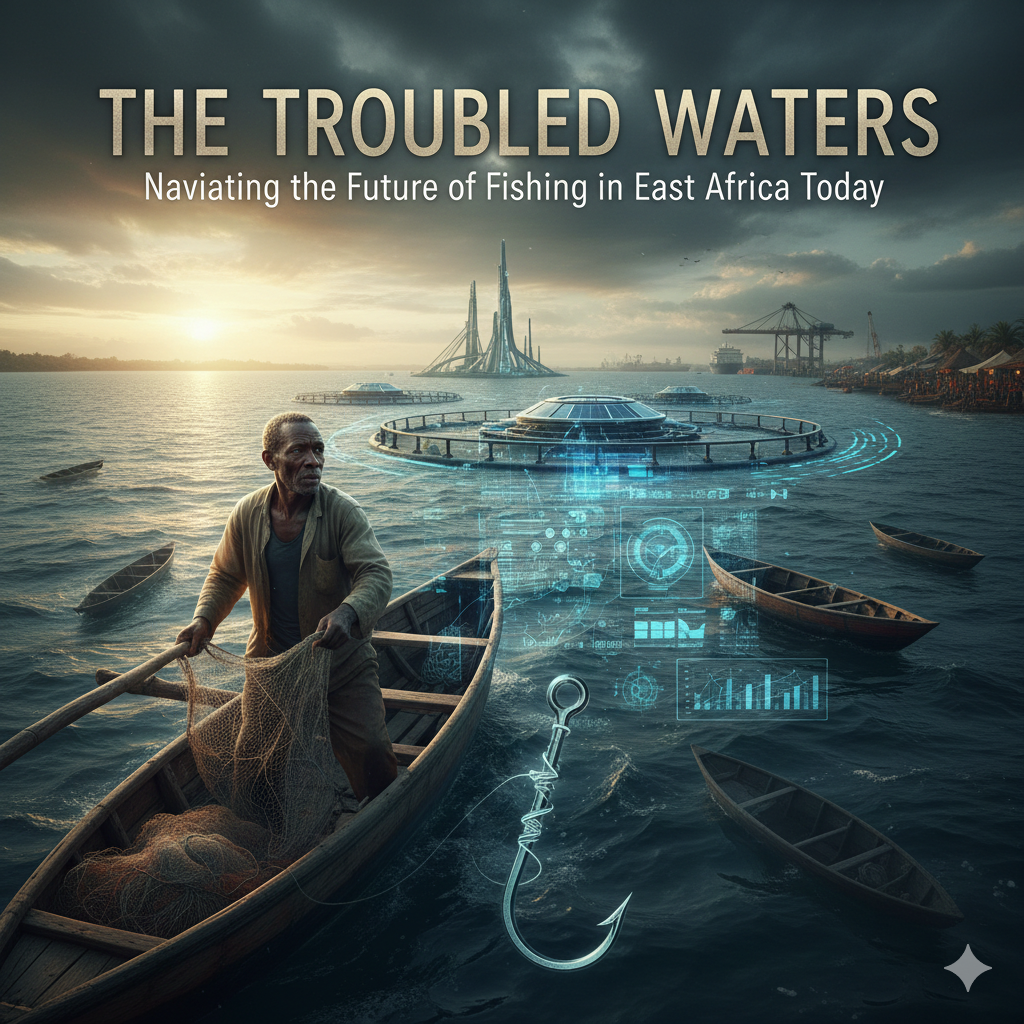
East Africa’s relationship with the sea and its inland waters is as ancient as its coastal Swahili cities. From the artisanal fishers casting nets from wooden dhows on the Indian Ocean to the bustling fish markets on the shores of Lake Victoria, fishing is a cornerstone of food security, livelihoods, and culture for tens of millions. However, this vital sector is in a state of profound crisis and transformation. The story of East Africa’s fisheries today is a stark microcosm of global challenges—ecological collapse, geopolitical predation, and climate vulnerability—intertwined with a desperate search for sustainable solutions, economic justice, and resilient communities.
The Inland Crisis: Lakes Under Siege
The plight of East Africa’s great lakes, particularly Lake Victoria, serves as a dire warning of unsustainable practice.
- Lake Victoria’s Precarious Balance: The world’s largest tropical lake and the source of the iconic Nile Perch, Lake Victoria supports over 35 million people across Kenya, Uganda, and Tanzania. The introduction of the Nile Perch in the 1950s, while creating a massive export industry (sending fillets to European and Israeli markets), devastated native fish biodiversity, an ecological catastrophe documented in the film Darwin’s Nightmare. Today, the lake faces even more immediate threats. Chronic overfishing, driven by poverty and population growth, means too many boats are chasing fewer, smaller fish. Juvenile perch are caught before they can reproduce, collapsing stocks and forcing fishers into a vicious cycle of longer hours for diminishing returns.
- The Silent Killer: Pollution and Hyacinth: The lake is a sink for agricultural runoff, industrial waste, and raw sewage from booming cities like Kisumu and Mwanza. This nutrient pollution fuels eutrophication and the explosive growth of invasive water hyacinth. These mats of vegetation choke waterways, deplete oxygen, block sunlight, and create perfect breeding grounds for disease vectors, further degrading fish habitats and making fishing physically impossible in vast areas.
- The Human Cost: The crisis on the lakes is measured in human desperation. With formal employment scarce, fishing remains a job of last resort, absorbing the region’s youth. This leads to intense competition, sometimes violent conflict over fishing grounds, and a rise in dangerous practices. Poverty and the transient nature of fishing communities also contribute to severe public health issues, including some of the world’s highest rates of HIV/AIDS.
The Blue Economy Dream and Oceanic Reality
On the coast, from Somalia to Mozambique, the narrative shifts to one of immense potential overshadowed by exploitation and a warming climate.
- The Promise of the Blue Economy: Governments, led by Kenya and the Seychelles, are championing the “Blue Economy” framework. This concept promotes sustainable ocean-based development, encompassing sustainable fishing, aquaculture, marine tourism, and shipping. The Seychelles has pioneered innovative debt-for-conservation swaps, protecting vast swathes of its maritime territory. The ambition is to transform the ocean from a shared commons prone to abuse into a managed, productive asset.
- Illegal, Unreported, and Unregulated (IUU) Fishing: The Great Plunder: This is the single greatest threat to East Africa’s maritime future. An armada of distant-water fishing vessels from Europe, China, Iran, and South Korea operates with impunity in the region’s Exclusive Economic Zones (EEZs). Using destructive methods like bottom trawling and large-scale purse seining, they vacuum up tuna, sardines, and squid, often without licenses, under-reporting catches, or fishing in prohibited zones. Somalia’s unpatrolled waters are among the world’s worst affected, with foreign fleets illegally harvesting an estimated $300 million worth of fish annually, devastating local artisanal fishers’ livelihoods. This industrial-scale theft undermines food sovereignty, robs coastal states of vital revenue, and cripples the sustainable Blue Economy before it can even start.
- Climate Change: The Rising Threat: The Indian Ocean is warming rapidly. This is altering fish migration patterns, pushing key species like tuna further east and south, away from the continental shelf. Coral reefs, essential nurseries for marine life, are suffering devastating bleaching events. Increased frequency and intensity of cyclones destroy fishing gear and infrastructure. For coastal communities, climate change is not an abstract concept but a daily reality of emptier nets and more dangerous seas.
Between the Net and the Market: Value Chains and Innovation
Between the act of catching fish and its consumption lie complex chains that determine who benefits.
- The Post-Harvest Loss Quagmire: A catastrophic 30-40% of the catch in East Africa is lost to spoilage. This is due to a near-total lack of cold chain infrastructure—ice, refrigeration, and refrigerated transport—from landing beaches to inland markets. Fish is often smoked or sun-dried using inefficient methods, losing nutritional and economic value. This loss represents a direct hit to fishers’ incomes and regional food security.
- Women as the Backbone and Their Burdens: While men dominate active fishing, women are the undisputed pillars of the post-harvest economy. They handle processing, transportation, and market sales. Yet, they face significant barriers: lack of access to capital to buy in bulk or equipment, exclusion from co-operative leadership, and vulnerability to exploitation by middlemen. Empowering women in the fisheries value chain is one of the most effective yet underutilized strategies for improving community resilience and economic outcomes.
- Aquaculture: A Partial Solution with Pitfalls: Seen as a pressure valve for wild stocks, aquaculture is growing rapidly. Kenya is promoting pond farming of tilapia and catfish. However, the sector faces its own challenges: high-quality feed is expensive and often imported, leading to a reliance on lower-quality alternatives that pollute waterways. There are also concerns about the genetic integrity of wild stocks if farmed fish escape. When poorly managed, aquaculture can simply shift environmental pressure from the lake to the watershed.
Charting a Sustainable Course: Pathways to Resilience
The future of East Africa’s fisheries hinges on integrated, multi-level action that addresses ecological, economic, and governance failures.
- Co-Management and Community-Led Conservation: The most successful models devolve management responsibility to local Beach Management Units (BMUs) and community co-operatives. When fishers have a direct stake in the long-term health of their fishing grounds—through exclusive rights, monitoring, and the benefits of sustainable catches—they become the most effective stewards. Supporting these groups with science, data, and legal authority is critical.
- Technology for Transparency and Traceability: To combat IUU fishing, regional governments are slowly investing in technology. This includes satellite-based Vessel Monitoring Systems (VMS), aerial drones for surveillance, and digital platforms for catch documentation. Creating transparent, traceable supply chains—where a fish can be tracked from boat to plate—can help lock illegal product out of lucrative export markets like the European Union.
- Investing in the “Last Mile” of the Cold Chain: Targeted investment in solar-powered ice makers, cold storage lockers at landing sites, and insulated transport can dramatically reduce post-harvest losses. This boosts incomes, improves nutrition, and creates green jobs. It is a foundational infrastructure need with an enormous return on investment.
- Regional Solidarity and Diplomacy: Fish stocks and foreign fleets do not respect national borders. East African nations must strengthen regional bodies like the Indian Ocean Tuna Commission (IOTC) and act in concert to negotiate better access agreements with foreign fishing nations, share surveillance data, and harmonize regulations to close loopholes exploited by IUU operators.
Conclusion: A Crossroads on the Water
Fishing in East Africa today stands at a crossroads. One path leads to continued depletion—a story of empty nets, hungry communities, and ecological deserts, where the wealth of the seas is siphoned away by foreign interests. The other path leads toward regeneration, built on community stewardship, technological empowerment, and regional cooperation.
The choice is not merely ecological but existential. The health of East Africa’s fisheries is a direct barometer of its commitment to equity, sustainability, and sovereignty. Saving the fisheries means securing a source of protein for millions, preserving ancient coastal cultures, and harnessing the true potential of the Blue Economy. It will require moving from open access to managed responsibility, from exploitation to stewardship, and from short-term gain to intergenerational justice. The tide of crisis is high, but with concerted will and innovation, East Africa can still navigate a course toward waters that are both bountiful and just.