

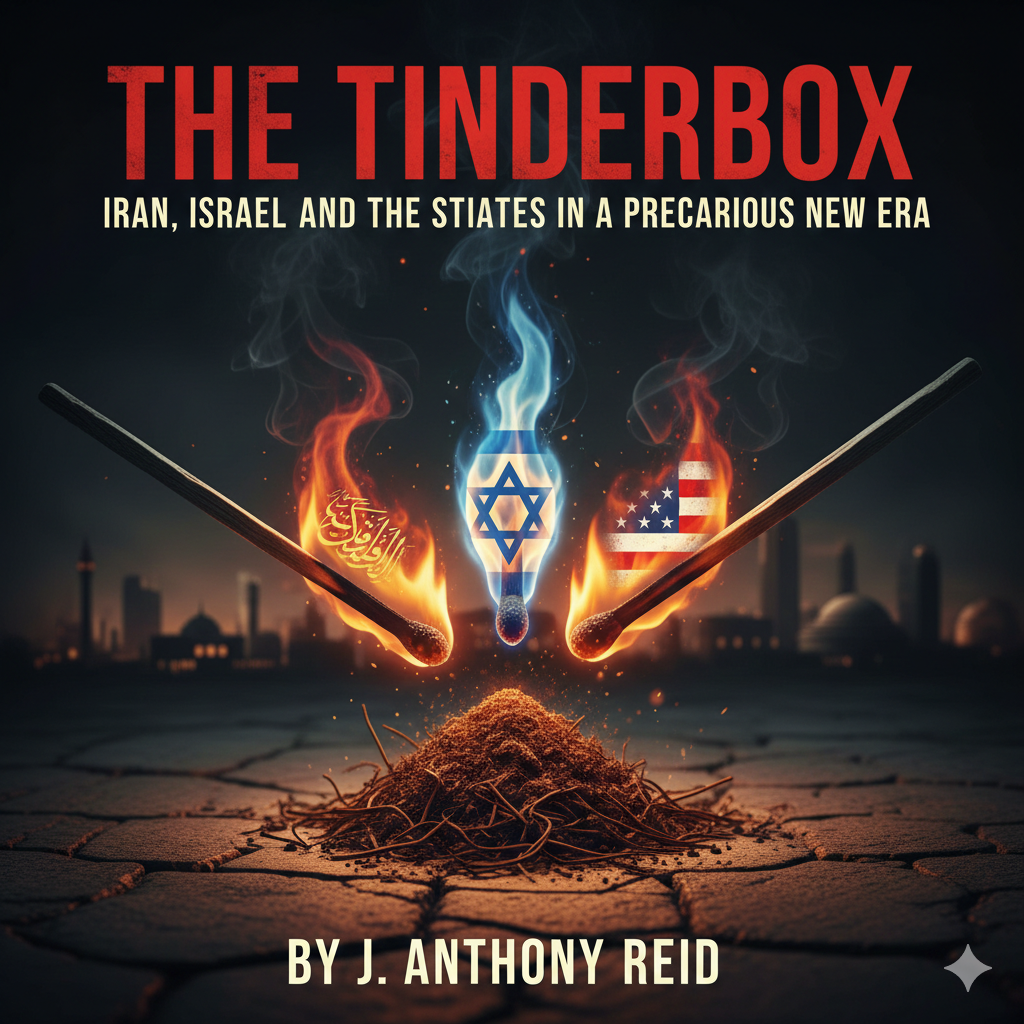
The strategic triangle of Iran, Israel, and the United States represents the world’s most volatile and consequential geopolitical fault line. This is no longer a simple story of an American-Israeli alliance against an isolated Islamic Republic. Instead, the landscape has been fundamentally reshaped by a series of dramatic shifts: a stalled nuclear deal, a devastating war in Gaza, and a complex shadow war that has burst into the open. Today, the relationship between these three powers sits on a knife’s edge, where miscalculation, rather than grand strategy, threatens to trigger a regional conflagration.
Iran: The “Axis of Resistance” Architect Under Pressure
The Islamic Republic of Iran approaches this moment from a position of both perceived strength and profound vulnerability. Its overarching strategy for decades has been to project power and secure its revolutionary regime by building and supporting a network of proxies—the “Axis of Resistance”—across the Middle East. This includes Hezbollah in Lebanon, the Houthis in Yemen, and Shia militias in Iraq and Syria. This strategy is designed to create deterrence, encircle rivals like Israel and Saudi Arabia, and ensure Iran can exert influence without direct confrontation.
Today, this strategy is being stress-tested as never before. The October 7th Hamas attack on Israel and the subsequent war in Gaza placed Iran’s network at the center of the conflict. While Iran denied direct operational involvement, its political and material support for Hamas is undeniable. The ensuing crisis has forced Tehran to calibrate a dangerous response. On one hand, it seeks to demonstrate leadership of the “Resistance” and maintain credibility by having its proxies attack US and Israeli interests. The Houthi attacks on Red Sea shipping and Hezbollah’s daily skirmishes on Israel’s northern border are manifestations of this.
On the other hand, Iran is desperate to avoid a full-scale war with either the US or Israel, which could threaten the regime’s survival. Its leadership is contending with severe domestic economic woes, persistent popular discontent, and a presidential transition following the death of Ebrahim Raisi. The result is a high-wire act: escalating through proxies to signal resolve and inflict cost, while using backchannels to communicate its desire to avoid a direct clash. Iran’s nuclear program continues to advance, with experts warning it is closer than ever to weaponization capability, providing it with the ultimate deterrent card but also raising the stakes of any Israeli or American military action.
Israel: A Nation Under Siege, Forced to Rethink Security
For Israel, the events since October 7th have constituted a strategic and psychological earthquake. The core security doctrine of deterrence and technological superiority, exemplified by the Iron Dome and the high-tech barrier around Gaza, was catastrophically breached. The government of Benjamin Netanyahu is thus operating under dual, often contradictory, imperatives.
The first is the military campaign in Gaza, aimed at dismantling Hamas’s governing and military capabilities—a goal that remains elusive and mired in a horrific humanitarian crisis. The second, and now more immediate, imperative is managing a multifront conflict ignited by the Gaza war. Israel is engaged in daily, escalating exchanges of fire with Hezbollah, its most formidable adversary, risking a devastating war that could dwarf the Gaza conflict. It has struck Iranian assets in Syria more brazenly and is believed responsible for assassinations of Iranian commanders. Domestically, Netanyahu presides over a fractured wartime cabinet, a mobilized but anxious population, and a powerful protest movement that has only paused, not ended, its opposition to his government.
Israel’s traditional strategy of “the campaign between the wars”—limited, covert strikes to degrade enemy capabilities—appears to be collapsing into a more overt and expansive confrontation. The Israeli calculus is now dominated by the question of whether a broader war with Iran and Hezbollah is inevitable, and if so, whether it is preferable to initiate it on Israel’s terms. This hawkish stance is tempered by the knowledge that such a war would be extraordinarily costly and would occur without the assured, unconditional backing of its most critical ally.
The United States: The Reluctant Arbiter in an Election Year
The United States finds itself in the unenviable role of trying to prevent a regional war while being a primary combatant in many of the ongoing skirmishes. President Joe Biden’s administration entered office hoping to de-escalate tensions, revive the Iran nuclear deal (JCPOA), and pivot focus to Asia. Every pillar of that hope has crumbled.
Today, US policy is a study in contradictions and immense pressure. Militarily, it is deeply engaged: leading a coalition to counter Houthi attacks in the Red Sea, striking Iran-backed militias in Iraq and Syria, and reaffirming “ironclad” support for Israel with emergency weapons shipments. Diplomatically, it is straining to restrain its closest ally, openly criticizing Israel’s conduct in Gaza and pushing for a ceasefire and humanitarian aid, while simultaneously vetoing UN resolutions calling for an unconditional end to hostilities.
This balancing act is being pulled apart by domestic politics. In an election year, Biden faces intense pressure from progressive elements of his party appalled by the Gaza war’s toll and from a Republican opposition that demands even more unflinching support for Israel and more aggressive strikes on Iran. The administration’s core objective is starkly simple but enormously complex: prevent the Gaza war from exploding into a regional war that could draw in US troops and spike global energy prices. It seeks to deter Iran and reassure Israel, while simultaneously restraining Netanyahu. This has led to a policy of forceful but limited retaliation—enough to signal resolve, but calibrated to avoid crossing Iran’s threshold for full-scale war.
The New and Dangerous Calculus of Deterrence
The greatest danger in this triangle is the erosion of clear “red lines” and the rise of a deadly cycle of action and reaction. The old rules of engagement are gone.
- The Shadow War Goes Public: Covert assassinations, cyber-attacks, and strikes on proxy assets were once the norm. Now, attacks are direct, overt, and claimed by the actors involved. Israel’s strike on an Iranian diplomatic compound in Damascus was a profound escalation, directly challenging Iran’s sovereignty. Iran’s unprecedented direct missile and drone attack on Israeli territory in April shattered a decades-long precedent of avoiding direct strikes.
- The Miscalculation Trap: With so many fronts active—Gaza, Lebanon, the Red Sea, Syria, Iraq—the risk of a single strike going awry and triggering an uncontrollable escalation is terrifyingly high. An errant missile that causes mass casualties, a successful Hezbollah strike on a critical Israeli infrastructure site, or a US soldier killed in Iraq could force a leader into a response they had hoped to avoid.
- The Alliance Stress Test: The US-Israel relationship is undergoing its most public strain in decades. Disagreements over Gaza strategy, settlements, and Palestinian statehood are no longer private. For the first time, significant portions of the American public and political establishment are questioning the nature of unconditional support. For Iran, watching this friction is both an opportunity and a risk—it may embolden its actions, but could also misjudge American resolve.
Conclusion: On the Brink of the Unknown
The Middle East is trapped in a security paradox. Each action taken by Iran, Israel, or the United States to enhance its own security—whether developing nuclear latency, launching preemptive strikes, or bolstering military presence—decreases the security of the others, driving the cycle of escalation. Diplomatic channels are starved of oxygen, replaced by the language of drones and missiles.
The path away from the brink is narrow and fraught. It requires a ceasefire in Gaza that holds, which would deprive Iran’s network of its primary rallying cry. It requires secret, robust communication channels between Washington and Tehran to manage crises. And it requires a fundamental, post-October 7th re-evaluation of long-term strategy in Washington and Jerusalem regarding Iran and the Palestinian question.
Today, however, the momentum is pointed toward conflict, not de-escalation. The triad of Iran, Israel, and the United States is locked in a dance where all parties believe they are acting defensively, yet are collectively marching toward a war that none claim to want but all are preparing to fight. In this tinderbox, the next spark is not a matter of if, but when and where—and whether the mechanisms to contain it have already been irreparably broken.