

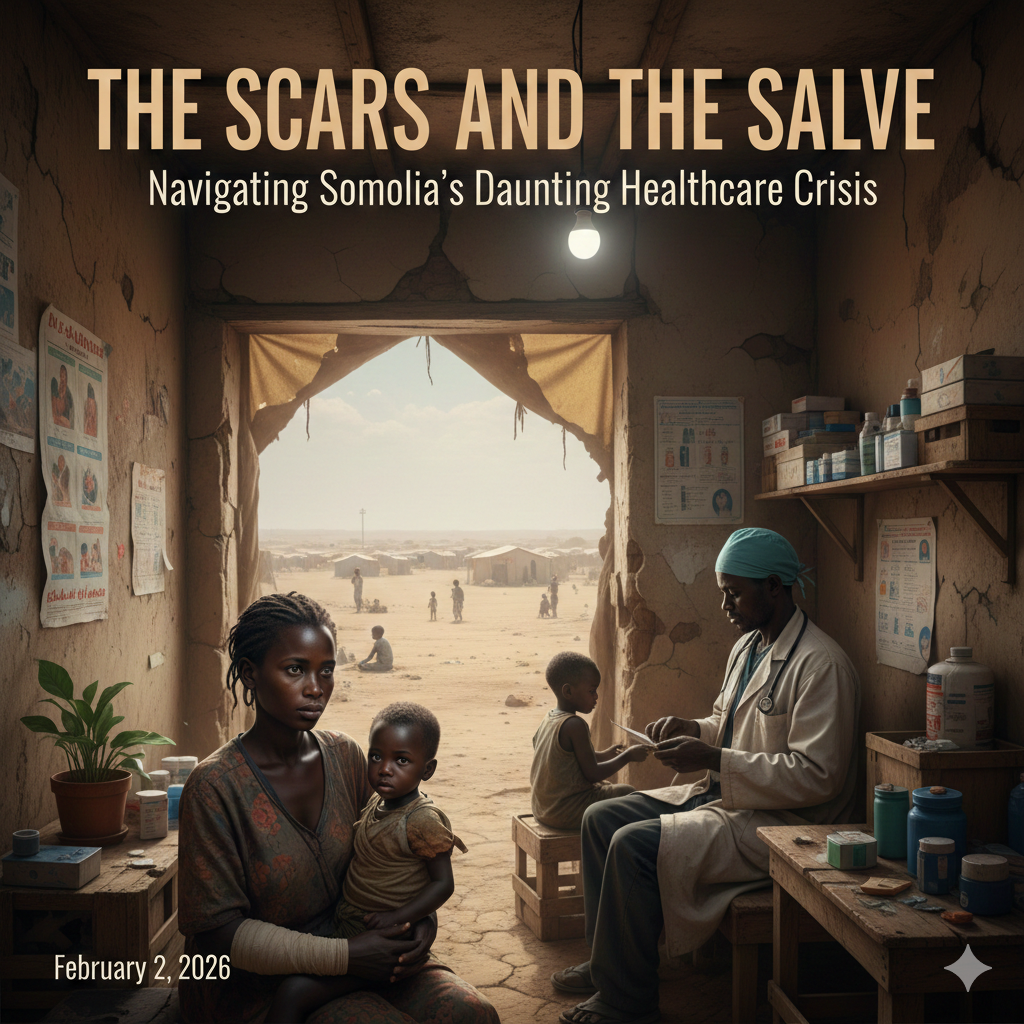
MOGADISHU, Somalia — The narrative of health in Somalia is one of the most challenging on the global stage, a profound story of human resilience in the face of a seemingly endless convergence of crises. It is a landscape where the lines between humanitarian emergency and chronic systemic failure are perpetually blurred. Decades of conflict, political instability, and climatic shocks have shattered infrastructure, scattered the professional class, and left the population exceptionally vulnerable. Today, Somalia’s health system exists in a state of fragile dependency, a patchwork of heroic efforts by local communities, NGOs, and international agencies struggling to hold back a tide of disease, malnutrition, and preventable death.
A System Built on External Support, Not Sovereignty
To speak of a formal, unified Somali “health system” is somewhat misleading. What exists is a fragmented network, heavily reliant on international humanitarian organizations and donor funding. The public sector is weak and under-resourced, with the Federal Government of Somalia (FGS) and Federal Member States (FMS) often lacking the capacity to deliver services beyond major urban centers. Salaries for public health workers are irregular, facilities are dilapidated, and supply chains for essential medicines are broken.
This vacuum has been filled by a vast ecosystem of non-governmental organizations (NGOs) and UN agencies like WHO, UNICEF, and the World Food Programme. They operate the majority of functional health facilities, manage vaccination campaigns, provide nutritional support, and respond to disease outbreaks. While this support is lifesaving, it creates a paradigm of dependency, with services vulnerable to the ebbs and flows of global funding priorities and humanitarian access negotiations with armed groups. The dream of a sovereign, self-sustaining Somali health service remains distant.
The Triple Burden: Infectious Disease, Malnutrition, and a Rising NCD Threat
The Somali population endures a crushing “triple burden” of disease:
- The Relentless Toll of Infectious Diseases: Preventable and treatable communicable diseases remain the leading causes of sickness and death. Recurrent outbreaks of acute watery diarrhea (AWD)/cholera and measles are fueled by pervasive lack of access to clean water and sanitation, with only 52% of the population having a basic water supply. Malaria is endemic, and vaccine-preventable diseases like polio have resurged due to gaps in immunization coverage. Tuberculosis and HIV/AIDS, while less prevalent than in other parts of Africa, are compounded by weak diagnostic and treatment systems. The COVID-19 pandemic, while not causing the catastrophic mortality initially feared, further exposed the system’s fragility.
- The Silent Emergency of Malnutrition: Malnutrition is not merely a health issue; it is a chronic national emergency. Driven by consecutive failed rainy seasons, drought, displacement, and economic hardship, acute malnutrition rates among children under five consistently exceed emergency thresholds. Over 1.5 million children are projected to be acutely malnourished, with hundreds of thousands suffering from its severe, life-threatening form. This malnutrition is cyclical: a malnourished child is far more susceptible to infectious diseases like diarrhea and measles, which in turn worsen their nutritional status, creating a deadly vortex. It also stunts cognitive and physical development, mortgaging the country’s future.
- The Emerging Shadow of Non-Communicable Diseases (NCDs): Beneath the acute crises, a slower-moving threat is emerging. Conditions like diabetes, hypertension, cardiovascular diseases, and cancers are increasingly diagnosed. A shift towards more processed foods in urban areas, tobacco use, and the immense psychological stress of protracted trauma are contributors. The health system, designed and funded for emergency response, is utterly ill-equipped to manage these chronic conditions, which require consistent medication, follow-up care, and lifestyle management—all scarce commodities.
Maternal and Child Health: A Perilous Journey
The statistics for maternal and child health are among the world’s most dire, painting a stark picture of the risks Somali women and children face.
- Maternal Mortality: A Somali woman’s lifetime risk of dying in pregnancy or childbirth is 1 in 17. This staggering figure is a result of limited access to skilled birth attendants (only one in three births is attended), a lack of emergency obstetric care, high rates of female genital mutilation (FGM) which complicate childbirth, and cultural barriers to seeking care.
- Child Mortality: Approximately one in eight children dies before their fifth birthday. The leading killers are pneumonia, diarrhea, and measles, exacerbated by malnutrition. Low immunization coverage leaves vast swathes of children unprotected.
Mental Health: The Invisible Wounds of Conflict
Perhaps the most under-addressed dimension of Somali health is mental health. A population that has endured over 30 years of war, displacement, loss, and uncertainty carries profound psychological scars. Rates of depression, anxiety, and post-traumatic stress disorder (PTSD) are extraordinarily high. Yet, mental health services are scarce, stigmatized, and severely underfunded. The trauma is intergenerational, affecting community cohesion and the very social fabric needed for recovery.
Beacons of Hope and Resilience
Despite the overwhelming challenges, there are points of light and innovation driven by Somali ingenuity and adaptation.
- The Private Sector & Telemedicine: In major cities, a burgeoning private healthcare sector caters to those who can pay. More innovatively, telemedicine has taken root. Somali doctors in the diaspora, along with local physicians, are using platforms like WhatsApp and dedicated apps to consult with patients in remote areas, providing critical guidance where no physical doctor exists.
- Community Health Workers (CHWs): The unsung heroes of the system are networks of CHWs. These local volunteers, often women, are trained to provide basic health education, screen for malnutrition, refer acute cases, and administer simple treatments. They are the vital bridge between isolated communities and any form of formal healthcare.
- Diaspora Engagement: The Somali diaspora is a crucial lifeline, remitting not only funds to families for health expenses but also contributing professional expertise. Diaspora doctors and nurses often volunteer in home country clinics, and their advocacy keeps Somalia’s health crisis on the international agenda.
The Path Forward: From Crisis Response to System Building
Addressing Somalia’s health catastrophe requires a fundamental shift in approach, however difficult:
- Invest in the Foundations: Sustainable health is impossible without Water, Sanitation, and Hygiene (WASH). Long-term investment in water infrastructure and sanitation is a health priority.
- Shift from Relief to Development: Donors and the government must work towards a transitional health financing model that gradually builds public sector capacity, supports the training and regular payment of Somali health workers, and establishes reliable medical supply chains.
- Integrate Services: Moving towards integrated health facilities that can manage acute malnutrition alongside routine immunization, antenatal care, and basic NCD screening would provide more comprehensive care.
- Prioritize Mental Health: Mainstreaming basic psychosocial support into primary healthcare and community programs is essential to heal the nation’s invisible wounds.
- Harness Local Capacity: Strengthening and officially recognizing the role of Community Health Workers and local NGOs builds a more resilient, locally-owned system.
Conclusion: A Test of Global Conscience and Somali Determination
Health in Somalia today is a barometer of human suffering and a test of the international community’s commitment to the most fundamental of human rights: the right to health. It is a story not of a single disease, but of a perfect storm where conflict, climate change, and poverty conspire against well-being. The Somali people have shown immense fortitude, but resilience alone cannot mend a broken system.
The path forward demands a dual commitment: sustained and smartly targeted international solidarity that moves beyond short-term aid, coupled with determined Somali leadership to prioritize health as a cornerstone of national rebuilding. Until then, for millions of Somalis, health remains a precarious hope, not a guaranteed right—a daily struggle for survival in one of the world’s most fragile environments.
