

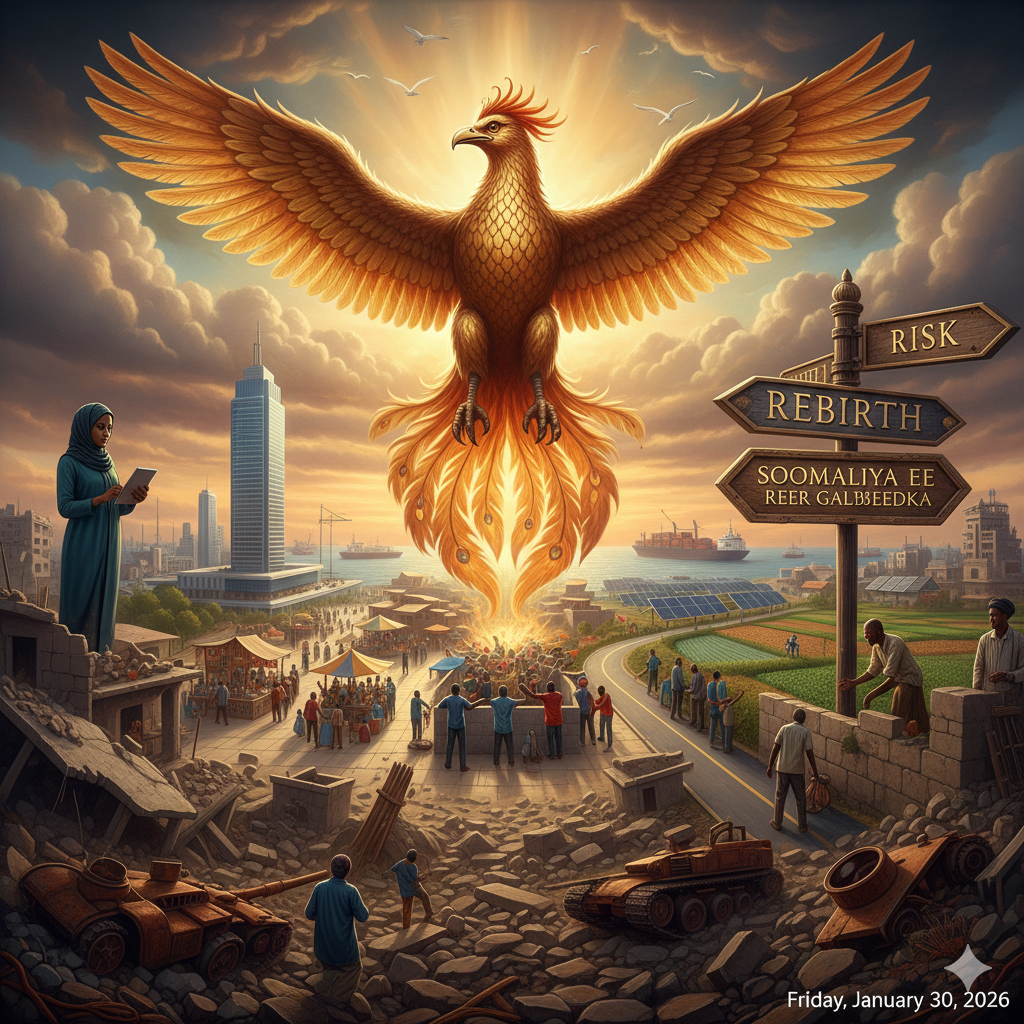
In the bustling markets of Bakara in Mogadishu, the shimmering new glass fronts of telecom offices in Hargeisa, and the bustling port of Bosaso, a complex and defiant narrative of commerce is being written. Somalia, synonymous for three decades with state collapse, famine, and piracy, is witnessing the slow, gritty, and extraordinary rise of a post-conflict private sector. Somali business today is a story of phenomenal resilience operating within a vacuum of formal governance, a testament to a mercantile spirit that has not only survived chaos but has begun to lay the foundations for a functional economy. It is an ecosystem defined by high-risk arbitrage, diaspora-fueled investment, digital leapfrogging, and the constant navigation of insecurity.
The Engines of the Somali Economy: Informal, Adaptive, and Globalized
Somalia’s economy is not found in ministry reports or stock exchanges, but in the dynamic flow of goods, services, and remittances that connect the Horn of Africa to the world.
- The Lifeline of Remittances (Hawala): The single most important economic engine is the $2 billion annual inflow of remittances from the vast Somali diaspora. This capital, transferred through a trusted, centuries-old hawala network, funds consumption, seeds small businesses, and provides the critical social safety net the state cannot. Hawala dealers are the country’s de facto bankers, providing not just transfers but also credit and currency exchange, forming the bedrock of financial activity with unparalleled efficiency and trust.
- Telecoms: The Unlikely Success Story: In the absence of a government, Somali entrepreneurs built one of Africa’s most competitive and innovative telecom sectors. Companies like Hormuud Telecom (Mogadishu), Telesom (Hargeisa), and Golis (Puntland) emerged not just as utility providers but as pillars of the economy. They pioneered mobile money services like EvcPlus and Zaad years before they became common in more stable neighbors. In a country with no formal banking system for most, these platforms became essential for everything from paying salaries to settling bills, driving a quiet financial revolution.
- Trade and Logistics: Masters of the Arbitrage: Somalia has always been a trading nation. Today, its business class excels at opportunistic import-export. Ports in Mogadishu, Bosaso, and Berbera (Somaliland) are gateways for everything from construction materials and electronics to sugar, rice, and the narcotic leaf khat. Businesses thrive on identifying price disparities, navigating complex customs (official and unofficial), and delivering goods to markets hungry for products. This trade is high-risk—subject to piracy, al-Shabaab taxation, and clan-based checkpoint fees—but the potential profits are equally high.
- The Diaspora as Developers and Investors: The Somali diaspora is not just a source of remittances; it is the primary source of foreign direct investment. Returning entrepreneurs and those investing from abroad are rebuilding the country’s physical infrastructure. They finance and construct hotels, apartment blocks, universities, and hospitals. This investment is driven by both profit and patriotism, a desire to literally rebuild the homeland. Their capital is cautious, targeted, and often hinges on personal clan connections for security and enforcement.
The Fragile Foundations: Operating in an Institutional Vacuum
Doing business in Somalia means operating in an environment where the rules are ambiguous, contested, and enforced through non-state means.
- The Security Premium: The overarching cost of business is security. Companies must budget for private armed guards, negotiate access with local clan authorities, and, in some areas, pay indirect “taxes” to al-Shabaab to ensure their trucks are not attacked. This “security tax” inflates costs for everyone and deters larger-scale, long-term industrial investments.
- Clan as the Ultimate Contract Enforcer: In the absence of a reliable judiciary, the clan system (qabil) remains the foundational institution for contract enforcement and dispute resolution. Business partnerships are often structured along clan lines to ensure trust and recourse. A breach of contract becomes a clan issue, with elders mediating. This system provides a crucial layer of predictability but also limits the pool of potential partners and can entrench exclusion.
- The Challenge of “Somaliland” vs. “Somalia”: The business environment differs starkly between the self-declared Republic of Somaliland and the Federal Government of Somalia (FGS) territories. Hargeisa offers relative stability, clearer (if still developing) regulations, and is attracting significant diaspora investment and even international logistics interest (e.g., DP World’s management of Berbera port). Mogadishu offers a larger market and the seat of government, but is mired in higher security risks and political volatility. Businesses often have to strategize for these as two separate, interconnected markets.
Sectors of Growth and Constraint
- Construction and Real Estate: Perhaps the most visible sign of progress. Fueled by diaspora investment and a growing urban middle class, skylines in major cities are dotted with cranes. This sector is a direct bet on a more stable future.
- Financial Technology (Hawala 2.0): The fusion of traditional hawala with mobile money is creating a powerful, homegrown fintech ecosystem. The next step—integrating these systems with a nascent formal banking sector and eventually, a national payments system—holds transformative potential.
- Livestock and Agriculture: The Untapped Potential: Somalia is a natural livestock exporter, sending millions of sheep, goats, and camels to the Gulf. However, the sector remains constrained by lack of modern abattoirs, veterinary services, and recognized quality standards. Similarly, agricultural revival in the fertile riverine regions of the south is hampered by insecurity and lack of irrigation infrastructure. The potential for agribusiness is colossal but remains largely untapped.
- The Shadow of Illicit Trade: The very instability that hampers formal business enables illicit economies. The illegal charcoal trade, financed by al-Shabaab, devastates the environment. Piracy may have declined, but illegal, unregulated, and unreported (IUU) fishing by foreign trawlers plunders Somali waters, costing the nation billions in lost revenue and harming coastal livelihoods.
The Path Forward: Formalization, Finance, and Faith
For Somalia’s phoenix economy to truly rise from the ashes, a difficult transition is needed.
- From Informal to Formal: The government’s greatest service to business would be to provide public goods: not just security, but a transparent legal framework for contracts, a functioning commercial court, and a credible central bank that can issue a stable currency. The ongoing struggle to secure debt relief and normalize relations with international financial institutions is critical to this process.
- Unlocking Institutional Finance: The business sector is starved of credit. Moving diaspora capital from real estate and trade into productive manufacturing and industry requires the development of accessible lending instruments. This hinges on building a formal banking sector that can assess risk beyond clan affiliation.
- Harnessing the Digital Bridge: Somalia’s high mobile penetration and innovative fintech sector provide a unique platform to leapfrog legacy systems. Digital IDs, property registries, and tax collection could be built on mobile platforms, increasing transparency and formalization faster than in many more established economies.
Conclusion: Capitalism in the Shadow of Chaos
Somalia’s business landscape today is a powerful rebuttal to the notion that commerce requires perfect order. It is a case study in extreme entrepreneurial adaptation, where business has evolved to fill the voids left by a failed state. The result is a vibrant, innovative, and globally connected mercantile economy that provides livelihoods and a semblance of normalcy against staggering odds.
Yet, this resilience has its limits. For the economy to mature beyond arbitrage and trade into job-creating industry and inclusive growth, the political settlement must evolve. The future of Somali business depends on a gradual, painful convergence between the dynamic, informal private sector and a nascent state struggling to provide the framework for its sustainable growth. The Somali entrepreneur has proven they can build amidst chaos. The question now is whether the environment will allow them to build for the future.
