

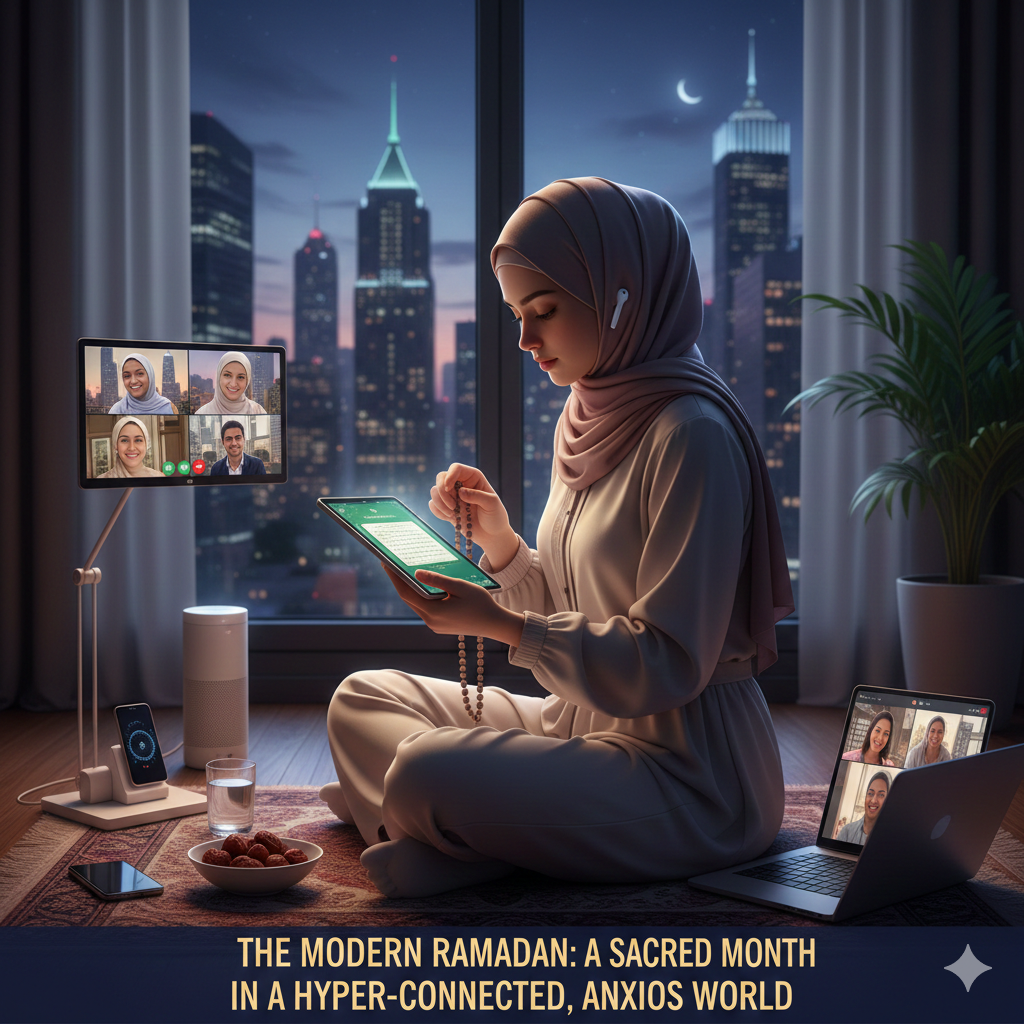
MECCA, SAUDI ARABIA – As the crescent moon is sighted and the call to prayer echoes across Muslim communities worldwide, the holy month of Ramadan begins. It is a time of profound spiritual reflection, communal solidarity, and physical discipline observed by nearly two billion Muslims. Yet, the Ramadan of today is not the Ramadan of a generation ago. It is a sacred tradition navigating the powerful currents of the 21st century—digital saturation, geopolitical strife, economic precarity, and a globalized consciousness that brings both connection and anxiety into the heart of worship. How is this pillar of Islam being practiced, experienced, and reimagined in the modern age?
The Unchanging Core: Fasting, Faith, and Community
At its essence, Ramadan remains unchanged. From dawn until sunset, Muslims abstain from food, drink, and other physical needs, focusing instead on prayer (salah), recitation of the Quran, charity (zakat and sadaqah), and self-purification. The fast (sawm) is a deeply personal act of submission to God, a means to cultivate taqwa (God-consciousness), empathy for the less fortunate, and mastery over one’s desires.
The communal heartbeat of the month is the Tarawih prayer, performed nightly in mosques. The act of breaking the fast together, the Iftar, remains a powerful social glue. Families gather, mosques host community meals, and the sense of shared sacrifice and celebration strengthens bonds of kinship and faith. The quest for Laylat al-Qadr (the Night of Power), believed to be holier than a thousand months, still drives nights of intense devotion in the final ten days.
The Digital Transformation: From Virtual Mosques to E-Zakat
The most visible modern evolution of Ramadan is its digital immersion.
- Virtual Congregations & Online Guidance: Livestreamed prayers from the Grand Mosque in Mecca and the Prophet’s Mosque in Medina allow global participation in real-time. Scholars and imams offer nightly sermons, Quranic reflections, and Q&A sessions via YouTube, Instagram Live, and dedicated apps, creating virtual communities for isolated Muslims, new converts, or those without access to a physical mosque.
- The App-Enabled Fasting: A suite of apps like Muslim Pro, Athan, and Ramadan Legacy provide precise prayer and fasting timetables based on location, Quran reading plans with translations and recitations, digital charity trackers, and daily devotional reminders. The zakah calculator, once a complex manual task, is now a simple app feature.
- Social Media and the “Ramadan Aesthetic”: Platforms like Instagram and TikTok are flooded with #Ramadan content. This ranges from beautiful calligraphy and recipes to fashion (modestwear for Eid) and “Ramadan morning/night routine” vlogs. While this fosters a sense of global Muslim identity and creativity, it also sparks debate about commercialization, performativity, and the pressure to present a picture-perfect Ramadan, potentially obscuring the month’s spiritual core.
- Digital Charity Revolution: Online fundraising campaigns for humanitarian crises in Gaza, Sudan, and Yemen see a massive surge during Ramadan. Platforms like LaunchGood and Islamic Relief USA make giving instant and trackable, channeling the heightened charitable impulse of the month directly to global causes with unprecedented efficiency.
Ramadan Under Pressure: Fasting in a Fractured World
For many Muslims today, Ramadan is observed under the shadow of immense hardship, reshaping its practice and meaning.
- Fasting in Conflict Zones: For Muslims in Gaza, Syria, Yemen, and parts of Sudan, Ramadan is a trial of survival. Fasting is compounded by famine, siege, and bombardment. The sound of iftar explosions replaces the call to prayer. Community iftars, if they happen at all, are shared over meager rations in shelters. In these contexts, Ramadan becomes an even more potent symbol of faith and resilience amidst devastation, a defiant act of worship when all else is stripped away.
- Economic Strain and Inflation: From Cairo to Karachi, soaring food prices have turned the festive iftar and suhoor (pre-dawn meal) into a source of stress. The tradition of generosity is strained when families can barely feed themselves. In response, community-organized iftar tents and subsidized food baskets become more critical than ever, embodying the Ramadan ethic of mutual aid in the face of economic crisis.
- Muslim Minorities and Identity: In Western societies and places where Muslims are minorities, Ramadan involves balancing religious obligations with secular work and school schedules. This demands negotiation for prayer breaks and understanding from employers and institutions. It also becomes a powerful month of da’wah (invitation to Islam), as open iftar events invite non-Muslim neighbors to share in the tradition, fostering interfaith dialogue and demystifying Islamic practice.
Health, Wellness, and the “Productive Fast”
A modern discourse around the health and productivity benefits of fasting has gained prominence, intersecting with traditional practice.
- The Science of Intermittent Fasting: The global popularity of intermittent fasting regimes has led to increased non-Muslim interest in the mechanics of Ramadan fasting. Medical studies on its potential benefits for metabolic health, detoxification, and mental clarity are widely circulated within Muslim communities, often blending spiritual and scientific justifications for the fast.
- Mindful Consumption: A counter-movement to the lavish iftar buffets encourages a mindful, healthy approach to eating—opting for nourishing, hydrating foods at suhoor and breaking the fast with dates and water followed by balanced meals. This reflects a broader global trend towards wellness and intentional living.
- The Challenge of Lifestyle: In hyper-competitive, 24/7 urban economies, maintaining energy levels for work, study, and family while fasting is a major concern. Time management, sleep discipline, and prioritizing tasks become essential spiritual and practical disciplines.
Commerce and Consumerism: The Ramadan Economy
Ramadan drives a massive economic spike across the Muslim world. Consumer spending surges on food, clothing, entertainment, and gifts for Eid al-Fitr. Marketing campaigns are meticulously tailored to Ramadan themes of family, generosity, and blessing. This commercial energy supports livelihoods but also raises critical questions about overconsumption and the hijacking of a spiritual month by materialism—a tension between the celebration of God’s bounty and the Prophetic warning against extravagance.
Theological Debates and Evolving Interpretations
Modernity has also spurred theological discussions:
- Moon Sighting: The age-old debate between local physical sighting and astronomical calculation has been amplified by global communication. International organizations and governments often seek unified calendars, but local communities still fiercely defend traditional methods.
- Extreme Latitude Fasting: Muslims in Scandinavian countries, where summer days can last 20+ hours, grapple with fiqh (jurisprudential) opinions that permit following the timetable of Mecca or the nearest Muslim-majority country, adapting a 7th-century practice to a 21st-century reality.
- Inclusivity: Increasing discussions focus on making Ramadan spaces more inclusive for reverts, those with less traditional family structures, and individuals with disabilities or mental health conditions that may affect their ability to fast in conventional ways.
Conclusion: An Anchor in the Current
In a world characterized by speed, noise, and fragmentation, Ramadan endures as a radical counter-rhythm. It mandates slowness, introspection, and connection. The modern challenges—digital distraction, geopolitical trauma, economic anxiety—do not diminish its power; they instead become the very conditions through which its lessons of patience, empathy, and reliance on God are learned with new depth.
The Ramadan of today is a dynamic fusion of ancient ritual and modern adaptation. It is a month where hashtags and prayer beads coexist, where a live-streamed sermon from Mecca comforts a refugee in a tent, and where the discipline of the fast becomes a quiet act of resilience against both personal and global crises. It proves that this pillar of Islam is not a relic, but a living, breathing tradition—a spiritual anchor that holds firm even as the waters of the modern world rush swiftly by. Its ultimate message remains timeless: that true nourishment comes not from the material, but from the divine; and that in the conscious embrace of temporary restraint, lasting peace and purpose are found.
