

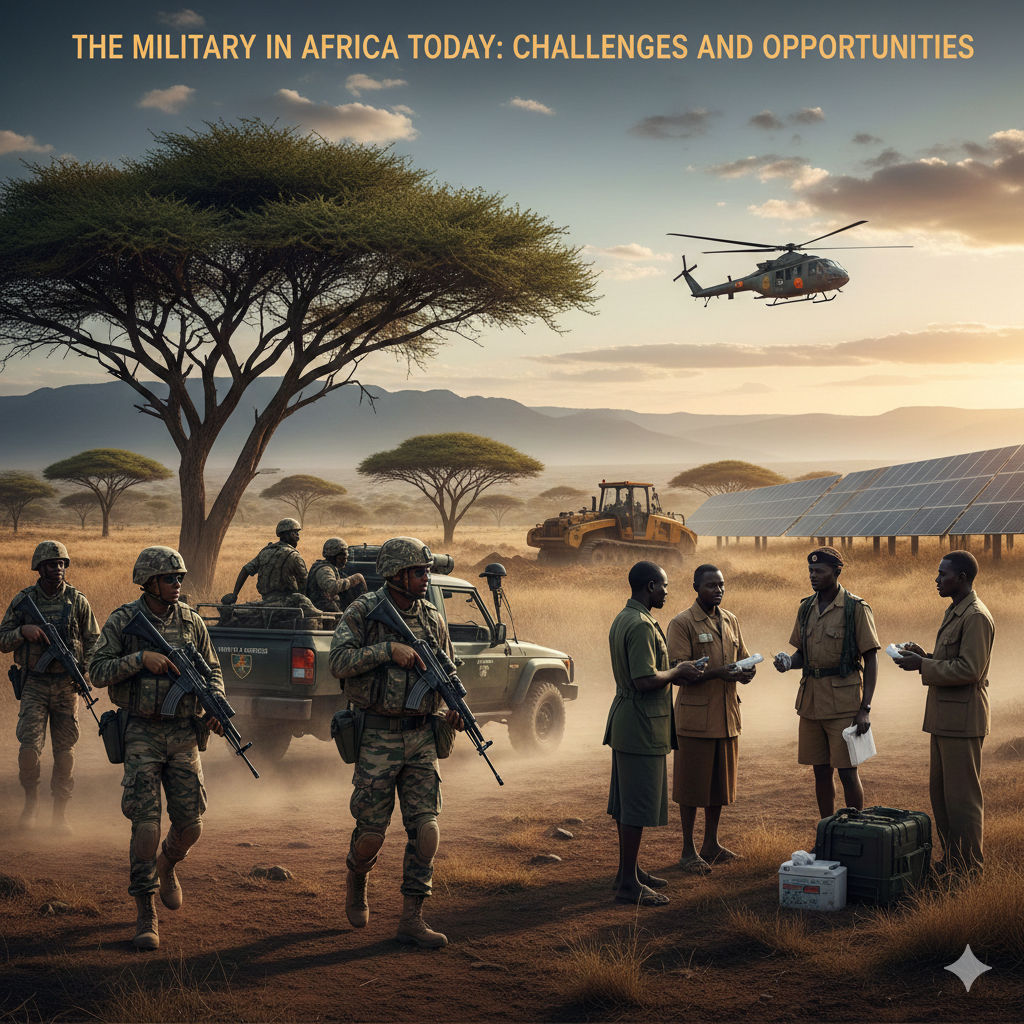
The Military in Africa Today
1. Introduction
The military in Africa today plays a vital role in shaping the continent’s political, social, and security landscape. African armed forces are responsible not only for national defense but also for maintaining internal stability, combating terrorism, and supporting peacekeeping efforts. However, their influence has also raised concerns related to governance and democracy.
2. Historical Background
The roots of military influence in Africa can be traced back to the colonial era. Many African armies were formed by colonial powers and later inherited by independent states. After independence, weak political institutions in some countries allowed the military to become a dominant force in national affairs.
3. Role in National Security
African militaries are tasked with protecting territorial integrity and defending their nations from external threats. In regions affected by border disputes or internal conflicts, the military serves as the primary institution responsible for maintaining law and order and preventing armed violence.
4. Counterterrorism Efforts
Terrorism is one of the greatest security challenges facing Africa today. Armed forces in countries such as Nigeria, Somalia, Mali, and Mozambique are actively engaged in fighting extremist groups. These operations aim to restore stability but often require long-term military commitment.
5. Peacekeeping Missions
Africa is a major contributor to international peacekeeping missions. African troops participate in United Nations and African Union operations to protect civilians and stabilize conflict zones. These missions have helped improve military professionalism and international cooperation.
6. Military Coups and Political Influence
Despite democratic progress in some regions, military coups remain a serious concern. In recent years, several African nations have experienced military takeovers. While often justified as responses to poor governance, coups undermine democratic systems and constitutional rule.
7. Civil-Military Relations
Healthy civil-military relations are essential for democracy. In many African countries, civilian control over the military is still developing. Ensuring accountability, transparency, and respect for civilian authority remains a major challenge.
8. Military Modernization
African militaries are increasingly modernizing their forces through improved training, technology, and equipment. Drone warfare, cyber defense, and advanced surveillance systems are becoming more common as governments seek to address modern security threats.
9. Foreign Military Partnerships
Many African countries rely on international partners for military training and support. Foreign involvement has helped strengthen capacities but has also raised concerns about dependency, national sovereignty, and foreign influence.
10. Human Rights Concerns
Military operations in conflict zones have sometimes led to human rights violations. Civilians are often the most affected by prolonged military engagements. Addressing these concerns requires proper training, discipline, and adherence to international law.
11. Role in Development and Disaster Response
In several African countries, the military assists in development projects and disaster response. Armed forces often provide aid during floods, droughts, and health emergencies. While this support is valuable, it should not replace civilian institutions.
12. Regional Cooperation
Regional organizations such as the African Union and ECOWAS promote collective security and discourage unconstitutional changes of government. Cooperation between African militaries is crucial in tackling cross-border threats and maintaining regional stability.
13. Conclusion
The military in Africa today remains a powerful institution with the potential to promote peace or hinder democratic progress. Strengthening civilian oversight, professional training, and regional cooperation is essential for ensuring that African militaries serve as protectors of stability, democracy, and development rather than sources of political instability.