

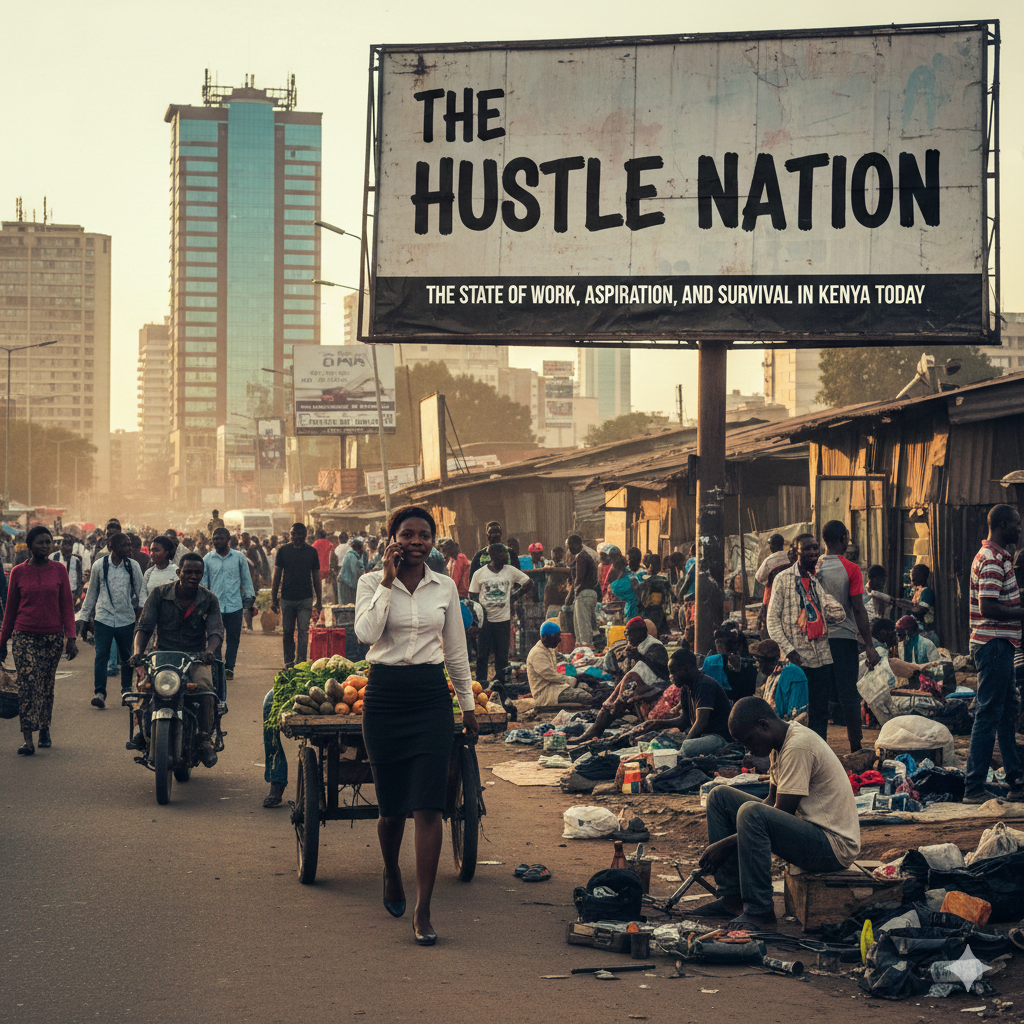
NAIROBI, Kenya – In the morning rush of Kenya’s economic engine, two parallel realities unfold. On Mombasa Road, a gridlocked stream of salaried professionals inches toward gleaming office towers in Nairobi’s Westlands. In the city’s sprawling informal settlements and rural towns, millions more embark on a different kind of commute: setting up a roadside kiosk, loading a boda boda (motorcycle taxi) for the day, or walking to a farm, shop, or construction site with no guarantee of daily pay. The story of jobs in Kenya today is a narrative of profound duality—celebrated growth in a dynamic, digital “Silicon Savannah” overshadowed by the relentless, precarious hustle of the informal economy, where the dream of stable employment remains elusive for the majority of its youthful population.
The Macro Paradox: Growth Without Transformation
Kenya boasts one of East Africa’s most diversified and technologically advanced economies. With consistent GDP growth, a booming tech scene, and ambitious infrastructure projects, it is often hailed as a continental leader. Yet, this macro-economic success has failed to generate sufficient formal, wage-paying jobs. An estimated 80% of Kenya’s workforce is engaged in the informal sector—a vast universe of micro-enterprises, casual labor, and subsistence agriculture characterized by insecurity, lack of benefits, and low productivity. Every year, nearly one million young Kenyans enter this crowded labor market, far outstripping the capacity of the formal economy to absorb them. This disconnect between economic growth and job creation is the central challenge defining work in Kenya.
The Formal Sector: A Narrow Gate of Opportunity
For the fortunate minority, Kenya’s formal job market offers pathways to a stable, middle-class life, but the competition is ferocious.
- The Public Sector: Long considered the pinnacle of job security, government employment remains highly coveted but is shrinking due to austerity measures and wage bill constraints. Jobs here are often secured through highly competitive examinations and, notoriously, through networks and patronage (“kuconnect”).
- Multinationals & Established Corporates: Blue-chip companies in finance (banks like Equity and KCB), telecommunications (Safaricom), and large manufacturing offer competitive salaries, benefits, and clear career ladders. These positions demand top-tier academic credentials, often from specific universities, and polished professional skills.
- The NGO & Development Sector: A significant employer for the educated elite, this sector offers respectable salaries aligned with international standards. However, it is highly reliant on donor funding cycles, leading to project-based contracts rather than permanent roles.
- The Digital & Tech “Ecosystem”: This is the new frontier of aspiration. Nairobi’s “Silicon Savannah” has created a generation of software developers, digital marketers, and tech entrepreneurs. Success stories from companies like Twiga Foods and numerous fintech startups inspire millions. Yet, this sector, while high-profile, still employs a relatively small number of people directly, often seeking individuals with very specific, self-taught, or expensively acquired digital skills.
Entering this formal arena almost universally requires a university degree, now held by millions. This has created a cruel paradox: massive graduate unemployment. Degrees in fields like business administration or humanities often do not match market needs, leaving a generation over-qualified for the jobs available and under-qualified for the specialized roles being created.
The Kingdom of Hustle: The Informal Economy
For the vast majority, work is not about a career ladder but daily survival. Kenya’s informal economy is a testament to breathtaking resilience and ingenuity.
- Micro-Trade and Services: This is the backbone. It includes the mama mboga (vegetable vendor), the street-food seller, the kiosk owner, the tailor, and the mobile phone airtime vendor. Success hinges on tiny profit margins, personal relationships, and location.
- The Boda Boda Revolution: Motorcycle taxis have become the default transport and delivery solution for millions, employing over 1.5 million young men. It is pure hustle—long hours, high risk, and income directly tied to daily effort, with no safety net for accidents or illness.
- Artisanal and Casual Labor: This includes construction workers, mechanics, house helps (ayahs), and security guards. These jobs are typically paid daily or weekly, with no contract, no sick leave, and sudden termination.
- Agriculture: Still the largest employer overall, but predominantly subsistence or small-scale. Young people often view it as a last resort, a symbol of backbreaking toil without the promise of prosperity.
The government’s Hustler Fund, a flagship micro-credit initiative, explicitly acknowledges and attempts to financially formalize this vast sector, though its impact on creating sustainable enterprises versus providing emergency liquidity remains debated.
The Gig Economy 2.0: Digital Platform Work
A new layer has emerged between the formal and informal sectors: the digital gig economy. Platforms like Uber, Bolt, and Little (ride-hailing), Glovo and Jumia Food (delivery), and BrighterMonday and Fuzu (freelance work) offer a semblance of formality. They provide flexible income opportunities, especially for the urban and digitally literate youth.
However, this often replicates informal precarity in a digital guise. Workers are “independent contractors” with no employment benefits, face algorithmic management that can be opaque and punitive, and bear all their own costs (fuel, vehicle maintenance, phone data). Recent strikes by drivers have highlighted the fight for fairer pay and better working conditions in this “modern” work arrangement.
Key Challenges: The Barriers to Better Work
Several systemic issues stifle Kenya’s job market:
- The Skills Mismatch: The education system is not aligned with economic needs. There is a surplus of general degree holders but a critical shortage of technical skills in areas like advanced manufacturing, renewable energy installation, and specialized tech fields.
- The Cost of Doing Business: For small and medium enterprises (SMEs)—the true engine of job creation—high costs of credit, corruption, and complex regulations stifle growth and hiring.
- Gender Disparity: Women face higher unemployment rates and are overrepresented in low-paid, vulnerable informal work, hampered by cultural norms, safety concerns, and the disproportionate burden of unpaid care work.
- The Demographic Tide: With a median age of 20, Kenya’s “youth bulge” is an enormous potential asset or a staggering risk. Failure to create meaningful opportunities for this generation is a ticking social and economic time bomb.
The Path Forward: From Hustle to Sustainable Livelihoods
Addressing Kenya’s jobs crisis requires a multi-pronged, realistic strategy:
- Mindset and Education Shift: Moving from an obsession with paper credentials to a focus on competency-based education and training (CBET). Revitalizing TVET (Technical and Vocational Education and Training) institutions to produce artisans, technicians, and digitally-savvy professionals is critical.
- Unlocking SME Potential: Creating a genuinely enabling environment for small businesses through tax incentives, affordable credit, and reduced bureaucratic red tape is the most reliable path to mass job creation.
- Formalizing the Informal: Instead of stigmatizing the hustle, policies should aim to provide social protection, access to finance, and business skills to informal workers, helping them grow and become more secure.
- Harnessing Green and Digital Jobs: Proactively investing in sectors of the future, such as renewable energy, climate-smart agriculture, and the digital economy, can create new pipelines of employment.
Conclusion: Redefining the Meaning of Work
In Kenya today, a “job” is not a single concept. For some, it is a corporate career; for most, it is a daily hustle. The national ethos of “kujikaza” (to persevere) is embodied in the relentless energy of its people, from the tech founder pitching to investors to the boda boda driver navigating treacherous traffic.
The true measure of Kenya’s economic success will not be GDP figures or the number of tech unicorns, but its ability to transform the sheer, raw hustle of its people into sustainable, dignified, and productive livelihoods. The goal must be to build an economy where talent and hard work—not just connections or capital—are the primary currencies for advancement. Until then, Kenya remains a “Hustle Nation,” a place of incredible dynamism and grinding pressure, where the search for a decent day’s work is the most important job of all.
