

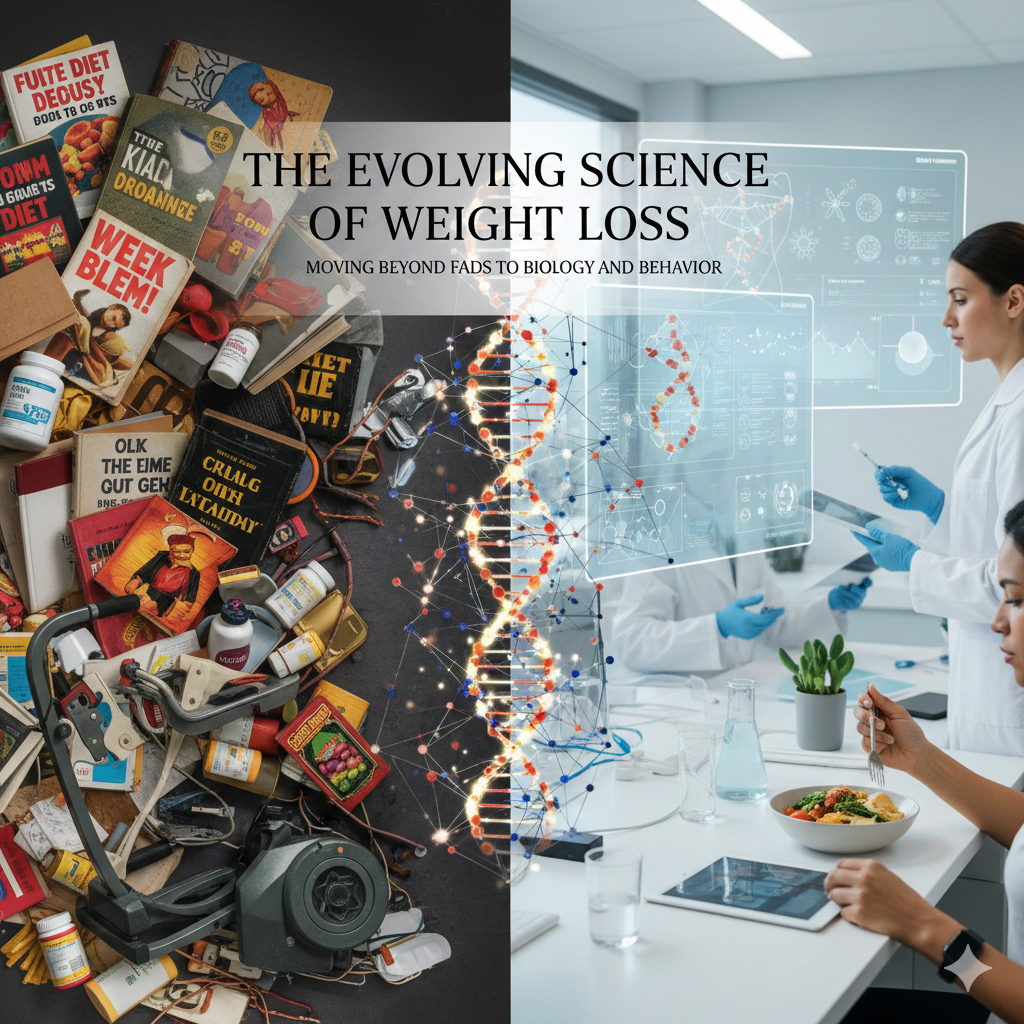
The End of the Quick-Fix Era
The landscape of weight loss in 2024 is undergoing a profound paradigm shift. Gone are the days of simplistic “calories in, calories out” mantras and the promise of one-size-fits-all miracle solutions. Today, the conversation is increasingly dominated by a more nuanced understanding of human biology, psychology, and the complex interplay of factors that govern metabolism and satiety. As obesity rates continue to climb globally, affecting over 1 billion people according to recent Lancet studies, the scientific and medical communities are pivoting toward strategies that are as individual as our fingerprints.
This new era is defined not by a single breakthrough, but by a convergence of research from neuroscience, endocrinology, gut microbiome science, and behavioral psychology. The result is a more compassionate, effective, and sustainable approach to weight management that treats the individual, not just the scale.
The Gut Microbiome: Your Internal Ecosystem
One of the most exciting frontiers is the study of the gut microbiome—the trillions of bacteria, viruses, and fungi residing in our digestive tract. We now understand this ecosystem acts as a virtual endocrine organ, influencing everything from hunger hormones to inflammation and energy extraction from food.
“Think of your gut bacteria as a diverse garden,” explains Dr. Anya Sharma, a leading researcher in nutritional psychiatry. “A diet high in processed foods, sugars, and artificial additives is like planting weeds—it encourages species that extract more calories from your food and promote inflammation. A diet rich in diverse fibers from plants (prebiotics) and fermented foods (probiotics) cultivates a garden that supports a healthy metabolism and better hunger regulation.”
Practical applications of this science are emerging. Personalized probiotic recommendations are on the horizon, but for now, the advice is universal: diversity is key. Incorporating a wide array of colorful vegetables, legumes, whole grains, and fermented items like kimchi, kefir, and yogurt can help cultivate a healthier internal terrain conducive to weight management.
The Neuroscience of Hunger: Rewiring the Reward System
For decades, willpower was considered the cornerstone of dieting. Modern neuroscience, however, reveals that hunger and cravings are complex electrochemical processes driven by powerful brain circuits. Highly palatable, ultra-processed foods—engineered with precise combinations of sugar, fat, and salt—hijack the brain’s dopamine-driven reward system in a manner similar to addictive substances.
“The brain’s primary job is to seek energy-dense food for survival. The modern food environment exploits this ancient wiring,” says Dr. Marcus Chen, a behavioral neurologist. “Weight loss isn’t just about resisting temptation; it’s about reshaping that environment and retraining neural pathways.”
Strategies grounded in this understanding include:
- Mindful Eating: Slowing down, removing distractions, and focusing on the sensory experience of food can strengthen the brain’s connection to satiety signals.
- Food Environment Engineering: Making unhealthy foods less visible and accessible at home while stocking the pantry with whole-food options reduces the cognitive load needed to make good choices.
- Understanding Cravings: Viewing cravings as transient brain waves that peak and subside, often within 20 minutes, rather than moral imperatives, can empower individuals to “ride the wave” without acting on it.
The Rise of GLP-1 Agonists and the “What Next?” Question
No discussion of contemporary weight loss is complete without addressing the pharmaceutical revolution led by GLP-1 receptor agonists like semaglutide (Wegovy, Ozempic) and tirzepatide (Zepbound, Mounjaro). These medications, initially developed for type 2 diabetes, work by mimicking gut hormones that slow stomach emptying, powerfully reduce appetite, and improve insulin sensitivity.
Their efficacy is undeniable, often leading to 15-25% reductions in body weight. However, they are tools, not cures. The critical conversation today revolves around their long-term use, access, and the essential need to pair them with lifestyle changes.
“The medication quiets the ‘food noise,’ the constant background thoughts about eating,” notes Dr. Linda Park, an obesity medicine specialist. “This creates a unique therapeutic window—a precious opportunity for patients to build sustainable habits around nutrition and exercise without being driven by intense hunger or obsession. The goal is to learn a new way of living while on the medication, not to rely on it indefinitely without addressing root behaviors.”
Concerns about cost, supply, side effects, and weight regain upon discontinuation underscore that these are powerful agents within a holistic treatment plan, not standalone magic bullets.
Personalization and Technology: The Data-Driven Self
The era of generic diet plans is fading. Advances in technology now allow for unprecedented personalization. Continuous glucose monitors (CGMs), once exclusive to diabetics, are being used by some to see their unique blood sugar responses to different foods, revealing that two people can have wildly different reactions to the same banana or bowl of oatmeal.
Wearables have evolved beyond step-counters to measure heart rate variability, sleep stages, and even skin temperature—all data points that influence metabolic health. Artificial intelligence is beginning to synthesize this data to offer personalized meal timing, food choices, and workout recommendations.
“This isn’t about biohacking for optimization’s sake,” clarifies tech-nutritionist David Cole. “It’s about giving individuals concrete, personalized feedback. Seeing a glucose spike after a ‘healthy’ granola bar can be more motivating than any generic advice. It empowers people to become experts on their own bodies.”
The Foundational Pillars: Sleep, Stress, and Movement
Amidst the high-tech advances, the core pillars of health remain irreplaceably central.
- Sleep: Chronic sleep deprivation (less than 6-7 hours per night) disrupts leptin and ghrelin, the hormones that regulate hunger and fullness, leading to increased cravings and a preference for high-calorie foods. It also increases cortisol, a stress hormone that promotes abdominal fat storage.
- Stress Management: Chronic, elevated cortisol not only drives fat storage but can create a vicious cycle of emotional eating. Integrating practices like meditation, walking in nature, or even simple breathing exercises is now considered non-negotiable in weight management protocols.
- Movement Reimagined: The focus has shifted from punitive, calorie-burning gym sessions to joyful movement and building muscle. Strength training is particularly prized for increasing basal metabolic rate (the calories burned at rest) and improving insulin sensitivity. The mantra is “build a body that burns fuel efficiently, all day long.”
A New Philosophy: Sustainable Harmony Over Punitive Restriction
The most significant change in today’s weight loss ethos is the move away from cycles of restriction and burnout toward a concept of sustainable harmony. Diets that vilify entire macronutrient groups (carbs, fats) are increasingly seen as unsustainable and physiologically unnecessary for most.
Instead, the emphasis is on:
- Food Quality: Prioritizing whole, minimally processed foods that are naturally high in fiber, protein, and water to promote satiety.
- Dietary Patterns: Adopting flexible, evidence-based frameworks like the Mediterranean diet, which is rich in plants, healthy fats, and lean proteins, rather than rigid meal plans.
- Self-Compassion: Recognizing that setbacks are part of the process. The language is shifting from “cheating” and “falling off the wagon” to “learning” and “recalibrating.”
Conclusion: The Whole-Person Approach
Weight loss in 2024 is less about finding a secret and more about integrating a symphony of evidence-based practices. It acknowledges that our bodies are complex systems influenced by genetics, hormones, microbes, psychology, and our social and physical environments.
The most successful strategies will be those that honor this complexity—combining nutritional science with behavioral support, leveraging medical advances when appropriate, and using technology for insight, all while fostering a compassionate and patient mindset. The goal is no longer just a lower number on the scale, but the cultivation of enduring health, energy, and well-being. In this new era, lasting weight management is understood not as a temporary race, but as a permanent, positive evolution in one’s relationship with food, body, and self.
