

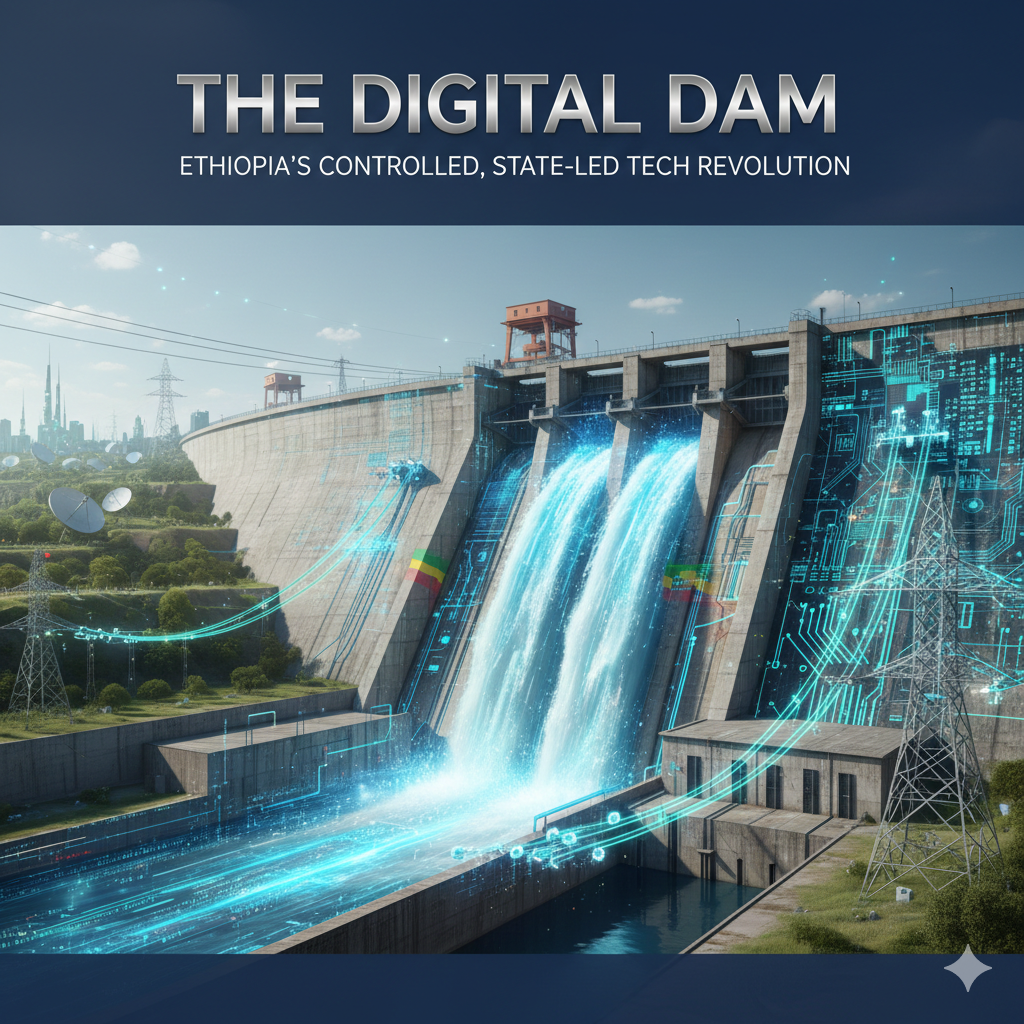
In the global imagination of technology, Ethiopia has long been defined by a paradox: a nation of ancient history and youthful potential, seemingly dammed from the digital currents shaping the rest of the continent. Today, that dam is strategically, if cautiously, being opened. Ethiopia’s technology landscape in 2024 is a state-led experiment in controlled digital transformation—a deliberate, top-down drive to modernize a vast agrarian economy, centralize services, and cultivate homegrown tech talent, all while maintaining the government’s firm grip on the commanding heights of the digital ecosystem.
The State as Architect and Gatekeeper
Unlike the organic, venture-capital-fueled tech booms of Lagos or Nairobi, Ethiopia’s digital surge is orchestrated. The guiding document is the Homegrown Economic Reform Agenda and the Digital Ethiopia 2025 Strategy, which explicitly frame technology as a lever for national development, sovereignty, and export growth. The state, through the Ethiopian Artificial Intelligence Institute and the Ministry of Innovation and Technology, is not just a regulator but the primary funder, incubator, and customer for major tech initiatives. This centralized approach ensures alignment with national goals but often sidelines the disruptive, bottom-up entrepreneurial energy seen elsewhere.
The Infrastructure Revolution: From Monopoly to (Limited) Competition
For decades, Ethiopia’s digital ambitions were bottlenecked by the state telecom monopoly, Ethio Telecom. The watershed change has been the liberalization of the telecom sector. The entry of the Safaricom-led consortium, Safaricom Telecommunications Ethiopia, has shattered the monopoly, injecting billions in investment and introducing fierce competition. The results are immediate: rapid expansion of 4G and 5G networks, plummeting data costs, and a surge in digital subscriptions. This new connectivity is the essential plumbing for every other tech aspiration, from digital payments to e-government.
Simultaneously, the government has embarked on a massive digital ID rollout—Fayda. This biometric identification system aims to register all citizens, providing a legal identity that will be the key to accessing everything from bank accounts and SIM cards to social services and voting. While a powerful tool for inclusion and efficient service delivery, it also represents an unprecedented capacity for state surveillance and social control, raising significant questions about data privacy and digital rights.
The Fintech Spark: Where Innovation Ignites
If there is one sector where Ethiopian entrepreneurial energy is visibly exploding, it is fintech. The proliferation of mobile phones, combined with a historically low banking penetration rate, has created a perfect storm for mobile money. While the ecosystem is still nascent compared to Kenya’s M-Pesa behemoth, local players like Chapa and Amole are rapidly gaining traction. The most significant catalyst, however, is M-Pesa’s official launch in Ethiopia through Safaricom. Its brand recognition and proven platform are poised to accelerate financial inclusion at a dizzying pace, forcing innovation and better services across the board.
The AI Ambition: Betting Big on the Future
In a move that distinguishes it from regional peers, Ethiopia has placed a strategic, high-stakes bet on Artificial Intelligence. The establishment of the Ethiopian Artificial Intelligence Institute is a statement of intent. Its focus is applied and nationalistic: using AI for precision agriculture to boost crop yields, for diagnostic tools in understaffed clinics, for traffic management in Addis Ababa’s notorious congestion, and for processing local languages. It is a long-term play to skip developmental steps and build sovereign capacity in what it sees as the defining technology of the century.
The Startup Ecosystem: Growth Under a Watchful Eye
Addis Ababa’s Sheger Valley and ictVillage are emerging as hubs for startups. Incubators and a small but growing pool of angel investors are supporting ventures in agritech (like delivery platform BeU Delivery), e-commerce, edtech, and healthtech. However, the ecosystem operates under unique constraints. Access to hard currency for software services (like AWS or Google Cloud) remains a bureaucratic hurdle. A stringent new Computer Crime Proclamation has created a climate of caution, with broad provisions that can be used to criminalize online dissent. Innovators must navigate a path that is both commercially viable and politically acceptable.
The Challenges: Digital Divides and Digital Walls
Ethiopia’s tech transformation is profoundly uneven. The urban-rural digital divide is a canyon. While Addis Ababa buzzes with ride-hailing apps and coffee shop coders, vast rural areas still lack reliable electricity, let alone 4G. Furthermore, the government maintains a firm hand on the digital sphere. Internet shutdowns have been used as a tool of control during times of conflict or unrest, most notably in the Tigray region. This practice, while increasingly criticized, underscores that connectivity is viewed as a privilege the state can revoke, not an immutable right. Balancing security, control, and the open exchange necessary for innovation remains a fundamental tension.
The Human Capital: A Young, Driven, but Underfed Talent Pipeline
Ethiopia’s greatest tech asset is its youth. Universities are producing thousands of computer science graduates annually. However, the gap between academic curricula and industry needs is wide. Coding bootcamps, like Gebeya and Altron, are working to fill this gap, training full-stack developers for both local and international remote work. The potential for Ethiopia to become a major exporter of tech talent is immense, but it requires sustained investment in practical, world-class education and an environment that incentivizes them to build at home.
Conclusion: A Sovereign Digital Sunrise
Technology in Ethiopia today is not a wild, disruptive force but a carefully channeled river. The state is the chief engineer, directing its flow toward national modernization, economic growth, and enhanced governance capacity. This model offers speed and scale in infrastructure rollout and strategic projects like digital ID and AI. Yet, it risks stifling the creative chaos from which breakthrough innovations often spring. The success of this grand experiment will hinge on whether the government can gradually loosen its control, allowing the innovative energy of its millions of young citizens to truly flourish alongside state projects. If it can, Ethiopia may forge a unique, sovereign path to becoming a digital powerhouse. If it cannot, its tech potential may remain, like a powerful river, dammed.
