

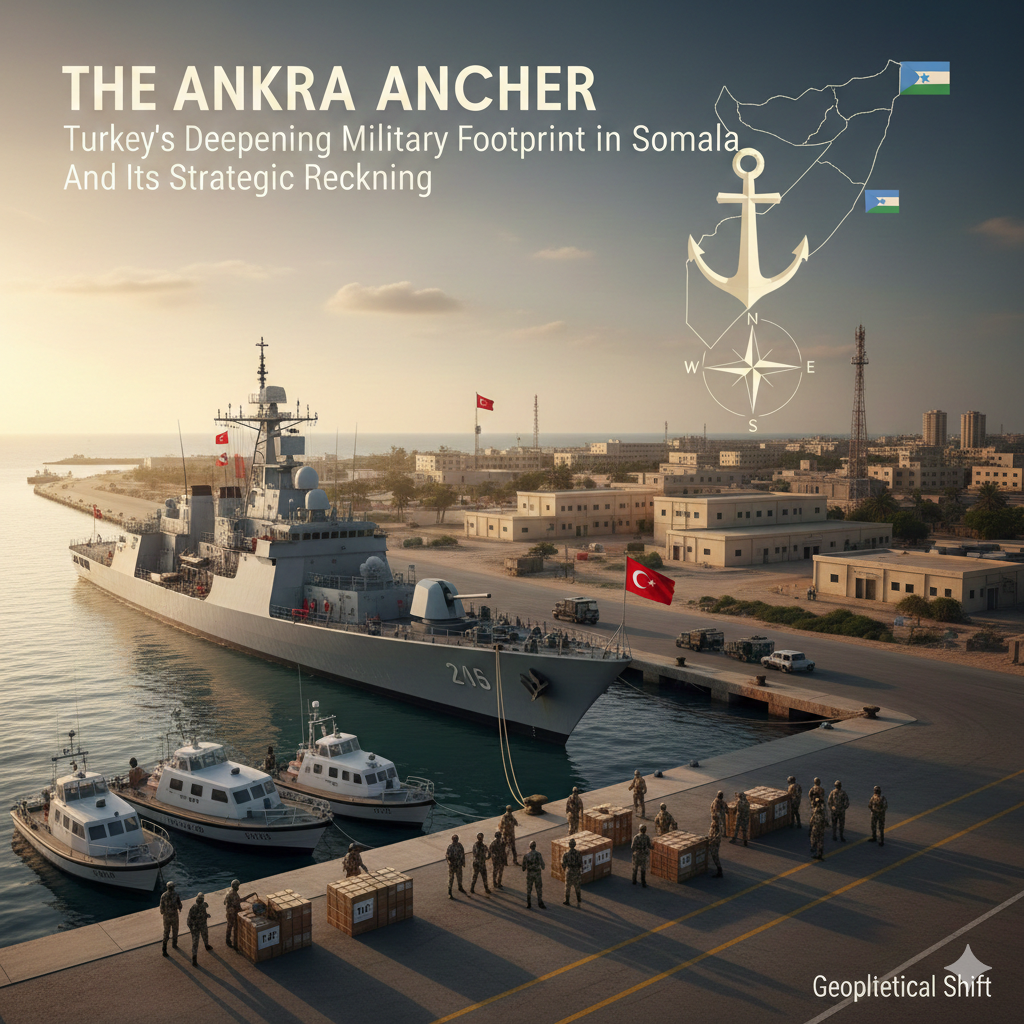
MOGADISHU, Somalia – On the sun-baked tarmac of Mogadishu’s Aden Adde International Airport, a sprawling, high-walled compound stands as a monument to a new kind of foreign engagement in the Horn of Africa. This is Turksom, Turkey’s largest overseas military base and the epicenter of an unprecedented, multi-faceted intervention that is quietly reshaping Somalia’s security landscape. While global attention fixates on the presence of African Union forces and U.S. drone operations, it is Turkey that has executed the most comprehensive, long-term, and politically astute military strategy in Somalia. This partnership, born of humanitarian outreach and solidified by hard security interests, represents Ankara’s boldest gambit for influence in Africa—a blend of soft power, hard power, and strategic patience.
From “Zero Problems” to Strategic Depth: The Genesis of a Partnership
Turkey’s entry into Somalia was not initially military. Following a devastating 2011 famine, then-Prime Minister Recep Tayyip Erdoğan’s high-profile visit—the first by a major non-African leader in years—marked a pivotal turn. While others delivered aid from afar, Turkey built hospitals, dug wells, and reopened the airport and seaport. This humanitarian surge, devoid of colonial baggage and framed within Islamic solidarity, built immense goodwill. It established Turkey as a sahab (friend), a trusted partner in a landscape of transient NGOs and wary Western governments.
From this foundation of soft power, the relationship naturally evolved into security cooperation. As Somalia’s Federal Government sought to rebuild a national army from the ashes of civil war, it turned to a partner it trusted. For Turkey, Somalia offered a proving ground for its burgeoning defense industry, a foothold in a strategic maritime corridor, and a chance to project power as a responsible Muslim-majority nation. The relationship transformed from charity to a strategic alliance, embodying Ankara’s foreign policy doctrine of seeking “strategic depth” and becoming an indispensable actor.
The Turksom Base: A University of War
The cornerstone of Turkey’s military commitment is the Turksom Military Training Base, inaugurated in 2017 at a cost of $50 million. More than a mere barracks, Turksom is a “university of war” for the Somali National Army (SNA).
- Comprehensive Training: Turkish officers run intensive courses for thousands of Somali recruits, the “Gorgor” (Eagle) Brigades. The training goes beyond basic infantry tactics to encompass engineering, counter-IED operations, and sniper skills. The curriculum is Turkish, the command language is Turkish, and the ethos is instilled by Turkish advisors. These brigades are becoming the most effective and disciplined units in the SNA, forming the core of the government’s offensive capabilities against Al-Shabaab.
- Doctrinal Influence: Turkey is not just training soldiers; it is building an army in its own image. This creates a profound and lasting dependency, ensuring decades of influence over Somalia’s most powerful institution. The bond forged in training creates loyalty not just to the Somali state, but to the Turkish partner that equipped and mentored them.
Beyond the Base: A Multi-Domain Security Partnership
Turkey’s military involvement extends far beyond the walls of Turksom, encompassing a holistic, multi-domain approach:
- Arming the Gorgor: Turkey is a primary supplier of small arms, uniforms, and military equipment to the SNA. This creates a direct pipeline from Turkish defense factories to the Somali frontline, fostering interdependence and ensuring equipment compatibility with Turkish-trained troops.
- The Naval Dimension: Recognizing Somalia’s vast coastline and vulnerability to piracy and smuggling, Turkey has donated patrol boats and trained the Somali navy. This enhances maritime security and protects critical sea lanes in the Indian Ocean, aligning with Turkey’s “Blue Homeland” doctrine that emphasizes naval power.
- The Drone War: In a game-changing development, Turkey has supplied the SNA with Bayraktar TB2 armed drones. These unmanned aerial vehicles (UAVs), famous for their efficacy in conflicts from Libya to Ukraine, provide Somali forces with persistent surveillance and precision-strike capabilities they never possessed. The drones allow the SNA to target Al-Shabaab leadership and logistics with minimal risk, altering the tactical balance. Their deployment signals Turkey’s willingness to provide cutting-edge, force-multiplying technology.
The Strategic Calculus: Why Somalia? Why Turkey?
For Somalia, Turkey is the ideal partner. Unlike Western actors burdened with stringent human rights conditionalities and risk aversion, Turkey offers a “no-questions-asked” security partnership. It is a fellow Muslim nation seen as less politically intrusive and more committed for the long haul. President Hassan Sheikh Mohamud views Turkish-trained forces as the key to executing his “total war” doctrine against Al-Shabaab, preferring them over sometimes-unreliable clan militias.
For Turkey, the investment is multifaceted:
- Testing and Marketing Arms: Somalia serves as a live-fire proving ground for Turkey’s defense exports, particularly the Bayraktar drone. Success against Al-Shabaab is a potent marketing tool across the Global South.
- Geopolitical Foothold: The base in Mogadishu solidifies Turkey’s status as an Indian Ocean power, providing a listening post on the vital Bab el-Mandeb strait and counterbalancing rivals like the UAE, Saudi Arabia, and Qatar, who also vie for influence in the Horn.
- Leadership of the Muslim World: The mission bolsters Ankara’s claim to be the champion of the Muslim world’s neglected corners, enhancing its soft power and diplomatic capital from the Organization of Islamic Cooperation to the UN.
Challenges and Inherent Risks
The partnership is not without peril:
- The Sustainability Question: Can Somalia, perpetually aid-dependent, maintain and fund a Turkish-model army? The sophisticated equipment requires continuous Turkish support for maintenance, spare parts, and advanced training.
- Blowback and Escalation: The increased effectiveness of the SNA could lead to more aggressive Al-Shabaab retaliation, including direct threats to Turkish interests. A major attack on Turkish personnel would represent a severe crisis.
- Regional Entanglement: Turkey’s presence adds another layer to the Horn’s complex great power rivalry. It irritates Ankara’s rivals, particularly the UAE and Egypt, and could draw Turkey into regional disputes beyond Somalia’s borders.
- The “Mercenary” Perception: While the troops are Somali, the deep Turkish command-and-control influence risks creating a perception of a proxy force, which could be exploited by Al-Shabaab propaganda.
Conclusion: An Enduring Engagement
Turkey’s military mission in Somalia is a case study in 21st-century power projection: asymmetric, patient, and deeply embedded. It goes beyond transactional mercenary contracts or distant aerial bombardments. It is an ambitious, state-building exercise in military form.
The ultimate test will be whether this investment yields a truly sovereign, capable Somali military that can secure its own territory, or whether it creates a permanent, client-state dependency. For now, Turkey has secured a level of influence in Mogadishu that far exceeds its footprint. It has positioned itself not as another external intervener, but as the indispensable partner—the anchor upon which Somalia’s hopes for security increasingly rest. In the treacherous waters of the Horn of Africa, Turkey has cast its lot with Somalia, betting that its deep engagement will pay dividends in security, influence, and a lasting legacy as the nation that helped a failed state back onto its feet. The success or failure of that bet will resonate far beyond the walls of the Turksom base.