

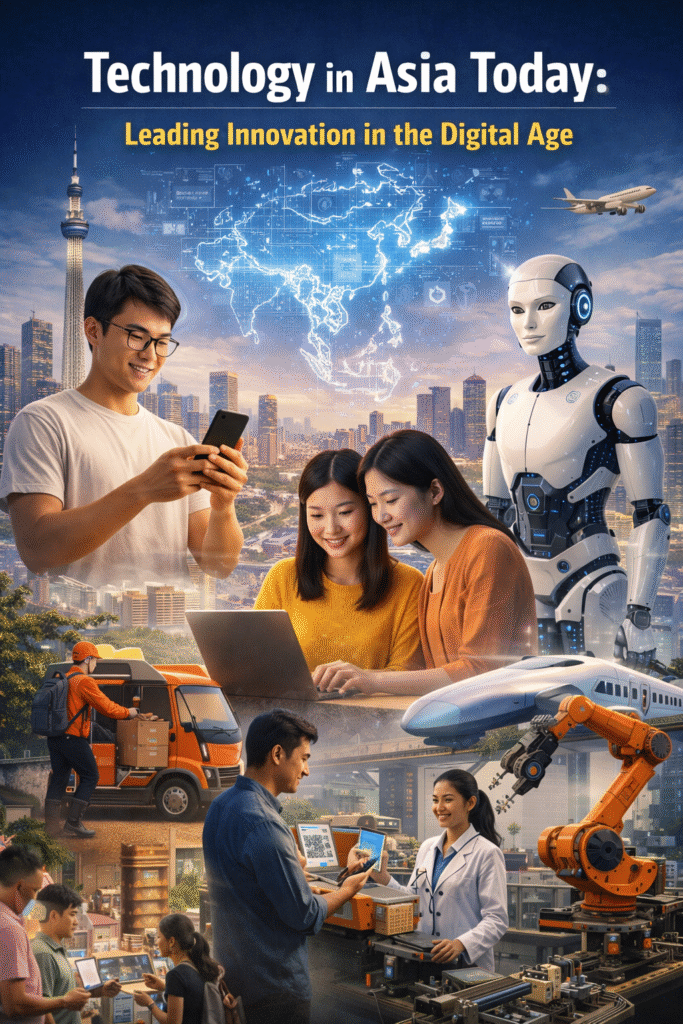
Asia today stands at the forefront of global technological advancement. Home to some of the world’s largest economies, fastest-growing markets, and most digitally connected populations, the continent is shaping how technology is developed, adopted, and scaled. From artificial intelligence and robotics to e-commerce and smart cities, technology in Asia is transforming industries and everyday life at an unprecedented pace.
Digital Transformation and Connectivity
Asia has made significant progress in expanding digital connectivity. Countries such as South Korea, China, Japan, and Singapore lead the world in high-speed internet and 5G deployment, while developing nations across South and Southeast Asia are rapidly increasing mobile internet access. Affordable smartphones and data plans have brought millions of people online, enabling digital inclusion and economic participation.
This connectivity supports digital services ranging from online education and telemedicine to remote work and social networking, helping bridge gaps between urban and rural populations.
Artificial Intelligence and Automation
Asia is a global hub for artificial intelligence (AI) and automation. China, in particular, has invested heavily in AI research, facial recognition, smart surveillance, and data-driven industries. Japan and South Korea continue to lead in robotics, applying advanced automation in manufacturing, healthcare, and elder care.
These technologies are increasing efficiency, supporting aging populations, and enhancing productivity across industries such as automotive, electronics, and logistics.
E-Commerce and Digital Payments
E-commerce has become a dominant force in Asia’s digital economy. Platforms like Alibaba, Shopee, Flipkart, and Rakuten have transformed how people shop and do business. Digital payment systems, including mobile wallets and QR-code payments, are widely used, often replacing cash entirely in major cities.
Small and medium-sized businesses benefit greatly from these platforms, gaining access to regional and global markets with minimal barriers.
Smart Cities and Infrastructure
Asian countries are investing heavily in smart city initiatives. Cities like Singapore, Seoul, Shanghai, and Dubai* use technology to manage traffic, energy consumption, public safety, and waste management. Internet of Things (IoT) devices, data analytics, and AI help governments improve urban planning and service delivery.
These innovations aim to improve quality of life while addressing challenges such as congestion, pollution, and population growth.
Innovation, Startups, and Talent
Asia’s tech startup ecosystem is thriving. India has emerged as a major startup hub, particularly in software, fintech, and edtech. Southeast Asian nations such as Indonesia and Vietnam are also seeing rapid growth in innovation and entrepreneurship.
A strong focus on STEM education, combined with a large, youthful workforce, ensures a steady pipeline of skilled talent ready to drive future technological progress.
Challenges and Future Outlook
Despite rapid advancement, Asia faces challenges including cybersecurity threats, data privacy concerns, digital inequality, and ethical questions around surveillance and AI use. Addressing these issues will require strong regulatory frameworks and international cooperation.
Conclusion
Technology in Asia today is a powerful engine of global innovation. By combining advanced infrastructure, large-scale adoption, and a culture of innovation, Asia continues to influence the direction of the digital world. As the continent balances growth with responsibility, its technological leadership is set to play a defining role in the future of the global economy.