

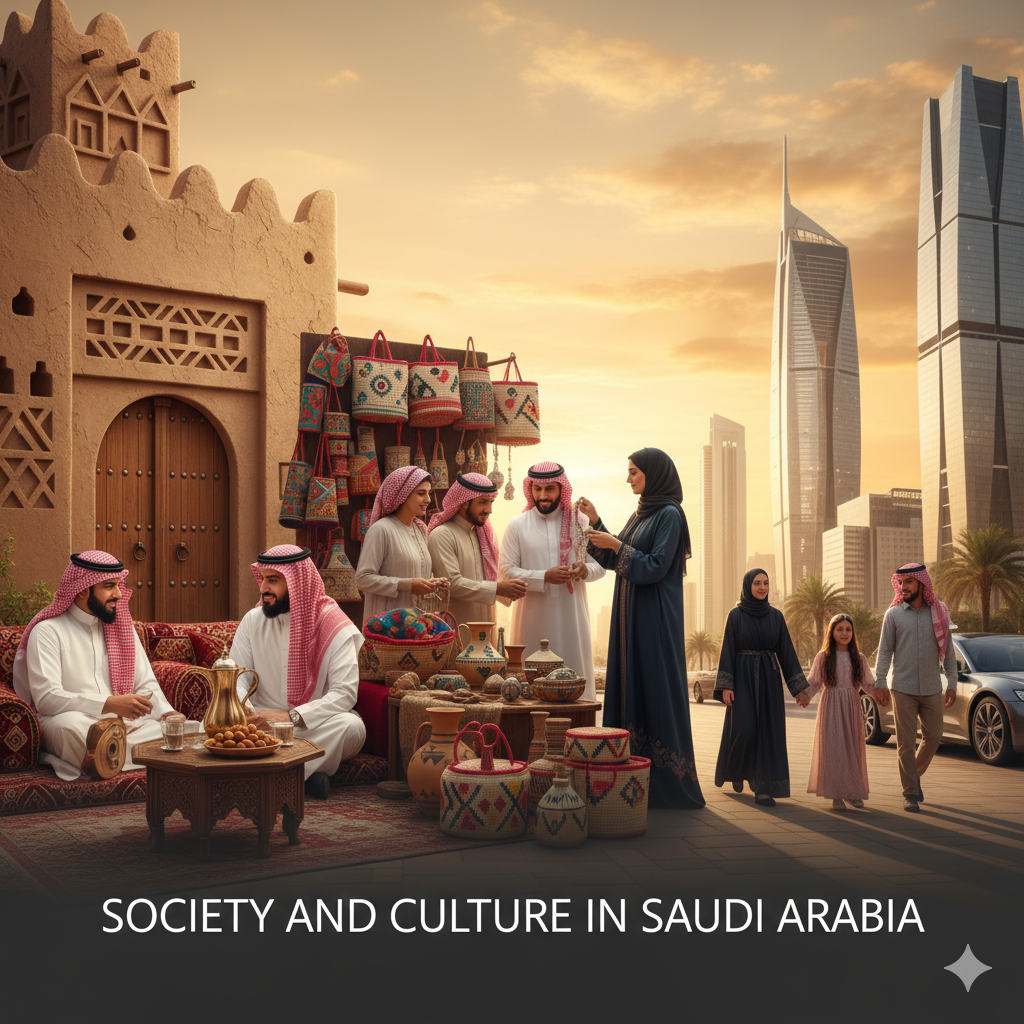
The people of Saudi Arabia today are living through a period of rapid social, economic, and cultural transformation. Rooted in a rich history shaped by Arab traditions and Islamic values, Saudi society is now experiencing significant change as the country moves forward under Vision 2030. With a young population, growing global engagement, and evolving lifestyles, the people of Saudi Arabia reflect a balance between tradition and modernity.
Population and Demographics
Saudi Arabia has a population of over 35 million people, with Saudi nationals forming the majority alongside a large expatriate community. One of the defining features of Saudi society today is its youthfulness, with a large proportion of the population under the age of 30. This young generation plays a major role in shaping social attitudes, labor markets, and cultural trends. Urbanization is also high, with most people living in cities such as Riyadh, Jeddah, Dammam, and Mecca.
Culture, Religion, and Identity
Islam is central to the identity and daily life of the Saudi people. The country is the birthplace of Islam and home to its two holiest cities, Mecca and Medina. Religious practices strongly influence social norms, values, and traditions. At the same time, Saudi society today shows increased openness to cultural expression through arts, entertainment, and public events, while maintaining respect for religious principles.
Family and Social Life
Family remains the foundation of Saudi society. Strong family ties, respect for elders, and hospitality are important cultural values. Extended families often maintain close relationships, providing social support and guidance. Although lifestyles are changing, family gatherings, weddings, and religious celebrations continue to play a central role in social life.
Education and Youth Development
Education has expanded rapidly in Saudi Arabia over recent decades. Young Saudis have access to modern schools, universities, and international scholarship programs. Higher education opportunities, including overseas study, have contributed to a more globally aware and skilled population. Today’s youth are increasingly confident, educated, and ambitious, seeking opportunities in diverse professional fields.
Role of Women in Society
The role of women in Saudi Arabia has undergone notable changes. Women today participate more actively in education, business, healthcare, and public life. Legal and social reforms have expanded opportunities for women to work, drive, travel, and start businesses. While challenges remain, women are increasingly visible contributors to the country’s development and modernization.
Employment and Economic Life
Economic change has influenced the daily lives of Saudi people. Employment opportunities are expanding beyond traditional sectors such as oil and government services to include tourism, technology, entertainment, and entrepreneurship. Saudization policies encourage greater participation of citizens in the private sector, particularly among youth and women. Many Saudis today value innovation, skills development, and career advancement.
Lifestyle and Modern Living
Modern living has transformed daily life in Saudi Arabia. Shopping malls, cafés, social media, digital services, and entertainment venues are now part of everyday experiences. Sports, fitness, and cultural events have gained popularity, especially among young people. At the same time, traditional clothing, customs, and language remain important symbols of national identity.
Expatriate Communities and Diversity
Saudi Arabia is home to millions of expatriates from Asia, Africa, the Middle East, and Europe. These communities contribute significantly to the economy and add cultural diversity to society. Interaction between Saudis and expatriates has increased, particularly in workplaces and urban environments, creating a more multicultural social landscape.
Social Challenges and Change
Saudi society today faces challenges alongside progress. Issues such as balancing tradition with modernization, employment expectations, housing, and social adaptation remain important. Rapid change requires adjustments in social attitudes, education systems, and family life. The government and society continue to navigate these changes carefully.
Values and National Pride
Despite rapid transformation, strong values such as faith, family loyalty, generosity, and national pride remain central to Saudi identity. Cultural heritage, national history, and shared goals under Vision 2030 contribute to a growing sense of unity and purpose among the people.
Conclusion
The people of Saudi Arabia today are experiencing a dynamic period of transition. While deeply rooted in tradition and religion, Saudi society is increasingly shaped by education, technology, and global engagement. With a young, ambitious population and evolving social roles, the people of Saudi Arabia are playing a crucial role in shaping the country’s future while preserving its cultural and religious foundations.
