

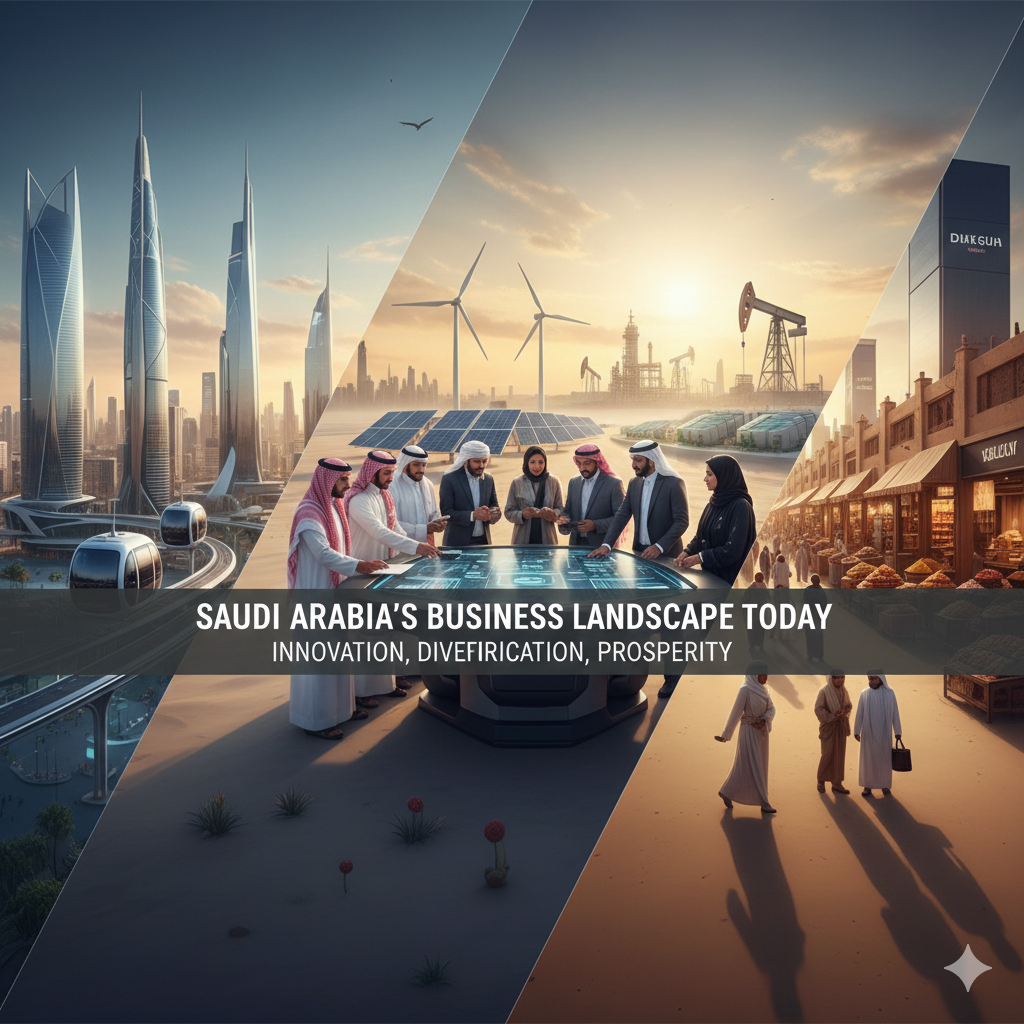
Saudi Arabia today is undergoing one of the most significant economic transformations in its modern history. Traditionally known for its vast oil wealth, the Kingdom is now actively reshaping its business environment to become more diversified, innovative, and globally competitive. Driven by Vision 2030, Saudi Arabia’s economic reforms are changing how business is conducted, opening new opportunities for domestic and international investors while redefining the role of the private sector.
Economic Overview
Saudi Arabia has the largest economy in the Middle East and is a key player in global energy markets. While oil and gas remain central to government revenue and exports, efforts are underway to reduce dependence on hydrocarbons. Economic diversification aims to strengthen non-oil sectors, stabilize growth, and create sustainable employment for a growing population. Recent years have seen steady economic reform, improved fiscal management, and increased private-sector participation.
Vision 2030 and Economic Reform
Vision 2030 is the foundation of Saudi Arabia’s modern business transformation. The strategy focuses on diversifying the economy, privatizing state assets, encouraging entrepreneurship, and attracting foreign direct investment. Key goals include developing tourism, entertainment, logistics, mining, manufacturing, and technology sectors. Regulatory reforms, business-friendly policies, and large-scale development projects support this ambitious vision.
Oil, Energy, and Petrochemicals
The energy sector continues to dominate Saudi Arabia’s business landscape. Saudi Aramco remains one of the world’s most valuable companies, leading oil production and refining operations. At the same time, the Kingdom is investing in renewable energy, hydrogen, and downstream petrochemicals to add value and reduce environmental impact. Energy diversification plays a growing role in long-term economic planning.
Expanding Non-Oil Sectors
Non-oil sectors are growing rapidly. Tourism and hospitality are expanding through projects such as cultural heritage sites, resorts, and entertainment hubs. The retail, construction, logistics, and healthcare sectors are also experiencing strong growth. Mega-projects and infrastructure investments generate business opportunities and strengthen supply chains across multiple industries.
Foreign Investment and Global Business
Saudi Arabia is actively encouraging foreign investment by easing ownership restrictions, improving legal frameworks, and offering incentives. International companies are increasingly attracted by Saudi Arabia’s large market, strategic location, and government-backed projects. Special economic zones, investment licenses, and public-private partnerships enhance the Kingdom’s appeal as a regional business hub.
Entrepreneurship and Small Businesses
Entrepreneurship is becoming an important driver of Saudi Arabia’s economy. Government programs support startups through funding, incubators, training, and digital platforms. Small and medium-sized enterprises (SMEs) are encouraged to innovate and contribute to job creation. Sectors such as e-commerce, fintech, food services, and digital media are particularly active among young entrepreneurs.
Digital Transformation and Technology
Digital transformation is reshaping business operations across Saudi Arabia. Investments in artificial intelligence, cloud computing, fintech, smart cities, and e-government services increase efficiency and transparency. The rise of digital payments, online services, and technology-driven startups reflects the Kingdom’s commitment to becoming a knowledge-based economy.
Labor Market and Saudization
Workforce reform is a key element of business policy. Saudization programs aim to increase employment opportunities for Saudi nationals in the private sector. Companies are required to meet localization targets while investing in training and skills development. At the same time, Saudi Arabia continues to rely on expatriate labor, especially in specialized and technical roles.
Business Environment and Regulation
Saudi Arabia has made significant improvements to its business environment. Simplified licensing procedures, updated commercial laws, and digital government services make it easier to start and operate businesses. Transparency, contract enforcement, and regulatory clarity are gradually improving, boosting investor confidence.
Challenges Facing Businesses
Despite progress, businesses in Saudi Arabia face challenges. Regulatory changes, compliance requirements, workforce localization, and global economic uncertainty can increase operational complexity. Companies must adapt to a fast-changing environment while managing costs and maintaining competitiveness.
Future Outlook and Conclusion
Business in Saudi Arabia today reflects ambition, reform, and opportunity. While oil remains important, the Kingdom’s future lies in diversification, innovation, and global integration. With continued reform, investment in human capital, and private-sector growth, Saudi Arabia is positioning itself as a leading business destination in the region and beyond.