

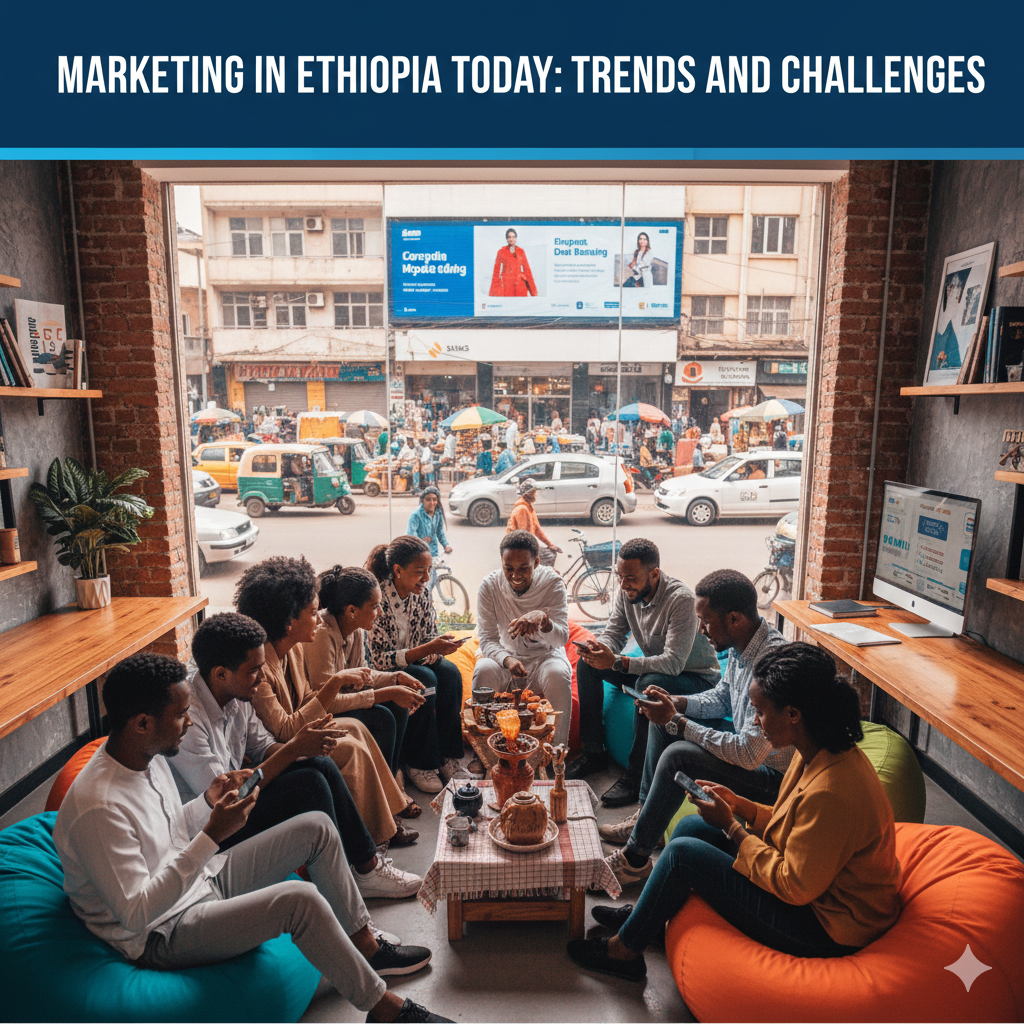
Marketing in Ethiopia Today: Trends, Challenges, and Opportunities
Marketing is a critical component of business growth and economic development, and Ethiopia, with its rapidly evolving economy, presents both exciting opportunities and unique challenges for marketers. Over the past decade, Ethiopia has experienced significant economic expansion, urbanization, and technological adoption, all of which have transformed the marketing landscape. From traditional methods to modern digital strategies, businesses in Ethiopia are navigating a complex market shaped by culture, infrastructure, and consumer behavior.
1. Rapid Economic Growth and Consumer Market Expansion
Ethiopia is one of Africa’s fastest-growing economies, with sectors such as agriculture, manufacturing, services, and technology showing considerable expansion. As incomes rise, urban populations grow, and the middle class expands, consumer demand for goods and services is increasing. This growth creates fertile ground for marketing, as businesses strive to differentiate themselves in a competitive environment. Companies targeting urban areas like Addis Ababa, Mekelle, and Bahir Dar are increasingly investing in brand awareness, customer engagement, and market research to capture this emerging consumer base.
2. Traditional Marketing Still Dominates
Despite the rise of digital platforms, traditional marketing methods remain highly relevant in Ethiopia. Billboards, radio, television, and newspapers are widely used to reach consumers, especially in regions where internet penetration is limited. Many businesses rely on personal selling, word-of-mouth, and community-based promotion to build trust with local audiences. For example, small and medium-sized enterprises (SMEs) in rural areas often rely on direct interaction with customers to establish loyalty and credibility.
3. The Rise of Digital Marketing
Digital marketing is growing rapidly in Ethiopia, driven by increased smartphone adoption and internet access. Social media platforms such as Facebook, Instagram, Telegram, and TikTok are becoming key tools for advertising, promotions, and brand building. E-commerce platforms and mobile money services are also influencing marketing strategies, allowing companies to reach wider audiences and offer online purchasing options. However, digital marketing faces challenges such as low broadband penetration in rural areas, high data costs, and limited digital literacy among some consumers.
4. Consumer Behavior and Cultural Influences
Ethiopian consumers are strongly influenced by culture, religion, and social norms. Brand loyalty, trust, and personal recommendations play a significant role in purchasing decisions. Marketing campaigns must consider local languages, traditions, and values to resonate with target audiences. For example, campaigns during major religious or cultural festivals, such as Meskel or Ethiopian New Year, often see higher engagement. Understanding local tastes, preferences, and social dynamics is essential for effective marketing.
5. Challenges of Market Research
Effective marketing relies on accurate market data, yet Ethiopia faces challenges in this area. Reliable consumer data, demographic insights, and purchasing trends are limited, particularly outside major urban centers. This lack of information makes it difficult for companies to segment audiences, forecast demand, and tailor marketing strategies. Businesses often rely on small-scale surveys, direct observation, or anecdotal evidence to guide their campaigns.
6. Brand Awareness and Competition
As Ethiopia’s economy grows, competition among businesses is increasing. Both local and international companies are vying for market share, making brand differentiation crucial. Businesses are investing in creative advertising, promotions, and loyalty programs to establish strong brand presence. Multinational companies often leverage global branding strategies, while local businesses focus on community engagement and personalized marketing to build trust.
7. Influence of Youth and Urbanization
Ethiopia has a young population, with a majority under the age of 30. Urban youth are tech-savvy, socially connected, and highly receptive to new products and trends. Marketing strategies targeting this demographic increasingly use social media influencers, interactive campaigns, and digital engagement to drive brand awareness and sales. Urbanization also facilitates exposure to diverse products, ideas, and lifestyles, encouraging modern marketing approaches.
8. Advertising Regulations and Ethical Considerations
Marketing in Ethiopia is regulated by government policies and industry standards to protect consumers and ensure fair competition. Advertisements must adhere to truthfulness, avoid misleading claims, and respect cultural and religious sensitivities. Companies must navigate these regulations while creating persuasive campaigns, balancing creativity with compliance. Ethical marketing is also gaining importance as consumers become more aware of corporate responsibility and sustainability.
9. Integration of Technology and Data Analytics
Advanced marketing strategies increasingly rely on data analytics, customer relationship management (CRM) systems, and artificial intelligence (AI). In Ethiopia, larger companies and tech startups are experimenting with analytics to understand consumer behavior, track engagement, and optimize campaigns. While adoption is still limited compared to global standards, these technologies present opportunities to increase efficiency and ROI in marketing efforts.
10. Marketing in the Agricultural and Industrial Sectors
Ethiopia’s economy is heavily dependent on agriculture and emerging industrial sectors. Marketing strategies in these sectors often focus on product quality, supply chain reliability, and trade relationships rather than mass advertising. For example, agribusinesses use cooperative networks, trade fairs, and farmer engagement programs to promote products. Industrial goods companies emphasize technical specifications, business-to-business relationships, and industrial exhibitions.
11. E-commerce and Online Retail Growth
Online retail is gaining traction in Ethiopia, driven by increasing internet penetration, mobile payments, and digital literacy. Companies are using social media storefronts, websites, and mobile apps to sell products directly to consumers. E-commerce marketing strategies include targeted ads, influencer promotions, and online discounts. However, logistics challenges, payment system limitations, and trust issues with online transactions remain barriers to rapid growth.
12. Importance of Customer Experience
Customer experience is becoming a central component of marketing strategies. Ethiopian consumers value responsive service, product quality, and personalized engagement. Businesses that provide excellent customer service, loyalty programs, and after-sales support are more likely to retain clients and build long-term brand loyalty. Word-of-mouth recommendations remain a powerful marketing tool, especially in tightly knit communities.
13. Opportunities for Startups and SMEs
Small and medium-sized enterprises (SMEs) and startups are at the forefront of innovation in marketing. With lower budgets but greater flexibility, they are experimenting with digital campaigns, influencer marketing, and community-based engagement. Government initiatives and international development programs are supporting entrepreneurship, helping SMEs develop marketing skills and reach new markets.
14. Future Trends in Ethiopian Marketing
Looking forward, marketing in Ethiopia is likely to become increasingly digital, data-driven, and consumer-centric. Mobile marketing, social commerce, and personalized campaigns will continue to grow. Companies that adapt to technological changes, understand cultural nuances, and leverage data analytics will have a competitive advantage. Sustainability, ethical branding, and corporate social responsibility are also expected to influence marketing strategies in the coming years.
Conclusion
Marketing in Ethiopia today is at an exciting but challenging stage. The country’s growing economy, youthful population, and urbanization present vast opportunities for businesses, while infrastructure limitations, limited data, and cultural complexities pose challenges. Successful marketing strategies in Ethiopia must balance traditional and digital approaches, respect cultural norms, and focus on customer engagement and trust. By embracing innovation, leveraging technology, and understanding the local market, businesses can unlock Ethiopia’s immense marketing potential and contribute to sustainable economic growth.
