

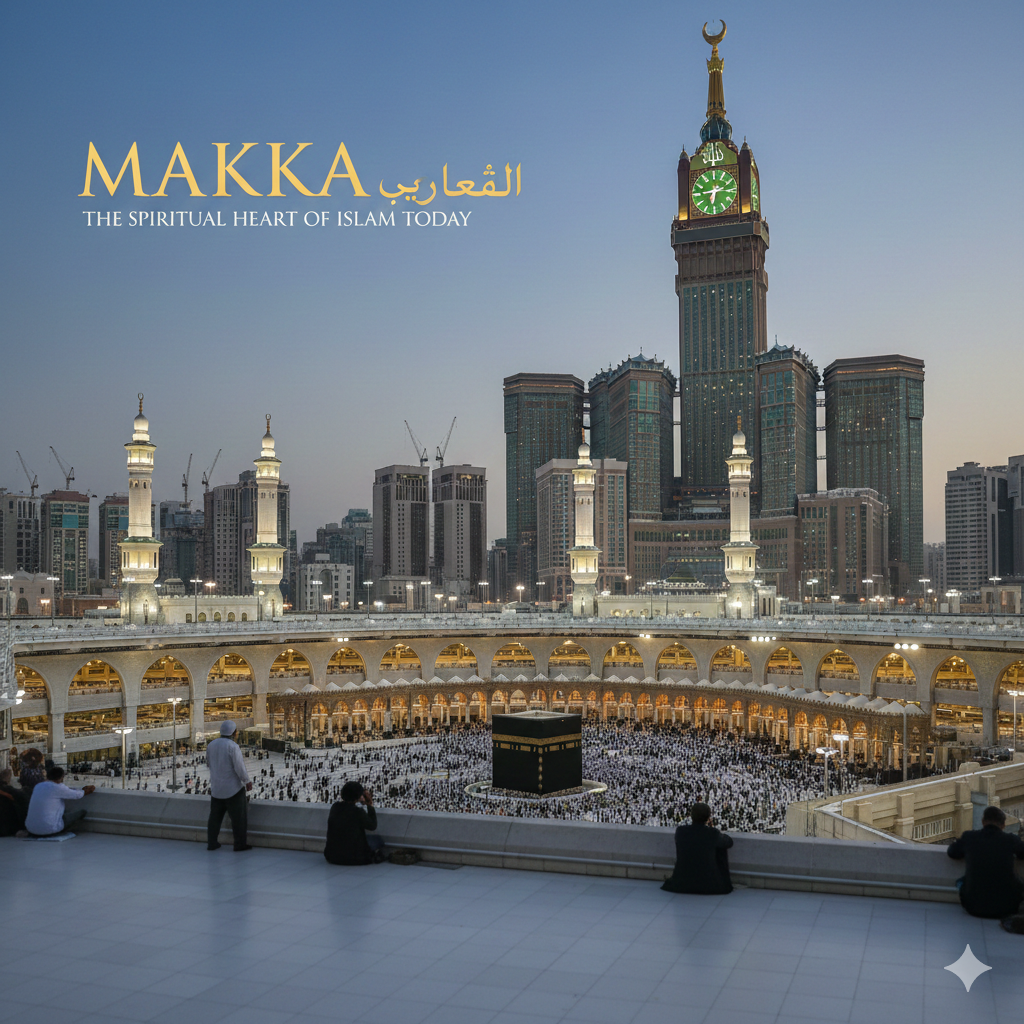
Makkah holds a unique and sacred position in the hearts of more than a billion Muslims around the world. As the birthplace of the Prophet Muhammad (peace be upon him) and the site of the Holy Kaaba, Makkah is the spiritual center of Islam. Today, Makkah is not only a city of deep religious significance but also a rapidly developing urban center that balances tradition, faith, and modern infrastructure to serve millions of pilgrims and residents.
Religious Significance of Makkah
Makkah is the holiest city in Islam. It is the direction of prayer (Qibla) for Muslims worldwide and the destination of the Hajj and Umrah pilgrimages. Every year, millions of Muslims travel to Makkah to perform Hajj, one of the five pillars of Islam, while Umrah is performed throughout the year. The Masjid al-Haram, which houses the Kaaba, is the focal point of worship and spiritual unity for the Muslim world.
Population and Urban Growth
Makkah’s population has grown steadily over the years, driven by natural growth and increasing economic activity linked to religious tourism. Today, the city is home to residents from diverse backgrounds, including Saudis and expatriates. Urban expansion has transformed Makkah into a modern city with improved housing, transportation, and public services designed to meet the needs of both residents and pilgrims.
Pilgrimage and Religious Tourism
Pilgrimage is the central feature of life in Makkah today. Managing the flow of millions of pilgrims requires advanced planning, logistics, and infrastructure. The Saudi government has invested heavily in expanding the Masjid al-Haram, improving crowd management systems, and enhancing safety measures. Hotels, transport services, and healthcare facilities operate year-round to support pilgrims, making religious tourism the backbone of the city’s economy.
Infrastructure and Development Projects
Makkah has witnessed major infrastructure development in recent years. Large-scale projects include mosque expansions, road networks, pedestrian tunnels, and high-rise accommodations near the Grand Mosque. Modern transportation systems, including buses and rail links, help ease congestion during peak pilgrimage seasons. These developments aim to improve comfort, safety, and accessibility while preserving the city’s sacred character.
Economy and Employment
The economy of Makkah is largely centered on services related to Hajj and Umrah. Employment opportunities exist in hospitality, transportation, retail, construction, and healthcare. Small businesses, such as shops selling religious items and food services, play an important role in supporting pilgrims. The city’s economy reflects a strong connection between spiritual activities and livelihood.
Social Life and Community
Daily life in Makkah is shaped by religious values, hospitality, and cultural diversity. Residents are accustomed to interacting with visitors from all over the world, creating a unique social environment. Despite the city’s fast pace during pilgrimage seasons, community bonds remain strong, with family life, neighborhood relations, and religious practices forming the foundation of society.
Education and Healthcare
Makkah has developed education and healthcare services to meet the needs of its population and visitors. Schools, universities, and religious institutions provide both secular and Islamic education. Healthcare facilities, including hospitals and emergency services, are expanded and reinforced during Hajj to ensure the safety and well-being of pilgrims and residents alike.
Technology and Smart City Initiatives
Technology plays an increasing role in managing Makkah today. Digital systems are used for crowd control, health monitoring, transportation planning, and pilgrimage services. Mobile applications help pilgrims with navigation, rituals, and safety information. These innovations support efficient management while enhancing the overall pilgrimage experience.
Challenges Facing Makkah
Despite progress, Makkah faces challenges such as managing overcrowding, preserving historical sites, environmental sustainability, and balancing modernization with religious sanctity. Seasonal population surges place pressure on infrastructure and services. Addressing these challenges requires careful planning and continuous investment.
Cultural and Global Importance
Makkah represents unity, equality, and faith for Muslims worldwide. People of all races, languages, and nationalities gather in the city to worship together, symbolizing global Islamic brotherhood. This cultural and spiritual importance gives Makkah a global influence beyond its physical boundaries.
Conclusion
Makkah today stands as a city of profound spiritual significance and modern development. While deeply rooted in Islamic tradition, it continues to evolve through infrastructure growth, technology, and improved services. By balancing sacred values with contemporary needs, Makkah remains a center of worship, unity, and faith for the Muslim world, while providing a dignified and safe environment for millions of visitors each year.
