

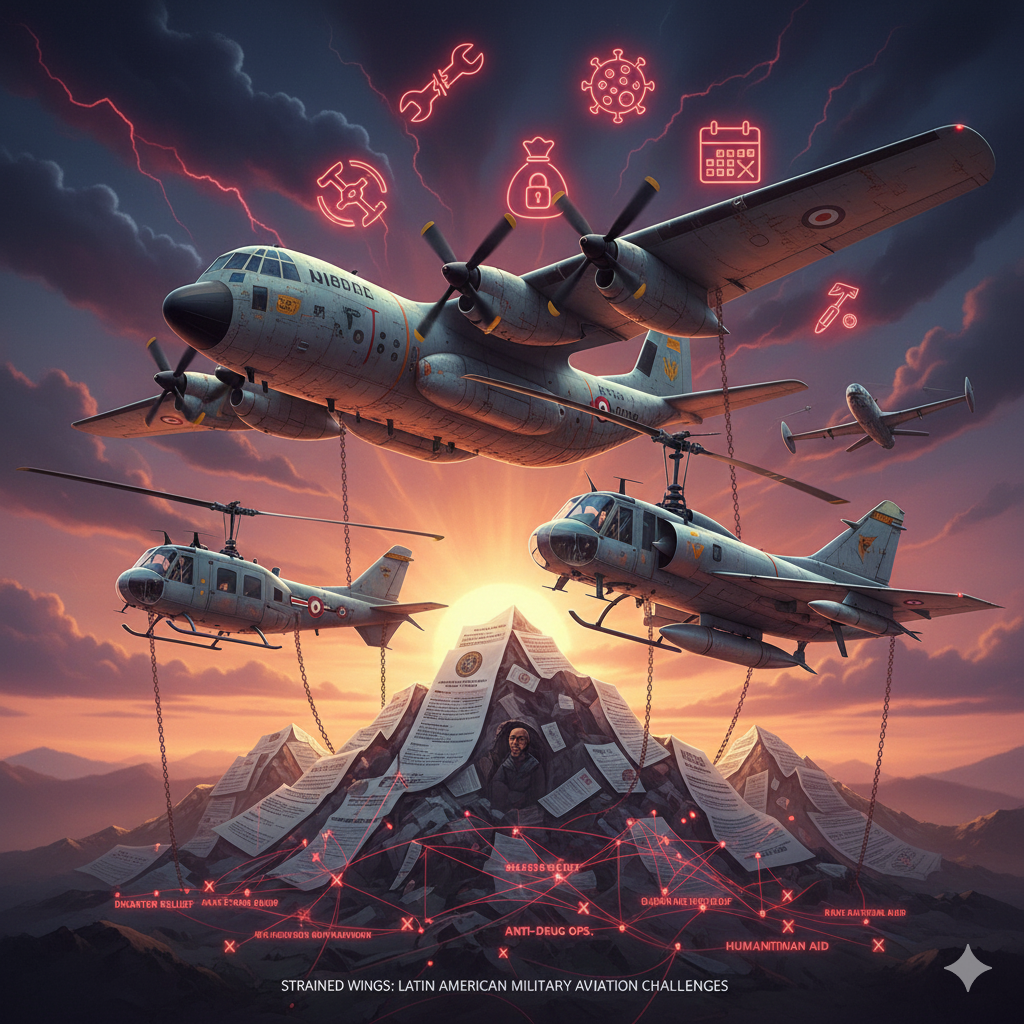
Strained Wings: Major Problems Facing Latin American Military Airlines Today
Military aviation plays a vital role in Latin America, supporting national defense, border surveillance, disaster response, humanitarian missions, and peacekeeping operations. From Brazil’s Air Force (FAB) and Mexico’s Air Force to smaller forces in Central America and the Caribbean, military airlines are essential for regional stability. However, despite their importance, Latin American military aviation forces face serious challenges that limit operational readiness and modernization.
1. Aging Aircraft Fleets
One of the most significant problems facing Latin American military airlines is the aging of aircraft fleets. Many air forces continue to operate aircraft acquired in the 1970s and 1980s, including transport planes, helicopters, and fighter jets.
Older aircraft suffer from reduced reliability, higher maintenance demands, and limited compatibility with modern systems. Aging fleets also increase the risk of accidents and restrict the types of missions that can be performed safely. While a few countries such as Brazil and Chile have invested in modernization, many others struggle to replace obsolete aircraft due to budget constraints.
2. Limited Defense Budgets
Defense spending in Latin America remains relatively low compared to global averages. Governments often prioritize social programs, infrastructure, and debt repayment over military investment. As a result, air forces face chronic underfunding.
Limited budgets affect aircraft procurement, training programs, spare parts availability, and infrastructure maintenance. Military airlines are often forced to reduce flight hours, delay upgrades, or ground aircraft altogether. This funding gap weakens overall airpower capability and response readiness.
3. Maintenance and Spare Parts Shortages
Maintaining military aircraft requires specialized parts, tools, and skilled technicians. Many Latin American military airlines experience frequent shortages of spare parts, especially for older or foreign-made aircraft.
Supply chain disruptions, international sanctions, and dependence on overseas suppliers complicate maintenance operations. In some cases, aircraft remain grounded for months due to the unavailability of a single component. This problem is especially severe in countries operating mixed fleets sourced from multiple countries.
4. Training and Human Resource Challenges
Another major challenge is the shortage of trained pilots, engineers, and maintenance personnel. Military aviation demands continuous training to maintain safety and operational proficiency. However, budget limitations restrict simulator access, flight hours, and advanced instruction.
Additionally, trained personnel often leave the military for better-paying civilian aviation jobs. This brain drain weakens institutional knowledge and increases training costs for replacement staff. Smaller air forces are particularly vulnerable to losing highly skilled specialists.
5. Modernization and Technological Gaps
Modern military aviation relies on advanced technologies such as surveillance systems, avionics, data links, and unmanned aerial vehicles (UAVs). Many Latin American military airlines lag behind in adopting these technologies.
Outdated radar systems, limited electronic warfare capabilities, and minimal drone integration reduce situational awareness and operational effectiveness. Without modernization, military airlines struggle to address contemporary threats such as organized crime networks, illicit trafficking, and cyber-related risks.
6. Political and Economic Instability
Political instability in parts of Latin America directly affects military aviation. Government changes often lead to shifts in defense priorities, delays in procurement programs, or cancellation of long-term modernization plans.
Economic crises and currency devaluations increase the cost of imported aviation equipment and maintenance services. Inflation further strains defense budgets, forcing air forces to scale back operations and delay critical investments.
7. Dependence on Foreign Suppliers
Latin American military airlines rely heavily on foreign aircraft manufacturers and defense suppliers, particularly from the United States, Europe, and Russia. This dependence creates vulnerabilities related to export restrictions, political conditions, and price fluctuations.
When diplomatic relations deteriorate, access to spare parts, upgrades, and technical support may be limited. This dependence undermines strategic autonomy and can compromise national defense capabilities.
8. Infrastructure and Base Limitations
Air bases, hangars, and maintenance facilities in many countries are outdated or poorly equipped. Inadequate infrastructure limits aircraft availability and increases wear and tear on equipment.
Harsh environmental conditions—such as tropical humidity, high altitude, and salt exposure in coastal regions—accelerate aircraft corrosion. Without sufficient funding for base upgrades and environmental protection, aircraft service life is reduced.
9. Expanding Non-Combat Responsibilities
Latin American military airlines are increasingly tasked with non-combat missions, including disaster relief, medical evacuation, firefighting, humanitarian aid, and anti-drug operations.
While these missions are vital, they place additional strain on already limited fleets. Aircraft and crews must be available for emergencies, reducing time for training and maintenance. The growing operational burden stretches resources thin.
10. Limited Regional Cooperation
Despite shared security challenges, regional cooperation in military aviation remains limited. Joint training programs, shared maintenance facilities, and pooled procurement initiatives are underdeveloped.
Greater collaboration could reduce costs, improve interoperability, and enhance regional security. However, political differences and national sovereignty concerns often hinder cooperative efforts.
Impact on National Security and Preparedness
These combined challenges reduce the ability of Latin American military airlines to respond effectively to security threats, emergencies, and humanitarian crises. Limited airlift capacity, surveillance gaps, and reduced readiness weaken overall defense postures.
In disaster-prone regions, insufficient aviation readiness can delay rescue and relief operations, increasing human and economic losses.
Conclusion: A Critical Need for Strategic Reform
Latin American military airlines are operating under growing pressure. Aging fleets, budget constraints, and technological gaps undermine their effectiveness at a time when security, disaster response, and sovereignty protection are more important than ever.
To strengthen military aviation, governments must commit to sustainable funding, gradual fleet modernization, improved training, and regional cooperation. Without strategic reform, Latin America’s military airlines risk losing the operational capacity needed to protect their nations and serve their populations.
