

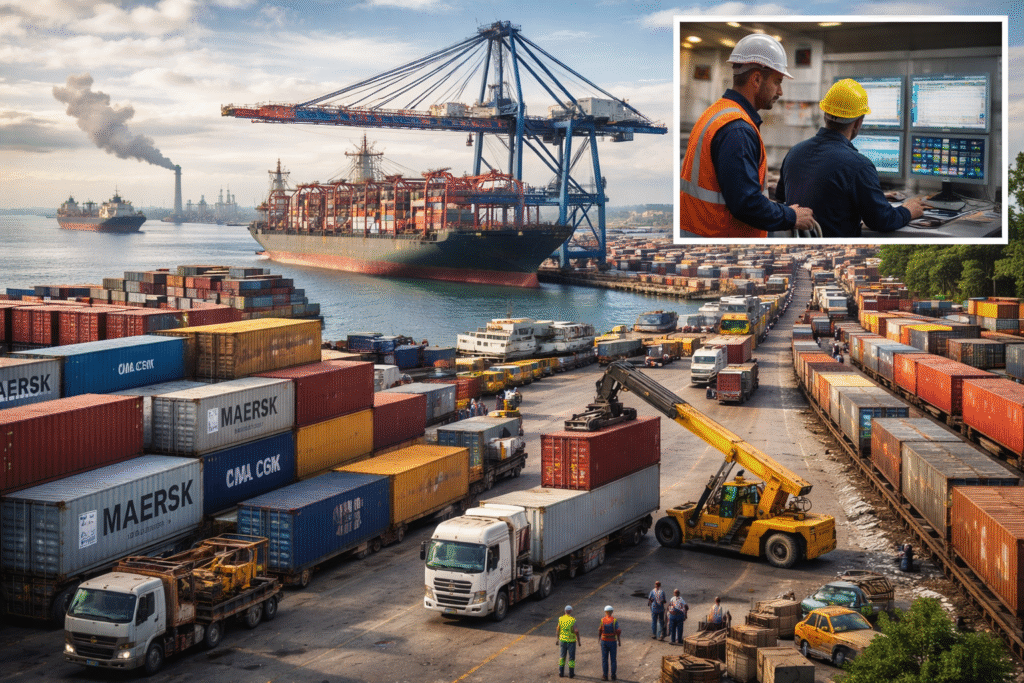
1. Port Congestion and Capacity Pressure
Many major European ports experience congestion due to growing cargo volumes and increased containerization. Limited space for expansion, especially in historic port cities, makes it difficult to increase capacity. Congestion causes delays in vessel berthing, cargo handling, and inland distribution.
2. Limited Physical Expansion Space
European ports often operate in densely populated urban areas where land is scarce and expensive. Environmental restrictions and public opposition further limit expansion projects. This makes it difficult to build new terminals, storage areas, or logistics zones.
3. Aging Infrastructure
Despite their development, some European ports still rely on old infrastructure such as outdated quays, warehouses, and rail lines. Maintaining and upgrading aging infrastructure requires massive investment and causes operational disruptions.
4. Strict Environmental Regulations
European ports must comply with some of the world’s strictest environmental standards. Regulations on emissions, noise, waste disposal, and water quality increase operational costs. While essential for sustainability, compliance places financial pressure on port authorities and operators.
5. Climate Change and Extreme Weather
Ports across Europe face growing risks from climate change, including rising sea levels, flooding, stronger storms, and heatwaves. Coastal erosion and storm surges threaten port infrastructure, requiring costly climate-resilient investments.
6. High Operating and Labor Costs
Labor and operational costs in European ports are generally high. Strong labor unions, complex employment regulations, and high wage levels increase expenses. These costs affect competitiveness compared to ports in other regions with cheaper labor.
7. Labor Disputes and Skills Gaps
While labor unions protect workers’ rights, disputes over automation and work conditions sometimes lead to strikes and disruptions. At the same time, ports face shortages of skilled workers in digital systems, automation, and cyber-security.
8. Slow Adoption of Automation in Some Ports
Although some European ports are technologically advanced, others lag behind in automation due to high investment costs and resistance from labor groups. This uneven adoption reduces efficiency and creates performance differences among ports.
9. Hinterland Connectivity Bottlenecks
Efficient ports depend on strong rail, road, and inland waterway connections. In some regions, congestion, outdated rail infrastructure, or limited cross-border coordination slow cargo movement beyond the port.
10. Energy Transition Challenges
European ports play a key role in the energy transition, including handling LNG, hydrogen, and renewable energy equipment. However, adapting infrastructure for new energy types requires major investment, regulatory clarity, and technological readiness.
11. Digitalization and Cybersecurity Risks
Increased reliance on digital systems exposes ports to cyberattacks and data breaches. Many ports still lack strong cybersecurity strategies, trained personnel, and coordinated responses to digital threats.
12. Geopolitical and Trade Uncertainty
European ports are affected by geopolitical tensions, sanctions, wars, and shifting trade routes. Changes in global trade policies and regional conflicts disrupt cargo flows and create uncertainty for long-term planning.
13. Strong Competition from Non-European Ports
European ports face increasing competition from ports in the Middle East, Asia, and North Africa. These ports often have fewer regulations, lower costs, and rapid expansion capabilities, drawing traffic away from Europe.
Conclusion
European ports remain vital to global trade, but they face complex and evolving challenges. Congestion, limited expansion space, environmental demands, high costs, labor issues, digital risks, and geopolitical uncertainty all test their resilience. Addressing these problems requires innovation, investment, cooperation among EU members, and balanced policies that combine economic efficiency with sustainability. If these challenges are managed effectively, European ports will continue to play a leading role in global maritime trade.
