

Major Problems Facing Airlines in Europe Today
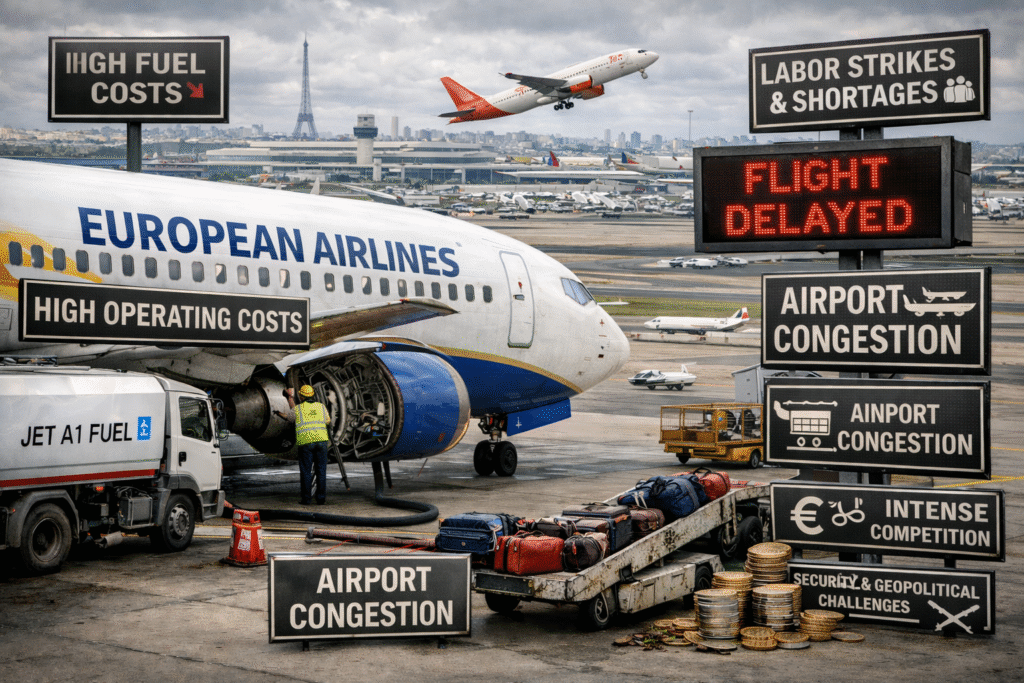
The airline industry in Europe is one of the most advanced and competitive in the world, providing essential connections for business, tourism, and trade. However, European airlines are currently facing significant challenges that affect their profitability, operations, and long-term sustainability.
1. High Operating and Fuel Costs
European airlines face high operating costs due to expensive aviation fuel, airport charges, and air navigation fees. Fuel price volatility and currency fluctuations further increase financial pressure, especially for smaller and low-cost carriers.
2. Strict Environmental Regulations
Europe has some of the strictest environmental policies in the aviation sector. Measures such as carbon taxes, emissions trading systems, and sustainability targets increase compliance costs. While these policies aim to reduce climate impact, they require airlines to invest heavily in new aircraft and sustainable aviation fuel.
3. Labor Shortages and Industrial Strikes
Pilot shortages, lack of cabin crew, and airport staff shortages have become common across Europe. In addition, frequent labor strikes by airline and airport workers disrupt flights, causing delays, cancellations, and financial losses.
4. Airport Congestion and Capacity Limits
Major European airports such as London Heathrow, Paris Charles de Gaulle, and Frankfurt operate close to or beyond capacity. Limited runway expansion and environmental restrictions lead to congestion, delays, and inefficient airline operations.
5. Air Traffic Control (ATC) Delays
Fragmented air traffic control systems across Europe contribute to frequent delays. Weather disruptions, staffing shortages, and coordination problems between national ATC authorities increase flight times and operational costs.
6. Financial Pressure and Rising Debt
Many European airlines are still recovering from the financial impact of the COVID-19 pandemic. High debt levels, loan repayments, and reduced government support make it difficult for airlines to remain profitable.
7. Intense Competition
European airlines face fierce competition from low-cost carriers such as Ryanair and easyJet, as well as from Middle Eastern and Asian airlines offering long-haul connections. This competition reduces ticket prices and profit margins.
8. Geopolitical and Security Challenges
Geopolitical tensions, airspace closures, and security concerns in neighboring regions affect flight routes and increase fuel consumption due to longer detours. These factors raise costs and complicate flight planning.
Conclusion
European airlines face a complex set of challenges including high costs, environmental regulations, labor disruptions, congestion, and strong competition. Addressing these problems will require policy coordination, infrastructure investment, technological innovation, and balanced environmental strategies. Successfully overcoming these issues will help ensure a stable and sustainable future for aviation in Europe.
