

Major Problems Facing Airlines in Africa Today
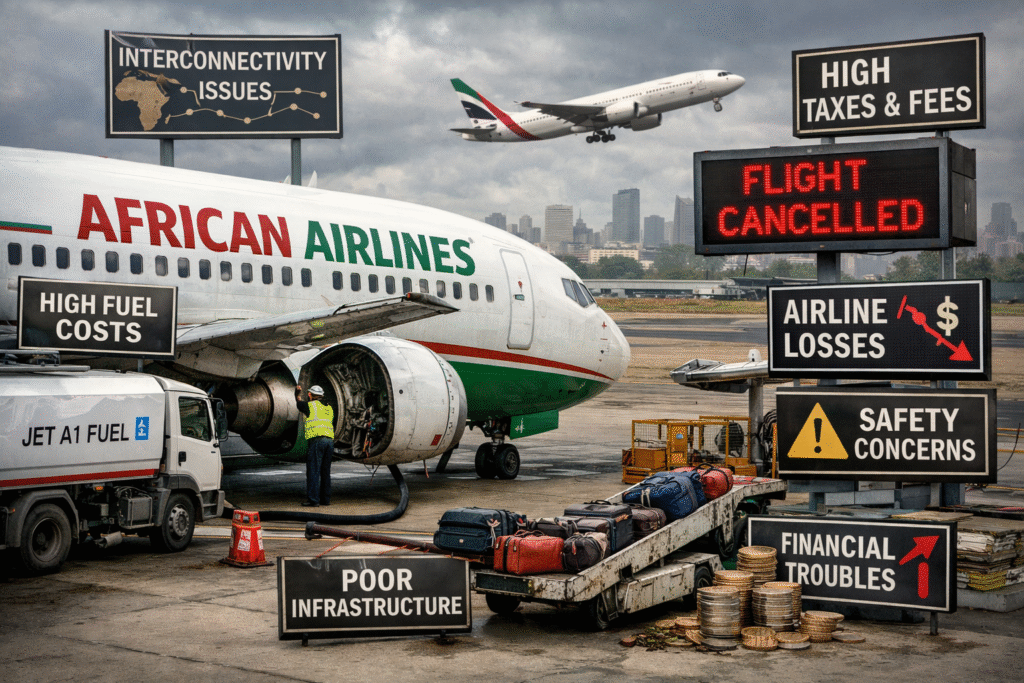
The aviation industry plays a vital role in Africa’s economic growth by supporting trade, tourism, and regional integration. However, despite its potential, the airline industry in Africa continues to face numerous challenges that limit its growth and efficiency. Many African airlines struggle to remain profitable and competitive due to structural, economic, and operational problems.
1. High Operating Costs
One of the biggest challenges facing airlines in Africa is the high cost of operation. Fuel prices are significantly higher in many African countries due to taxes, limited supply infrastructure, and import dependency. In addition, airlines face expensive aircraft maintenance costs because many countries lack certified maintenance, repair, and overhaul (MRO) facilities, forcing carriers to send aircraft overseas.
2. Weak Infrastructure
Airport infrastructure in many parts of Africa is outdated or insufficient. Poor runway conditions, limited airport capacity, unreliable power supply, and inadequate navigation equipment affect flight safety and punctuality. Smaller airports in rural areas often lack basic facilities, limiting connectivity across the continent.
3. Heavy Government Taxes and Fees
African airlines are burdened with excessive taxes, charges, and fees imposed by governments and airport authorities. These include passenger service charges, landing fees, navigation fees, and fuel taxes. Such costs increase ticket prices, reduce passenger demand, and make African airlines less competitive compared to foreign carriers.
4. Poor Connectivity and Restrictive Policies
Despite Africa having more than 50 countries, air connectivity within the continent remains low. Many routes require unnecessary stopovers because of restrictive bilateral air service agreements. Although initiatives like the Single African Air Transport Market (SAATM) aim to liberalize air travel, full implementation has been slow.
5. Financial Instability and Mismanagement
Many African airlines suffer from weak financial management, political interference, and lack of long-term planning. State ownership often leads to inefficiency, corruption, and poor decision-making. As a result, several national airlines have collapsed or required frequent government bailouts.
6. Safety and Regulatory Challenges
While safety standards have improved in recent years, some regions still struggle with weak regulatory oversight and insufficient training of aviation professionals. Inconsistent enforcement of international aviation standards can damage the reputation of African airlines and discourage international partnerships.
7. Limited Access to Financing
African airlines often face difficulties accessing affordable financing for aircraft acquisition and fleet modernization. High interest rates, weak local currencies, and lack of government guarantees make it hard for airlines to compete with well-financed foreign carriers.
8. Competition from Foreign Airlines
International airlines, especially those from the Middle East and Europe, dominate many African routes. These carriers benefit from strong financial backing, modern fleets, and well-developed hubs, drawing passengers away from local airlines.
Conclusion
The airline industry in Africa faces many interconnected challenges, including high operating costs, weak infrastructure, restrictive policies, and financial instability. However, with improved governance, infrastructure investment, policy reforms, and regional cooperation, African airlines can overcome these obstacles. Strengthening the aviation sector is essential for economic development, job creation, and regional integration across the continent.
