

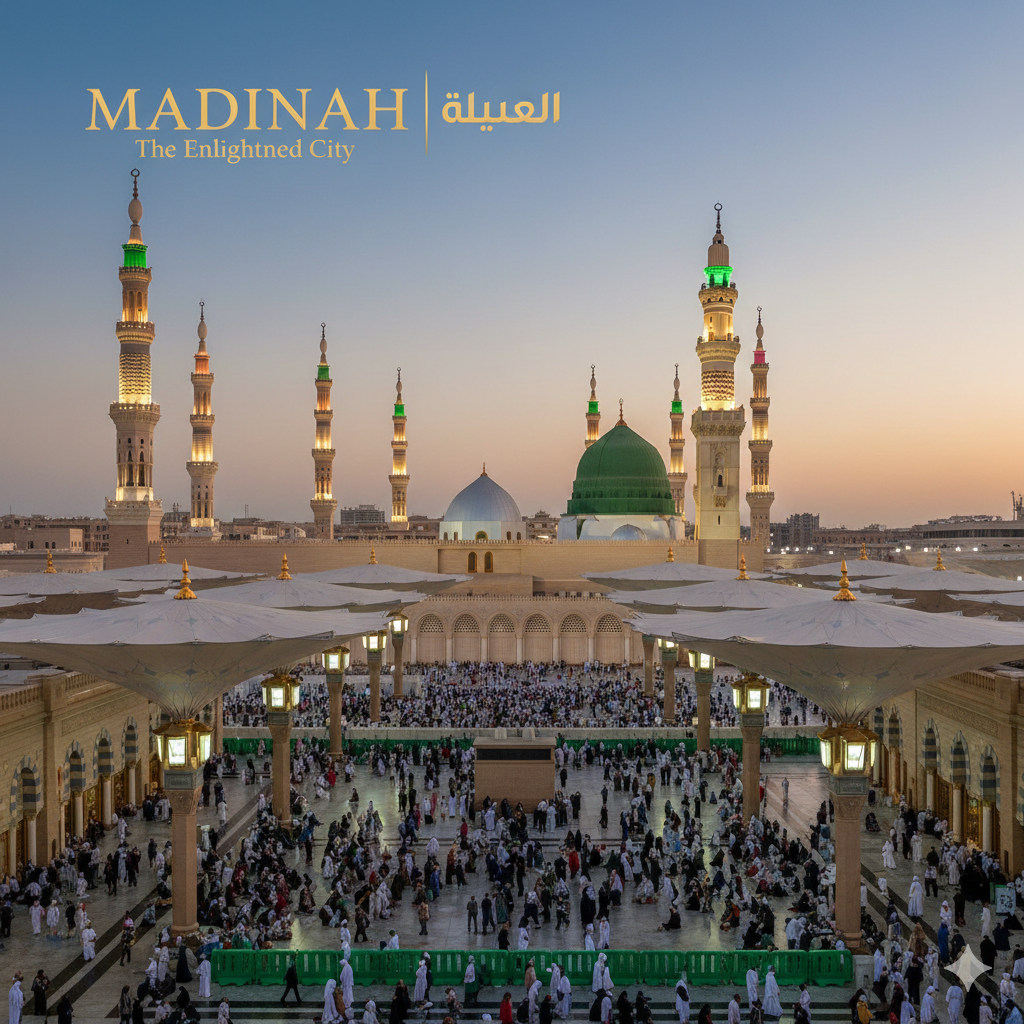
Madinah, officially known as Al‑Madinah Al‑Munawwarah (the Enlightened City), holds a special and honored place in the Islamic world. As the city to which the Prophet Muhammad (peace be upon him) migrated and where the first Islamic community was established, Madinah is deeply rooted in religious history and spiritual meaning. Today, Madinah is both a sacred city and a modern urban center, carefully balancing its religious heritage with development, services, and growing global connections.
Historical and Religious Importance
Madinah’s importance comes from its central role in Islamic history. It was here that the Prophet Muhammad (peace be upon him) built the first mosque, established a just society, and laid the foundations of the Islamic state. The Prophet’s Mosque (Al‑Masjid an‑Nabawi), which contains the Prophet’s tomb, remains the heart of the city and one of the holiest places in Islam. Millions of Muslims visit Madinah every year to pray, reflect, and connect spiritually with Islamic history.
Population and Urban Development
Today, Madinah is home to a diverse population that includes Saudi citizens and expatriates from many countries. The city has expanded significantly in recent decades, with new residential areas, roads, and public facilities developed to support residents and visitors. Urban planning in Madinah focuses on preserving the city’s spiritual atmosphere while meeting modern housing, transportation, and service needs.
Pilgrimage and Religious Tourism
Religious tourism is the main driver of Madinah’s economy and daily life. Pilgrims often visit Madinah before or after performing Hajj or Umrah in Makkah. The city is designed to accommodate large numbers of visitors throughout the year, with hotels, restaurants, transport services, and guidance centers operating close to the Prophet’s Mosque. Authorities place great importance on ensuring comfort, safety, and respect for the sacred nature of the city.
Infrastructure and Public Services
Madinah has benefited from significant investment in infrastructure. Roads, pedestrian areas, and public transportation systems have been improved to ease movement, especially during peak pilgrimage seasons. Healthcare facilities are well developed, with hospitals and emergency services prepared to serve both residents and visitors. Utilities such as water, electricity, and sanitation systems are continually upgraded to meet high demand.
Economy and Employment
The economy of Madinah is closely linked to religious tourism. Employment opportunities are mainly found in hospitality, retail, transportation, healthcare, and services related to pilgrimage management. Small and medium businesses play a vital role, including shops selling dates, religious items, and local products. Agriculture, particularly date farming, also remains an important part of the region’s economic identity.
Education and Knowledge
Madinah is an important center of Islamic learning. The Islamic University of Madinah attracts students from around the world who come to study Islamic sciences and Arabic language. Alongside religious education, the city also offers modern schools and universities that provide scientific, technical, and professional education. This combination supports the development of a knowledgeable and skilled population.
Social Life and Cultural Values
Social life in Madinah reflects strong Islamic values, hospitality, and community spirit. Residents are known for their kindness toward visitors and their respect for religious customs. Family life, prayer, and community activities are central to daily routines. Despite modernization, Madinah maintains a calm and spiritual atmosphere compared to many large cities.
Technology and Modern Management
Technology plays an increasing role in managing Madinah today. Digital systems support crowd management, transportation planning, health services, and visitor guidance. Mobile applications help pilgrims navigate religious sites, access information, and receive safety updates. These technological solutions enhance efficiency while preserving the city’s sacred character.
Environmental and Urban Challenges
Like other growing cities, Madinah faces challenges such as urban expansion, environmental sustainability, and managing seasonal population increases. Authorities work to protect green spaces, reduce congestion, and ensure responsible development. Balancing growth with preservation remains a continuous responsibility.
Madinah’s Global Significance
Madinah represents peace, faith, and guidance for Muslims worldwide. It is remembered as the city of brotherhood, justice, and moral leadership established by the Prophet Muhammad (peace be upon him). This spiritual legacy gives Madinah a global influence that goes far beyond its physical boundaries.
Conclusion
Madinah today is a city where history, faith, and modern life exist side by side. Deeply rooted in Islamic tradition, it continues to develop as a well‑organized, welcoming, and peaceful urban center. By honoring its sacred heritage while embracing progress, Madinah remains a symbol of spiritual enlightenment, unity, and compassion for Muslims around the world.