

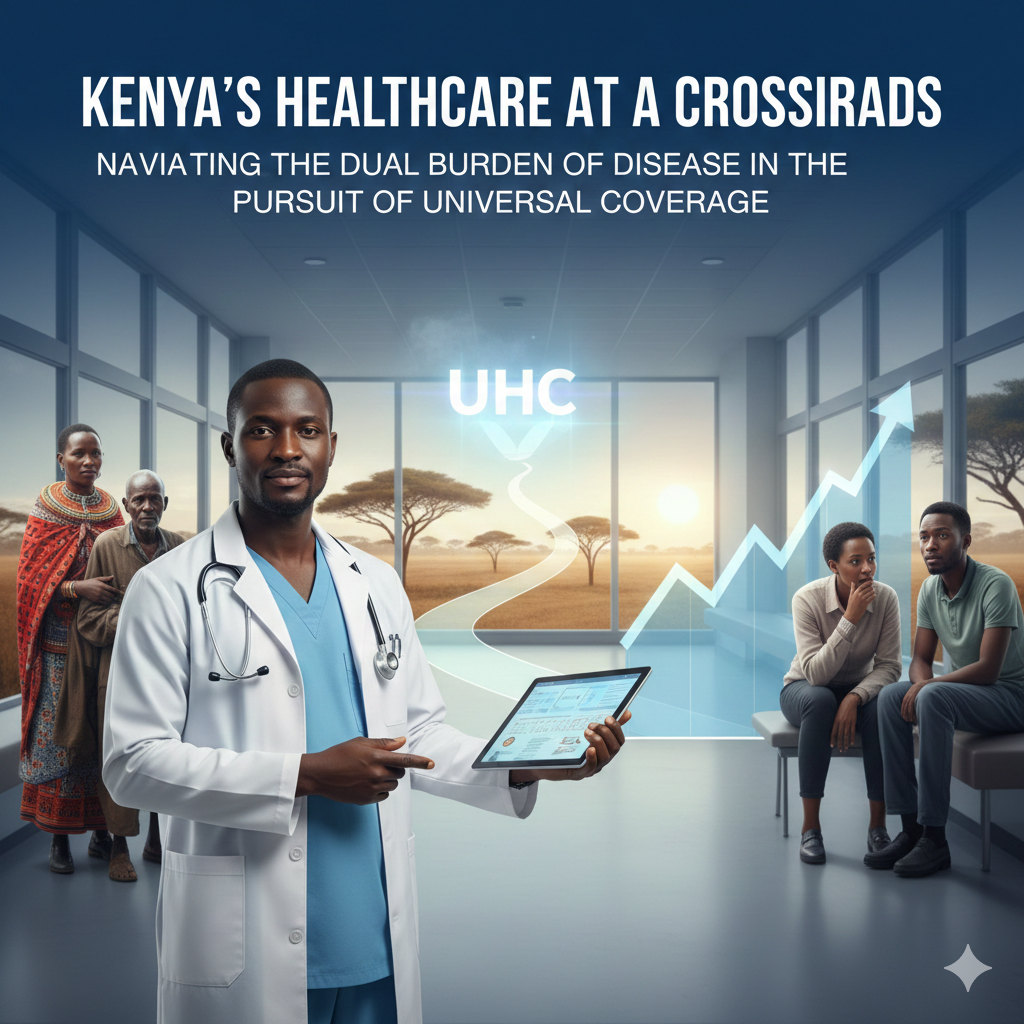
NAIROBI, Kenya — The state of health in Kenya today is a story of profound contrasts and competing realities. On one hand, the nation has made remarkable strides, emerging as a regional leader in medical innovation and digital health. On the other, it continues to grapple with the deep-seated inequities and systemic challenges that define healthcare for much of the Global South. As Kenya approaches the first decade of its ambitious Universal Health Coverage (UHC) agenda, its health system stands as a microcosm of both Africa’s potential and its enduring struggles.
A Landscape of “Dual Burden”: Infectious Diseases and a Rising NCD Tide
The epidemiological profile of Kenya is increasingly complex, characterized by a “dual burden” of disease. While the nation has made significant progress in combating infectious diseases, they remain a formidable challenge.
- Persistent Infections: HIV/AIDS, though no longer the death sentence it once was, continues to affect an estimated 1.4 million Kenyans. The success story lies in robust antiretroviral therapy (ART) programs, achieving high viral suppression rates. However, tuberculosis, often co-morbid with HIV, and malaria—especially in endemic regions like the Lake Victoria basin—still claim thousands of lives annually, disproportionately affecting children and pregnant women.
- The Silent Surge of NCDs: The more alarming shift is the rapid rise of non-communicable diseases (NCDs). Cardiovascular diseases, diabetes, chronic respiratory illnesses, and cancers now account for over 50% of all hospital admissions and nearly 40% of deaths. This surge is driven by urbanization, sedentary lifestyles, dietary changes towards processed foods, and increasing tobacco and alcohol use. The strain on a system historically designed for acute, infectious care is immense and growing.
Maternal and child health indicators, while improved, also reflect this duality. Skilled birth attendance has risen, yet the maternal mortality ratio remains stubbornly high at 342 deaths per 100,000 live births, with stark disparities between urban and rural areas. Access to quality antenatal and postnatal care is not a given for millions.
The UHC Promise and the “Devolved” Reality
The centerpiece of Kenya’s health policy is the 2010 Constitution’s decentralization of health services and the subsequent launch of Universal Health Coverage (UHC) as a flagship national project in 2018. The goal is clear: to ensure all Kenyans can access essential quality health services without suffering financial hardship.
The reality is a complex, uneven implementation:
- The Devolution Challenge: Health service delivery is now primarily the responsibility of 47 county governments. This has led to a patchwork of outcomes, with well-managed counties making impressive gains while others struggle with governance, funding, and capacity. Inequity in access and quality has, in some cases, been exacerbated rather than diminished.
- The NHIF Gamble: The National Hospital Insurance Fund (NHIF) is the engine of the financial protection model. Recent reforms aim to transform it into a more robust, mandatory social health insurer. However, challenges of affordability for the informal sector (which constitutes over 80% of the workforce), claims processing delays, and allegations of inefficiency and corruption have hampered its effectiveness. The proposed shift to the new Social Health Insurance Fund (SHIF) is mired in legal and public trust debates.
- The Primary Healthcare Gap: True UHC is built on a foundation of strong primary care. Kenya’s network of dispensaries and health centers is extensive but often plagued by stock-outs of essential medicines and commodities, absenteeism, and a lack of diagnostic capacity. Strengthening this “first contact” layer remains the system’s most critical and underfunded task.
Beacons of Innovation: Kenya’s Digital Health Leadership
Amidst these systemic challenges, Kenya has earned global recognition as a pioneer in digital health (e-Health) and health tech innovation. This is not a side story; it is a central pillar of the nation’s strategy to leapfrog infrastructure deficits.
- From M-Pesa to Health: Building on the revolutionary success of mobile money, platforms like M-Tiba allow users to save, send, and pay for healthcare via their phones, directing funds specifically to medical needs. This has empowered community-based health insurance and reduced out-of-pocket spending at the point of care.
- Telemedicine Takes Root: Start-ups and established providers are deploying teleconsultation services to bridge the specialist gap, particularly in psychiatry, dermatology, and chronic disease management. This is crucial for rural populations.
- Data for Decision-Making: Digital tools like the DHIS2 (District Health Information Software 2) are being used to track disease outbreaks in real-time, manage medical supply chains, and monitor health indicators at the facility level, moving the system from paper-based guesswork to data-informed action.
The Human Resource Crisis: A System Stretched Thin
Technology cannot replace the fundamental need for skilled personnel. Kenya faces a critical shortage and maldistribution of healthcare workers. The doctor-to-patient ratio remains far below WHO recommendations, and the distribution is heavily skewed towards urban centers and private facilities.
This crisis is compounded by:
- “Brain Drain”: The emigration of trained doctors, nurses, and clinical officers to the UK, US, and Middle East in search of better remuneration and working conditions is a constant hemorrhage of talent and public investment.
- County-Level Disparities: Salaries and working conditions for health workers vary dramatically from county to county, leading to internal strikes and protests that paralyze service delivery.
- Burnout and Morale: Those who remain are often overworked, underpaid, and demoralized, facing immense pressure in under-resourced public facilities.
Emerging Threats and Social Determinants
The health of Kenyans is inextricably linked to broader environmental and social factors:
- Climate Change as a Health Multiplier: Recurrent droughts and floods are not just agricultural disasters; they are health crises. They drive malnutrition, fuel waterborne disease outbreaks like cholera, and displace populations, increasing their vulnerability.
- The Mental Health “Silent Epidemic”: Long stigmatized and neglected, mental health is gaining recognition as a critical public health issue. Depression, anxiety, and substance abuse are prevalent, especially among youth and in areas affected by poverty and trauma. The ratio of mental health professionals to the population is critically low.
- Urbanization and Slum Health: The explosive growth of informal settlements in cities like Nairobi creates environments ripe for the spread of disease, with overcrowding, poor sanitation, and limited access to clean water defining daily life for millions.
The Road Ahead: An Integrated, Equitable Future
The path forward for health in Kenya requires moving beyond fragmented solutions to an integrated, people-centered approach.
- Reinforcing Primary Care: Significant, sustained investment must flow into county-level primary health systems—ensuring consistent drug supplies, adequate staffing, and functional equipment. This is the most cost-effective path to better health outcomes.
- Making UHC Financing Work: Building a transparent, efficient, and trustworthy national health insurance model is non-negotiable. This requires political will, robust oversight, and designs that genuinely include the poor and informal sector.
- Harnessing Innovation for Equity: Digital tools must be designed and deployed explicitly to reduce, not exacerbate, the urban-rural and rich-poor divide. They should support frontline health workers, not just tech-savvy urban elites.
- Investing in the Health Workforce: A national strategy to train, retain, and motivate health workers—with clear career paths, fair compensation, and safe working environments—is the system’s true backbone.
- A Multi-Sectoral Approach: Recognizing that health is made in homes, schools, and environments. Policies in agriculture (food security), environment (clean water, sanitation), and urban planning are fundamental health policies.
Conclusion: Resilience in the Balance
Health in Kenya today is a narrative of resilience shadowed by risk. It is a system where a doctor in a remote clinic might diagnose a patient using a smartphone app, yet that same patient may not find the prescribed medicine in stock. The spirit of innovation is palpable, but so is the weight of structural inequality.
The success of Kenya’s health journey will not be measured solely by the high-tech hospitals in Nairobi, but by the quality and dignity of care accessible to a mother in Turkana, a farmer in Kisii, and a youth in Kibera. As the nation strives to turn the constitutional right to health into a lived reality for all, it carries the lessons—both of promise and caution—for an entire continent seeking to heal itself.