

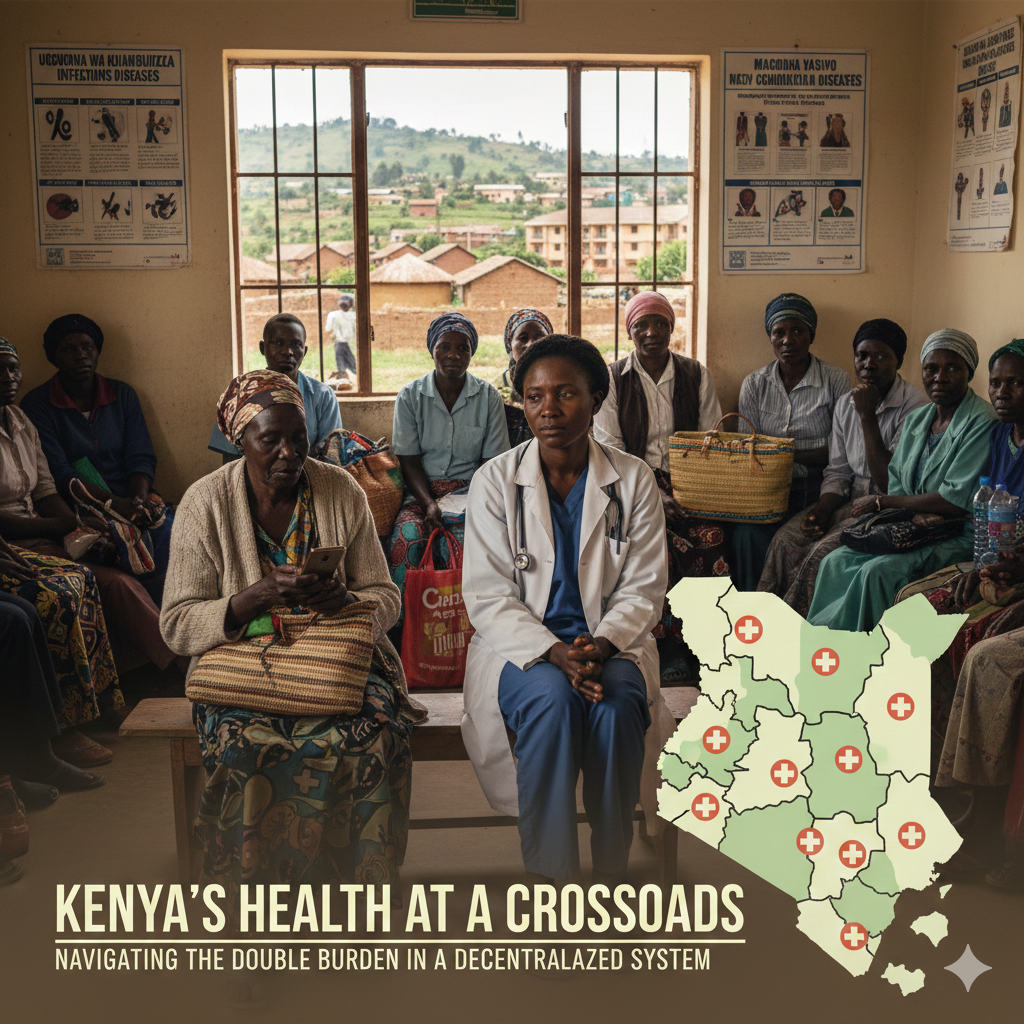
NAIROBI, Kenya – The narrative of health in Kenya today is one of profound duality. It is a story of pioneering innovation and stark inequity, of remarkable community-led triumphs and daunting systemic bottlenecks. As the nation strides towards its Vision 2030 ambitions, its healthcare system, a crucial pillar of social and economic development, stands at a pivotal juncture. It is grappling with the “double burden” of persisting infectious diseases and a rapid surge in non-communicable ailments, all within a decentralized framework that has both empowered counties and exposed deep-seated disparities. The pursuit of Universal Health Coverage (UHC) remains the guiding star, but the path is fraught with financial, infrastructural, and human resource challenges.
The Persistent and Evolving Disease Landscape
Kenya’s epidemiological profile is complex. The country has made significant strides in combating infectious diseases, yet they remain formidable. While HIV prevalence has dramatically declined from its peak to about 4%, the country still shoulders a significant burden, with 1.4 million people living with the virus. The success story lies in robust antiretroviral therapy (ART) programs, achieving high rates of viral suppression. Tuberculosis and malaria continue to claim lives, with the latter remaining a leading cause of morbidity, especially among children in endemic regions like the Lake Victoria basin.
However, the more alarming shift is the dramatic rise of non-communicable diseases (NCDs). Cardiovascular diseases, diabetes, cancers, and chronic respiratory illnesses now account for over 50% of hospital admissions and more than a third of all deaths. This surge is fueled by rapid urbanization, sedentary lifestyles, the consumption of processed foods high in sugar and fats, and rising tobacco and alcohol use. The strain on a system historically designed for acute, infectious care is immense. The result is a population where a child in Turkana may be at risk of malnutrition and pneumonia, while a middle-aged professional in Nairobi faces a high probability of hypertension and type 2 diabetes.
The UHC Promise and the Devolution Reality
Launched as a flagship project in 2018, Kenya’s pursuit of Universal Health Coverage (UHC) is the centerpiece of its health policy. The goal is to ensure all Kenyans can access essential quality health services without suffering financial hardship. The 2010 Constitution devolved healthcare delivery to 47 county governments, a move intended to bring services closer to the people.
This decentralization has yielded a mixed bag. Some well-managed counties have made impressive gains, innovating in service delivery and infrastructure. Others, however, struggle with governance, capacity, and funding, leading to a “postcode lottery” of care. The fragmentation has, at times, hampered national health security coordination, as seen during disease outbreaks. The heart of UHC’s financial mechanism is the National Hospital Insurance Fund (NHIF), now transitioning to the new Social Health Insurance Fund (SHIF). While designed to pool risk and provide financial protection, NHIF has been plagued by claims delays, allegations of corruption, and limited coverage for outpatient and primary care, forcing many to still pay out-of-pocket. The shift to SHIF, though ambitious, is mired in legal challenges and public skepticism over its implementation and transparency.
The Human Resource Crisis: Brain Drain and Burnout
A healthcare system is only as strong as its workforce. Here, Kenya faces a critical challenge. There is a severe shortage and maldistribution of doctors, nurses, and clinical officers. The doctor-to-patient ratio remains far below World Health Organization recommendations, with a heavy skew towards urban centers and the private sector.
This crisis is compounded by two factors. First, the “brain drain” sees a steady exodus of highly trained professionals to the UK, US, Australia, and the Middle East, lured by better remuneration, working conditions, and career opportunities. Kenya invests in their education, only to lose them at peak productivity. Second, those who remain face “burnout”—working in understaffed facilities with limited supplies, facing high patient loads, and often dealing with delayed or poor pay, especially in county systems. This demoralization affects the quality of care and patient safety.
Innovation and Community Health: Beacons of Hope
Amidst these challenges, Kenya has earned global acclaim as a hub for health technology innovation. The legacy of M-Pesa has birthed a thriving digital health ecosystem. Platforms like M-Tiba allow for mobile-based health savings, insurance, and payment. Telemedicine is expanding access to specialist consultations in remote areas. Crucially, Kenya’s Community Health Strategy, relying on a network of over 100,000 trained Community Health Promoters (CHPs), forms the bedrock of primary care. These frontline workers, soon to be salaried by the government, are the first point of contact for millions, providing health education, basic services, and vital linkage to facilities. Their role in pandemic response, HIV adherence, and maternal health has been indispensable.
The Silent Epidemics: Mental Health and Environmental Pressures
Two under-prioritized crises loom large. First, mental health is emerging from the shadows. The World Health Organization estimates that one in four Kenyans will suffer from a mental health condition in their lifetime, with depression, anxiety, and substance abuse being prevalent. Stigma is high, and services are scarce, concentrated in urban areas with a dire
