

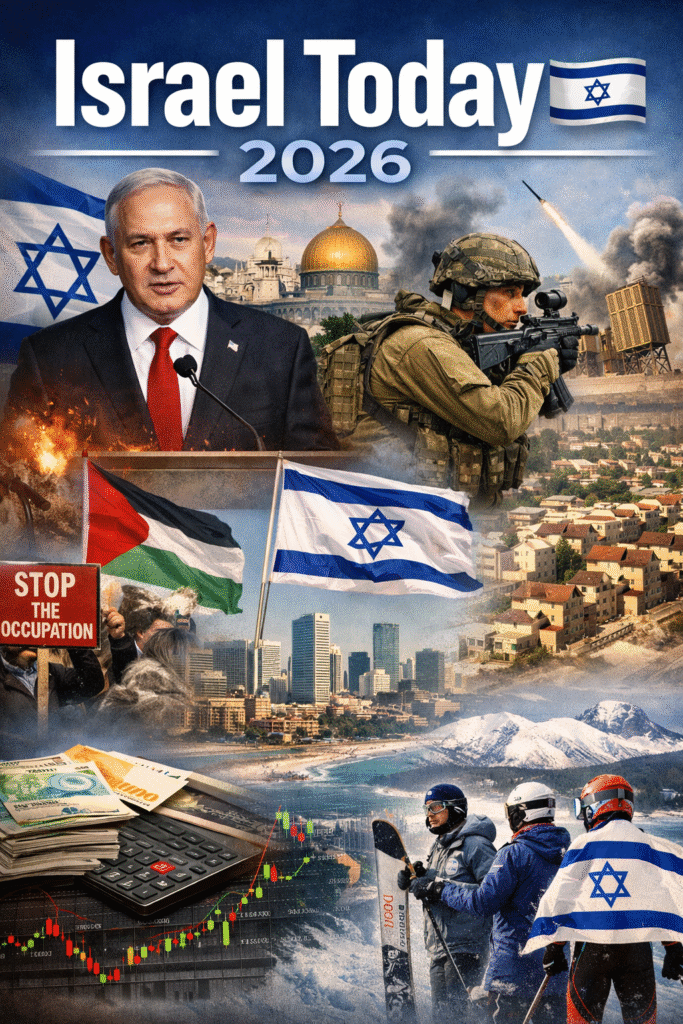
1. Political Landscape & Polls
Recent polls show Prime Minister Benjamin Netanyahu’s coalition gaining strength at the expense of the opposition if elections were held now — indicating continued public support for the current right‑leaning government ahead of elections later in 2026. (Israel National News)
2. Security and Military Tensions
The Israel Defense Forces (IDF) reported detecting a failed rocket launch from Gaza, with rockets falling short of Israeli territory. Simultaneously, Israeli strikes reportedly killed several Gazans — underscoring ongoing flare‑ups even after the last ceasefire. (The Times of Israel)
In maritime security, the IDF fired warning shots at an Egyptian vessel that entered Israeli waters without authorization — a reflection of vigilance along Israel’s complex coastal borders. (The Times of Israel)
3. Gaza & Humanitarian Controversies
Israel has begun revoking the licenses of 37 international organizations operating in Gaza, forcing them to cease activities by March 2026 — a controversial move drawing international humanitarian concern. (Anadolu Ajansı)
This comes amid reports that, since the ceasefire, hundreds of Gazans remain detained under Israel’s illegal combatants law, and arrests continue in Palestinian areas — demonstrating deep and unresolved tensions. (The Times of Israel)
4. West Bank Settlement Expansion
The Israeli government has issued internationally condemned tenders for construction in the E1 area of the West Bank near Jerusalem — a plan long opposed by many world governments as undermining prospects for a contiguous Palestinian state. (Haaretz)
Separate reports confirm approvals to start construction on thousands of housing units in this area — a development likely to further strain relations with Palestinians and global partners. (AP News)
5. International Relations & Regional Diplomacy
Iran’s foreign minister stated Tehran is “not seeking war” but is prepared for it, amid broader unrest in Iran and ongoing tensions with Israel and the United States. (The Times of Israel)
Worldwide, some countries have condemned actions tied to Israeli diplomacy — for example, a joint statement by multiple Muslim majority states criticized an Israeli official’s visit to Somaliland. (Foreign Affairs Ministry Pakistan)
6. Global Political Repercussions
In U.S. politics, the retirement of a longtime pro‑Israel congressional ally is seen as symbolic of shifting support dynamics, even as strong support for Israel persists alongside criticism of the government’s policies. (Haaretz)
Meanwhile, protests by anti‑Israel groups in places like Queens, New York, reflect how diaspora politics are mobilizing around the conflict’s broader implications. (The Jerusalem Post)
7. Domestic Social Strains
Inside Israel, societal strains persist. Issues such as disagreements over military conscription for ultra‑Orthodox communities continue to spark public debate and demonstrations. (Context from 2025 events) (The Guardian)
Additionally, internal crime concerns — including record levels of violence in some Arab‑Israeli communities — highlight domestic security and social cohesion challenges. (Reddit)
8. Economy & Monetary Policy
The Bank of Israel recently cut interest rates, responding to moderating inflation and a stronger shekel. Markets now expect further easing through 2026 — a sign of macroeconomic adjustments following the geopolitical shocks of recent years. (FocusEconomics)
9. Culture & Everyday Life
Despite tensions, cultural life continues, and Israel prepares for scheduled national and international events. Seasonal festivals, sporting competitions, and community activities proceed across the country. (Tourist Israel)
Tourism has been gradually resuming in major cities like Jerusalem and Tel Aviv, even as travelers consider safety advisories linked to regional tensions. (Reddit)
10. Sports: National Competitions & International Stage
In sports, the Israeli Basketball National League Cup is underway for the 2025–26 season, drawing local interest and competition rhythms back into public life. (Wikipedia)
Looking ahead, Israel will compete at the 2026 Winter Olympics in Milan and Cortina d’Ampezzo, expanding its global sporting presence. (Wikipedia)
11. Elections & Future Politics
2026 is an election year in Israel, with legislative polls expected in October. Debate around leadership, security policy, and national direction is a dominant theme among citizens and analysts alike. (Reddit)
12. Broader Regional Security Dialogues
There are ongoing negotiations — including U.S.-mediated proposals for demilitarized zones on the Israel–Syria border — aimed at reducing flashpoints and fostering regional stability. (Axios)
Israel also issued condemnations of actions by foreign governments — for instance, criticizing attacks on Kurdish populations in Syria — showing its active diplomatic stance in the region. (The Times of Israel)
13. Israel’s Role on the World Stage
In 2026, Israel continues to navigate major geopolitical shifts. Its activities in Palestinian territories, engagement with neighboring states, and global diplomatic maneuvers make it a central player in Middle Eastern politics — balancing security concerns, international criticism, and domestic imperatives.
