

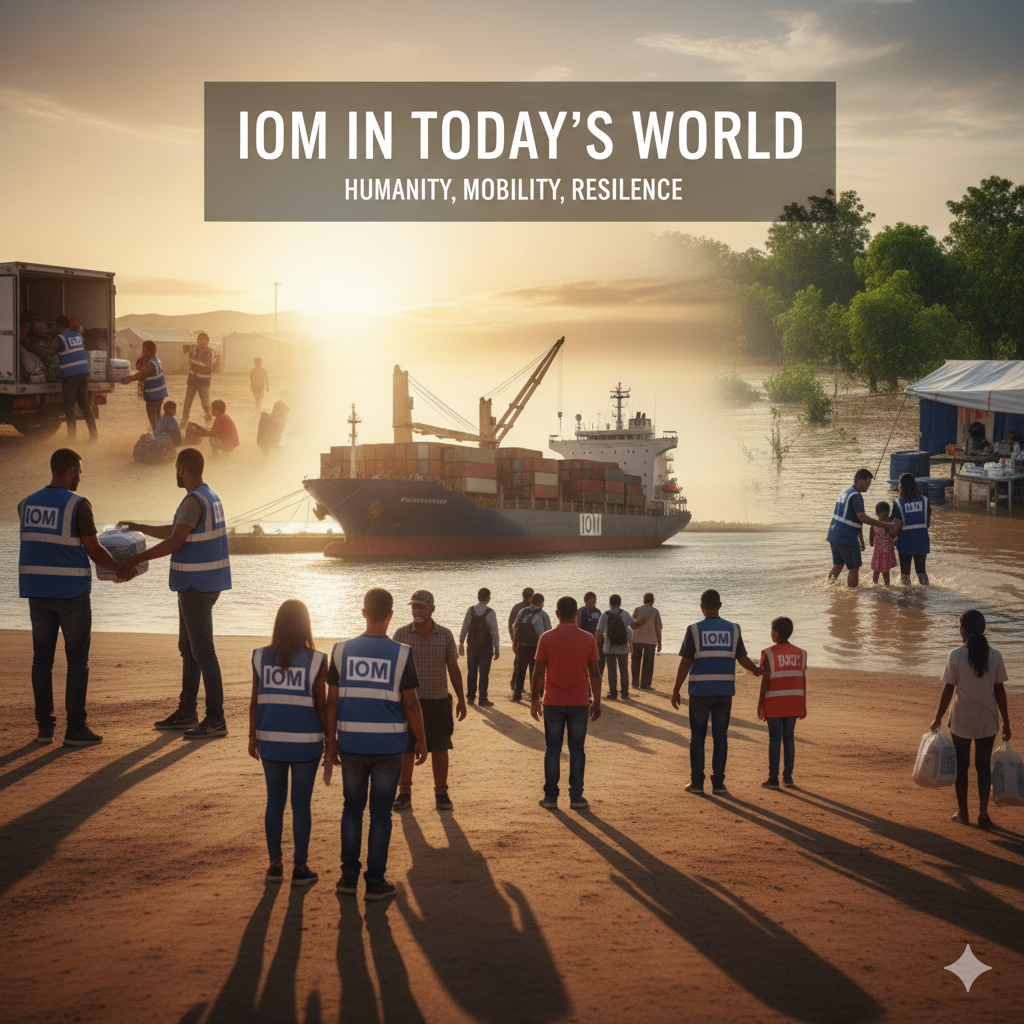
The International Organization for Migration (IOM) plays a vital role in addressing migration challenges in today’s interconnected world. Established in 1951, IOM is the leading intergovernmental organization working on migration issues and is now part of the United Nations system. In an era marked by conflict, climate change, economic inequality, and globalization, IOM’s work has become more important than ever. Today, the organization supports governments and migrants alike by promoting safe, orderly, and humane migration.
Understanding the Role of IOM
IOM works to ensure that migration benefits both migrants and societies. Its activities are based on the principles of human dignity, protection of rights, and international cooperation. IOM assists migrants directly, advises governments on migration policy, and provides humanitarian support in emergency situations. With offices in more than 170 countries, IOM operates at global, regional, and local levels.
Migration in the Modern World
Migration today is more complex than in the past. People move across borders for work, education, safety, and family reunification. At the same time, forced displacement caused by conflict, disasters, and environmental degradation has increased dramatically. Millions of refugees, internally displaced persons, and irregular migrants require protection and assistance. IOM responds to these realities through programs that manage migration while prioritizing human rights.
Humanitarian Assistance and Emergency Response
One of IOM’s key roles today is providing humanitarian assistance during crises. The organization delivers shelter, food assistance, healthcare, clean water, and protection services to displaced populations. IOM also supports camp coordination and management, ensuring that displaced people live in safer and more dignified conditions. In conflict zones and disaster-affected areas, IOM often works alongside governments and other UN agencies to save lives.
Migration Management and Policy Support
IOM supports governments in developing effective migration policies and systems. This includes border management, visa systems, data collection, and migration governance frameworks. The organization provides training and technical assistance to help states manage migration in line with international standards. By promoting cooperation between countries, IOM helps reduce irregular migration and combat human trafficking and smuggling.
Protection of Migrants’ Rights
Protecting migrants is central to IOM’s mission today. The organization works to prevent exploitation, violence, and discrimination faced by migrants, especially women, children, and vulnerable groups. IOM operates programs to combat human trafficking, provide legal assistance, and support victims of abuse. Respect for migrants’ rights strengthens social cohesion and reduces the risks associated with unsafe migration.
Labor Migration and Development
IOM recognizes the strong link between migration and development. Labor migration programs help match workers with employment opportunities while protecting their rights. Remittances sent by migrant workers contribute significantly to the economies of many developing countries. IOM supports ethical recruitment practices and helps countries maximize the development benefits of migration.
Climate Change and Migration
Climate change is increasingly shaping migration patterns. Floods, droughts, rising sea levels, and environmental degradation force people to move from their homes. IOM works to address climate-induced displacement by supporting adaptation strategies, disaster risk reduction, and planned relocation where necessary. Today, climate migration is a growing focus of IOM’s global agenda.
Health and Migration
Health is another important area of IOM’s work today. Migrants often face barriers to healthcare, including language, legal status, and access issues. IOM provides health assessments, vaccination programs, mental health support, and emergency medical care. During global health crises, such as pandemics, IOM helps ensure migrants are included in public health responses.
Partnerships and Global Cooperation
IOM works closely with governments, UN agencies, civil society organizations, and the private sector. Through partnerships, the organization strengthens global cooperation on migration. IOM also plays a key role in implementing the Global Compact for Safe, Orderly and Regular Migration, which promotes international collaboration and shared responsibility.
Challenges Facing IOM Today
Despite its achievements, IOM faces challenges such as funding constraints, political sensitivity surrounding migration, and growing humanitarian needs. Rising anti-migrant sentiment in some regions also complicates migration management. Balancing state interests with migrant protection remains a complex task.
Conclusion and Future Outlook
IOM’s role in today’s world is essential as migration continues to shape societies and economies. By promoting humane, safe, and well-managed migration, IOM contributes to global stability and development. Looking ahead, the organization will need continued international support, innovation, and cooperation to respond effectively to evolving migration challenges. In a world on the move, IOM remains a key actor in ensuring migration is a force for good.
