

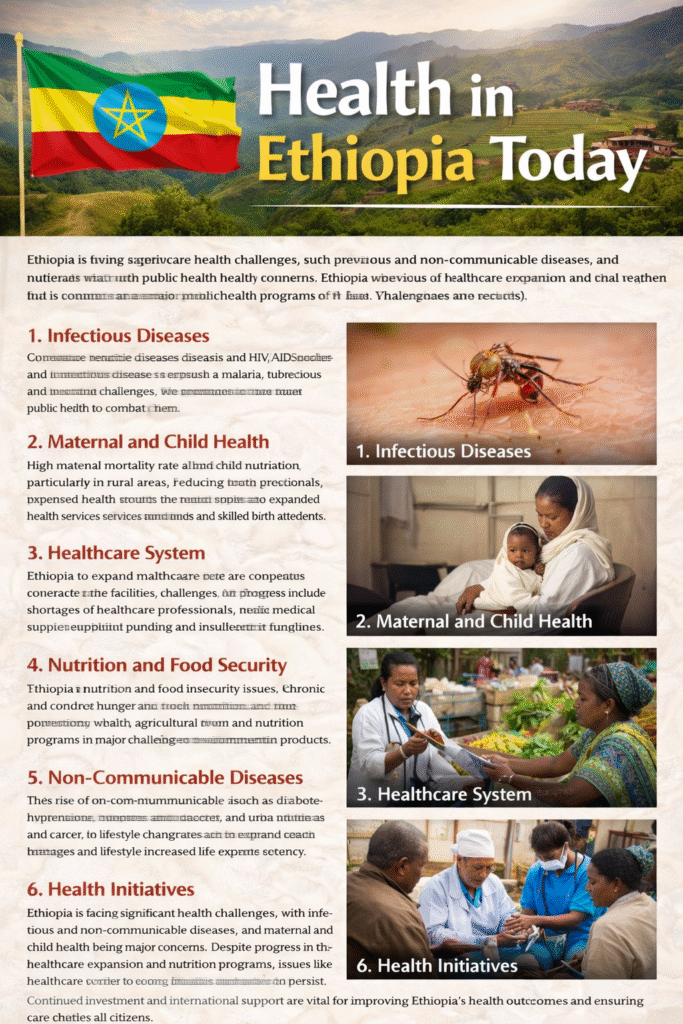
Health is a critical aspect of development in Ethiopia, a country that has made notable progress in improving the well-being of its population over recent decades. With a rapidly growing population and diverse geographical conditions, Ethiopia faces complex health challenges alongside meaningful achievements. Today, the health sector reflects a combination of traditional practices, modern healthcare reforms, community-based approaches, and ongoing efforts to ensure equitable access to services.
Overview of the Health System
Ethiopia’s health system is organized into a three-tier structure consisting of primary, secondary, and tertiary levels of care. Primary healthcare forms the foundation of the system and is delivered through health posts, health centers, and district hospitals. This structure aims to ensure that basic health services reach rural and underserved communities, where the majority of the population lives.
Health Extension Program
One of Ethiopia’s most successful health initiatives is the Health Extension Program (HEP). Introduced to expand access to essential services, the program trains health extension workers who deliver preventive and basic curative care at the community level. These workers focus on maternal and child health, hygiene, sanitation, nutrition, family planning, and disease prevention, significantly improving health awareness and outcomes.
Maternal and Child Health
Maternal and child health has been a major priority in Ethiopia. Expanded access to antenatal care, skilled birth attendance, and immunization programs has helped reduce maternal and under-five mortality rates. Despite progress, challenges such as limited access to emergency obstetric services and regional inequalities continue to affect outcomes, especially in remote areas.
Communicable Diseases
Communicable diseases remain a significant public health concern. Malaria, tuberculosis, HIV/AIDS, and waterborne diseases affect many communities, particularly in rural and low-income areas. Government-led prevention programs, improved diagnostics, vaccination campaigns, and international partnerships have contributed to declining disease prevalence, though continued vigilance is required.
Non-Communicable Diseases
In recent years, non-communicable diseases such as diabetes, hypertension, cardiovascular disease, and cancer have become more prevalent. Urbanization, lifestyle changes, and aging contribute to this shift. Ethiopia’s health system is gradually adapting to address these conditions through awareness campaigns, early detection, and integration of NCD care into primary health services.
Nutrition and Food Security
Malnutrition remains a key health challenge in Ethiopia, particularly among children and pregnant women. While food security has improved in some areas, periodic droughts, conflict, and economic pressures contribute to undernutrition. National nutrition programs promote breastfeeding, micronutrient supplementation, and community-based nutrition education to combat these issues.
Healthcare Workforce and Infrastructure
Ethiopia has expanded its healthcare workforce through training programs for doctors, nurses, midwives, and health extension workers. However, shortages of skilled professionals and uneven distribution of facilities persist. Rural areas often face limited access to specialized care, highlighting the need for continued investment in infrastructure and human resources.
Health Financing and Access
Health financing in Ethiopia relies on a mix of government funding, donor support, and out-of-pocket payments. Community-based health insurance schemes have been introduced to improve affordability and protect households from catastrophic health expenditures. Expanding insurance coverage remains essential to achieving universal health coverage.
Impact of Conflict and Emergencies
Conflict, displacement, and humanitarian emergencies have severely affected health services in certain regions. Damage to infrastructure, shortages of medicines, and disruption of routine care pose serious risks to vulnerable populations. Humanitarian organizations and the government work to restore services and provide emergency health assistance.
Role of Traditional Medicine
Traditional medicine continues to play an important role in Ethiopian society. Many people rely on herbal remedies and traditional healers, especially in rural areas. Efforts are underway to regulate and integrate traditional practices safely within the national health framework while promoting evidence-based medicine.
Future Prospects and Conclusion
Health in Ethiopia today reflects both progress and persistent challenges. Strong community-based programs, government commitment, and international cooperation have improved many health indicators. Going forward, strengthening the health system, addressing inequality, expanding health insurance, and preparing for emerging health threats will be essential. With sustained investment and inclusive policies, Ethiopia can continue to improve the health and well-being of its population.
