

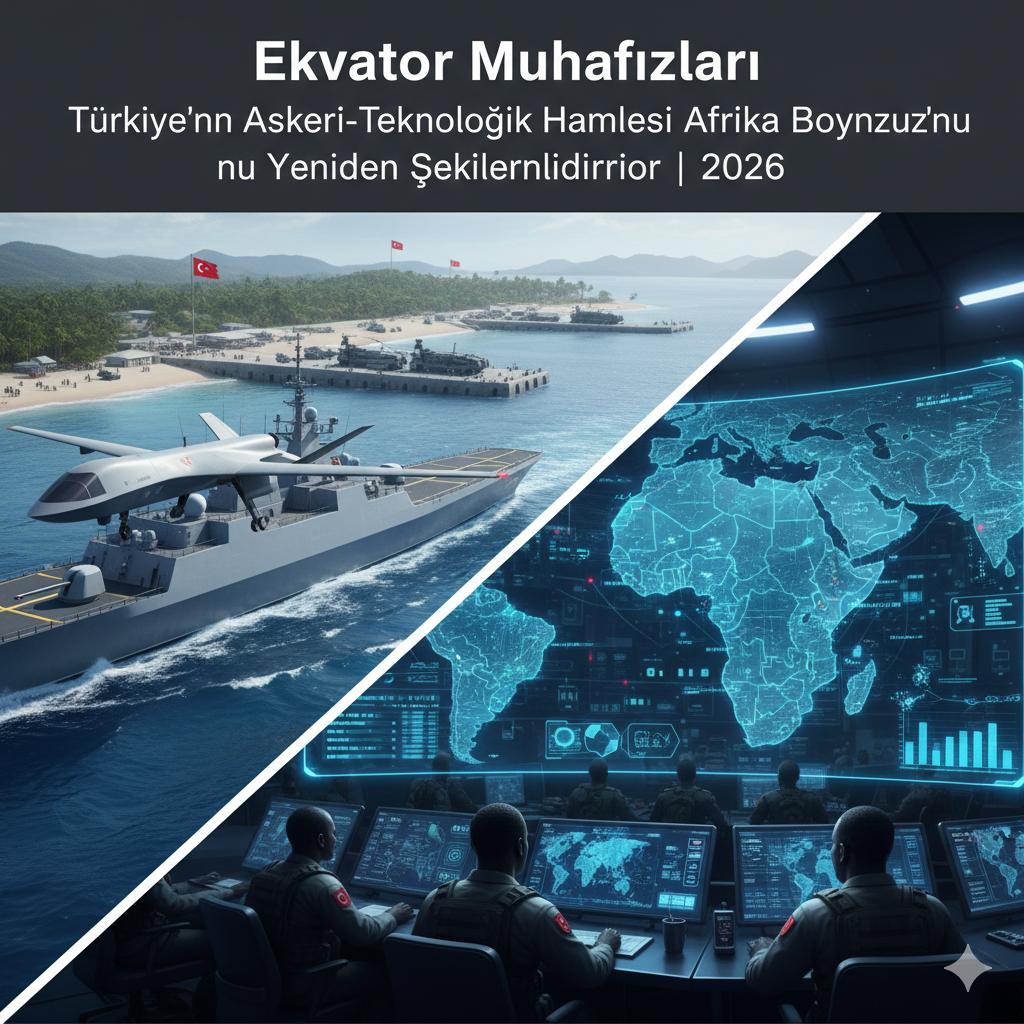
MOGADISHU, Somalia – In the span of three weeks, the strategic calculus of the Horn of Africa has been fundamentally rewritten. Turkish F-16 fighter jets now patrol the skies over Mogadishu. M60 Patton tanks, freshly unloaded at the capital’s port, rumble in convoy toward installations north of the city. Turkish special forces have, for the first time, been confirmed in direct ground combat alongside Somali troops against Al-Shabaab militants . This is not incremental assistance. It is a qualitative leap—a transformation of Turkey’s decade-old partnership with Somalia into a fully-fledged, multi-domain military-technological alliance with implications reaching far beyond the region’s borders.
As February 2026 draws to a close, the scale and sophistication of Ankara’s military buildup in Somalia demand a fundamental reassessment of power dynamics in East Africa. This is no longer a story of humanitarian diplomacy or training missions. It is the story of a middle power projecting hard power across continents, securing strategic assets, and reshaping the security architecture of one of the world’s most volatile regions.
The Air Component: F-16s Over Mogadishu
On January 28, 2026, three Turkish Air Force F-16 fighter jets touched down at Aden Adde International Airport in Mogadishu, accompanied by two military helicopters . For a city accustomed to the drone of UN cargo planes and the occasional rumble of American unmanned aircraft, the sight of advanced multirole fighters on its tarmac was nothing short of revolutionary.
Somalia’s Defense Minister Ahmed Moalim Fiqi confirmed the deployment, stating that the jets were meant to strengthen Somalia’s air capability and provide strategic support for counterterrorism operations . Turkish officials offered a characteristically measured public assessment, noting only that the air component command in Somalia had been “strengthened with new deployments” . But behind this diplomatic restraint lies a meticulously planned operation. Satellite imagery reviewed by multiple outlets shows several new hangars constructed at the airport since September 2025, suggesting long-term planning for an expanded Turkish air presence . A series of Turkish military cargo flights in the preceding days had delivered equipment, spare parts, and ammunition .
The operational implications are profound. While Turkey has long deployed armed drones—Bayraktar TB2s and Akinci UAVs—over Somali skies, manned fighter aircraft offer a fundamentally different capability set: greater payload capacity, faster response times, and the flexibility to adapt to emerging threats in real-time . For Al-Shabaab, which has for years operated with relative impunity in rural areas beyond the reach of Somali ground forces, the presence of fast jets introduces a new and terrifying variable.
Turkey’s F-16 fleet is the world’s largest, accounting for almost its entire air force . While some variants retain older mechanically scanned array radar systems, analysts consider them perfectly capable for counter-insurgency support missions in Somalia . More importantly, the deployment signals Turkey’s willingness to commit its most advanced conventional assets to the Somali theater—a commitment that extends far beyond training and advice.
The Armored Shield: Tanks for Strategic Infrastructure
If the F-16 deployment captured global headlines, the arrival of main battle tanks one week later underscored the seriousness of Turkey’s defensive posture. On February 13, the Turkish Navy landing ship TCG Sancaktar docked at the Port of Mogadishu, carrying a cargo that would have been unthinkable just months ago: M48 and M60 Patton tanks .
Footage published by Clash Report and verified by multiple outlets showed the heavily armored vehicles being offloaded and moving through the capital in convoy, escorted by Kipri armored vehicles . The tanks were handed over directly to Somali Army units, indicating immediate operational transfer rather than a training-only deployment .
Turkish sources say the tanks are being stationed primarily to protect strategic facilities in the Warshiikh area, approximately 60 kilometers north of Mogadishu . This site is reportedly being developed for missile and satellite launch capabilities, leveraging Somalia’s strategic proximity to the equator—a prime location for aerospace ballistics . The security of these installations is now a top priority for Ankara, and the introduction of main battle tanks provides a necessary deterrent against asymmetric threats in the Shabelle region .
Turkey maintains an inventory of roughly 1,500 M48 tanks, with a portion modernized in the early 1990s as M48A5T1 variants and nearly half further upgraded to M48A5T2 standard . While these Cold War-era platforms lack the advanced armor technology of modern main battle tanks, they offer durability, maintainability, and substantial firepower—qualities well-suited for ground support and armored security missions in the Somali environment .
The Ground Truth: Turkish Forces in Combat
Perhaps the most significant development, however, has been the confirmation of direct Turkish ground combat involvement. In late January, in the Middle Shabelle region near the Jabad-Godane area, Somali forces launched an intense artillery bombardment against Al-Shabaab positions, followed by a coordinated ground assault . The operation was led by Gorgor special forces—units trained by Turkey—with direct support from Turkish soldiers and officers previously deployed in the area .
According to local sources, dozens of Turkish military personnel, equipped with armored vehicles and advanced weaponry, took part in ground engagements lasting approximately three hours . Until now, Turkey had maintained a clear operational line, limiting its presence to training, equipment provision, intelligence sharing, and indirect support including armed drone operations. The Middle Shabelle operation marks the end of that distinction and positions Turkey as a direct combat actor in Somalia’s long war against Al-Shabaab .
Turkish Defence Minister Yaşar Güler recently confirmed that Turkey is increasing training and support activities in Somalia with the aim of strengthening security and stability. “In Somalia, we recently established the Air Force Command, which includes facilities for helicopters and drones,” Güler said .
The Strategic Rationale: Beyond Counterterrorism
Why is Turkey investing so heavily in Somali military capability? The answer lies at the intersection of geopolitics, economics, and grand strategy.
First, the immediate trigger appears to be regional diplomatic tensions. In late December 2025, Israel announced its recognition of Somaliland, the self-declared republic that broke away from Somalia in 1991 . Ankara condemned the move as “overt interference in Somalia’s domestic affairs” and illegal . The military buildup can be interpreted, in part, as a reaffirmation of Turkey’s support for Somali territorial unity and a signal to regional actors that Ankara will not tolerate challenges to its client’s sovereignty .
Second, the economic stakes are immense. Turkey’s partnership with Somalia has evolved far beyond humanitarian assistance. It now encompasses defense, energy, education, infrastructure, fisheries, space, and maritime sectors . In the energy domain, Turkey plans to begin offshore drilling in Somali waters in 2026, with the Cagri Bey drilling vessel scheduled for deployment . The F-16 deployment is closely tied to protecting these operations .
Somalia also holds significant untapped reserves of critical minerals including aluminium, copper, iron, rare earths, and titanium—key inputs for both civilian and military energy technologies . Access to these resources, amid Turkey’s domestic economic difficulties, represents a powerful motivation for deepening engagement .
Third, Somalia’s geostrategic position is unparalleled. It controls vital shipping lanes connecting the Indian Ocean to the Red Sea and the Suez Canal . As Somalia’s Ports Minister Abdulkadir Mohamed Nur noted, “The security of global trade is directly linked to the security of Somalia’s coasts” . For Turkey, a presence in Somalia offers a gateway to expanding military influence across Africa and a strategic foothold in one of the world’s most critical maritime chokepoints .
The Naval Dimension: Building a Blue-Water Capability
The military buildup extends to the maritime domain. Somalia’s cabinet has approved a historic defense deal authorizing Turkey to defend the African nation’s coastline for the next decade amid tensions with Ethiopia, and mandating Ankara to build a navy for the country . Turkey, whose navy has operated off Somalia’s shores and in the Gulf of Aden under UN mission since 2009, will not only construct the Somali navy but also train and equip personnel to counter illegal fishing in Somali territorial waters .
This naval component complements the air and ground buildup, creating an integrated, multi-domain Turkish military presence in the Horn of Africa. For the first time, a single external power will have significant influence over Somali airspace, territorial waters, and ground security—a concentration of capability unmatched by any other international actor.
The Regional Reaction and the Road Ahead
The Turkish buildup has not occurred in a vacuum. It coincides with an intensifying US military campaign against Al-Shabaab, with 23 airstrikes recorded since January 1, 2026 . It also comes amid heightened tensions following Ethiopia’s 2024 memorandum with Somaliland over sea access—a dispute Turkey helped steer into talks under the “Ankara Declaration” .
Regional actors are watching closely. Egypt, which has its own rivalries with Turkey and Ethiopia, may view the buildup with concern. The Gulf states, engaged in their own competition for influence in the Horn, must now contend with a Turkey that has translated economic partnership into hard military power.
For Somalia, the partnership offers unparalleled security guarantees but also raises questions of sovereignty and dependency. The new commander of the Somali National Army, Brig. Gen. Ibrahim Mohamed Mohamud, is a graduate of a Turkish university who received advanced military training at the Turkish National Defense University . This reflects the depth of Turkish influence in shaping Somalia’s security institutions—a relationship of profound interdependence.
Conclusion: A New Axis in the Horn
The Turkish military-technological buildup in Somalia represents a watershed moment for the Horn of Africa. It transforms a humanitarian partnership into a strategic alliance, introduces advanced conventional capabilities to a conflict long dominated by asymmetric warfare, and positions Turkey as an indispensable security actor in one of the world’s most volatile regions.
For Ankara, the stakes are clear. Somalia offers access to resources, strategic positioning, and a platform for projecting power across Africa. For Mogadishu, the partnership offers the most credible security guarantee available—but at the cost of deep dependency on a single external patron.
As the F-16s patrol overhead and the Patton tanks secure the approaches to Warshiikh, a new reality settles over the Horn. Turkey is no longer just Somalia’s partner. It is its guardian. And in the shifting sands of East African geopolitics, that changes everything.
