

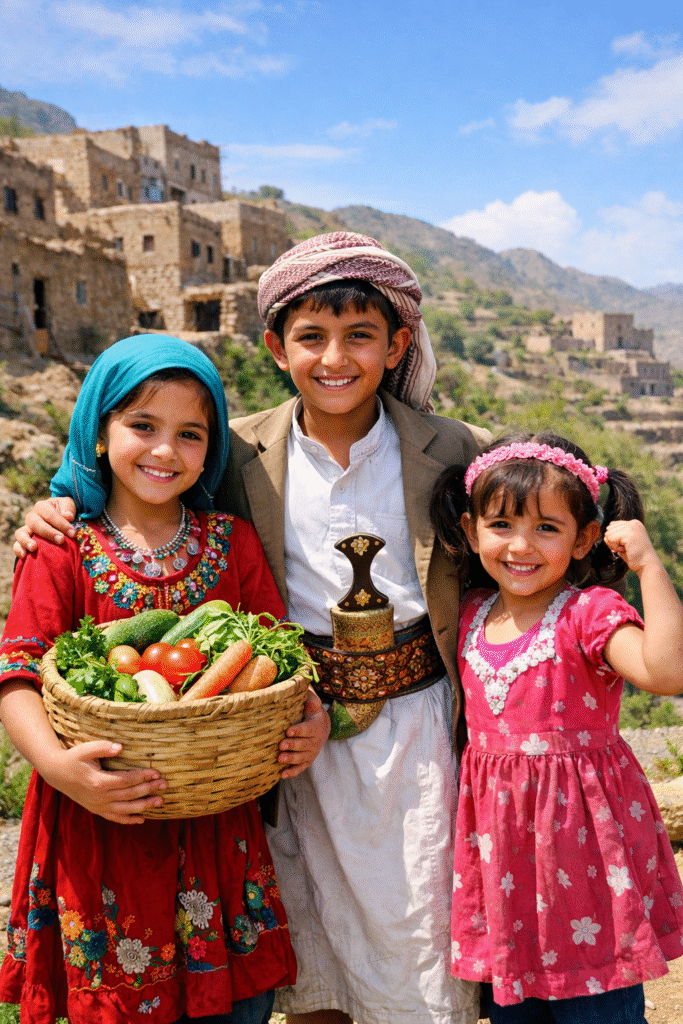
As February 2026 draws to a close, the children of Yemen are enduring one of the worst humanitarian crises on earth. After more than a decade of conflict, economic collapse, and now a catastrophic funding drought, the country’s youngest citizens are paying the highest price. The warnings from humanitarian officials have grown increasingly desperate: children are dying, and the world is not listening.
This is the state of children’s health in Yemen today: a story of preventable deaths, collapsing health infrastructure, and a race against time that the international community is losing.
A System on the Brink of Collapse
The most immediate threat to Yemen’s children is the disintegration of the country’s health system. In early February 2026, Yemen’s Minister of Public Health and Population, Qasim Buhaibeh, issued a stark warning: approximately 70% of health facilities are at risk of shutting down due to a sharp decline in donor funding .
The numbers are staggering. Before the current financial crisis, only 60% of Yemen’s 5,000 health facilities were functional. Today, that figure has dropped to just 50% . If funding continues to decline, operational capacity could plummet to a mere 30% , triggering a public health catastrophe .
This is not a distant threat—it is already happening. Since January 2025, 453 health facilities have faced partial or imminent closure across 22 governorates, including hospitals, primary health centres, and mobile clinics . These closures affect both areas controlled by the internationally recognized government and those under Houthi administration, underscoring the nationwide impact of the funding crisis .
The consequences are immediate and deadly. With facilities shutting down, millions of people now face reduced access to basic healthcare, maternal services, and emergency treatment . For children, this means no vaccinations, no treatment for common illnesses, and no nutritional support when they need it most.
The Malnutrition Crisis: Numbers That Shock the Conscience
At the heart of Yemen’s child health crisis is malnutrition—a condition that is entirely preventable yet devastating in its effects. The latest data paints a grim picture:
- Nearly 50% of children suffer from chronic malnutrition
- One-quarter of children under five are stunted, a condition that permanently damages physical and cognitive development
- More than half a million children under five currently suffer from severe acute malnutrition—a life-threatening condition that requires immediate treatment
Severe acute malnutrition is not a gradual decline; it is a medical emergency. Children with this condition are up to 11 times more likely to die from common childhood illnesses like diarrhoea or respiratory infections than well-nourished children. Their bodies simply lack the reserves to fight back.
The Integrated Food Security Phase Classification (IPC) has issued alarming projections for 2026. More than 18,500 children under five are projected to be severely malnourished by the end of this year . In four districts—Mawza and Mocha in Taiz province, and Hays and Khawkhah in Hodeida province—famine conditions are projected to emerge between July and October . These are not abstract statistics; they are communities where children will starve to death unless aid arrives.
The trajectory is worsening. The number of acutely malnourished children has increased by 34 percent compared to the previous year . This acceleration reflects the convergence of multiple crises: food insecurity, disease outbreaks, economic collapse, and shrinking humanitarian assistance.
Disease Outbreaks: The Silent Killers
When malnutrition weakens a child’s immune system, preventable diseases become death sentences. Yemen is now witnessing the resurgence of exactly such diseases.
According to the Minister of Health, there has been an emergence of outbreaks of vaccine-preventable diseases—including measles, polio, and diphtheria—due to the decline in free vaccination programs . With immunization coverage dropping, diseases that had been controlled are now spreading through vulnerable communities.
The funding crisis has crippled vaccination efforts. Currently, only about two-thirds of Yemeni children have completed full immunization , primarily because vaccines cannot reach northern regions . This protection gap leaves millions of children exposed to diseases that are easily preventable with routine vaccination.
Cholera remains a persistent threat. The combination of damaged water infrastructure, displacement, and malnutrition creates ideal conditions for waterborne diseases to spread. For a malnourished child, cholera can be fatal within hours.
The UN’s top aid official in Yemen, Julien Harneis, warned in January that the coming months could see a dramatic rise in mortality: “I fear that we will not really hear about it until we see a significant increase in mortality and morbidity rates in the coming year” .
The Funding Drought: A Man-Made Disaster
What makes Yemen’s child health crisis particularly tragic is that it is largely preventable—and the primary obstacle is not conflict or logistics, but money.
In 2025, the UN received only around $680 million for its Yemen operations—just 28 percent of the funding required . Life-saving nutrition programmes received less than 10 percent of the funding needed . The Minister of Health reported that donor funding has seen a decrease reaching 100 percent in some cases .
This funding drought has concrete consequences:
- More than 200 health and nutrition facilities have closed nationwide [citation:3 from Somalia article reference, but context applies]
- Vaccination programs are being scaled back or suspended
- Nutrition supplements for children are running out
- Health workers are going unpaid, with a hiring freeze that has lasted over a decade
- Medical personnel are leaving the country or moving to the private sector, creating a brain drain that will take years to reverse
The United States and several major Western donors have cut aid as they shift resources to defence, deepening a broader crisis for the UN in a country where more than a decade of war has destroyed infrastructure . As one humanitarian official put it, “The cost of underfunding shows up first in children’s bodies and futures.”
There is a small glimmer of hope. In late January 2026, UNICEF announced it had received $28.9 million from USAID’s Bureau of Humanitarian Assistance to scale up early detection and treatment for child malnutrition . A large portion of this grant will be used to procure Ready-to-Use Therapeutic Food (RUTF) —the peanut-based paste that can bring a severely malnourished child back from the brink in weeks .
As UNICEF Representative to Yemen Philippe Duamelle stated, “In Yemen today, more than half a million children under the age of five suffer from severe acute malnutrition which is a life threatening condition. Thanks to generous donors like USAID/BHA, UNICEF is able to provide lifesaving assistance to these children” .
But this single grant, while welcome, is a drop in an ocean of need. Canada has also contributed to multi-country humanitarian appeals that include Yemen, with $39 million allocated for 2025-2026 to support nutrition interventions including RUTF provision and community-based health care services . Yet the gap between needs and resources remains enormous.
The Human Cost: Stories Behind the Numbers
Behind the statistics are individual children and families making impossible choices. The International Rescue Committee’s country director in Yemen, Caroline Sekyewa, described how some parents are now gathering wild plants to feed their children while going hungry themselves .
According to IRC data, about 97 percent of respondents in field surveys said food is their top priority . Families are being forced into “negative coping strategies”—a humanitarian term that conceals brutal realities: child labour, early marriage, reducing meals to one per day, or skipping days entirely.
For pregnant and breastfeeding mothers, the situation is equally dire. An estimated 223,000 pregnant and lactating women are expected to be malnourished in 2024 . Maternal mortality has reached 183 deaths per 100,000 live births . When mothers are malnourished, their children are born underweight and vulnerable, perpetuating a cycle that spans generations.
The UN has estimated that every ten minutes, at least one child dies in Yemen from preventable causes such as malnutrition, diarrhoea, or respiratory tract infections . That is six children every hour, 144 every day, more than 50,000 every year—all from conditions that should never be fatal.
A Complex Operating Environment
Delivering aid to the children who need it is not simply a matter of funding. The operating environment in Yemen is among the most complex in the world.
Recent political and military developments, particularly in the south, have further complicated humanitarian access. In January, the UN reported renewed instability as the Southern Transitional Council sought to expand control in Hadramawt and Al-Mahra governorates, though government forces reversed the situation . These shifts make it difficult to maintain consistent aid delivery.
Even more concerning is the detention of UN staff. Since 2021, 73 UN employees have been detained by Houthi authorities . “For them, it is a nightmare. There are families who have not seen their loved ones for five years,” Harneis said. “They do not know the conditions of their detention, where they are, or whether they may face death sentences in the coming days” .
These detentions have forced the UN to relocate its resident coordinator’s office to Aden and have constrained operations in Houthi-controlled areas, which account for roughly 70 percent of humanitarian needs in the country .
Despite these constraints, humanitarian partners reached 3.4 million people with food assistance in 2025 and provided emergency support during floods and disease outbreaks . But declining funding threatens the ability to sustain even this limited response.
The Broader Context: A Decade of War
To understand children’s health in Yemen today, one must understand the context of a conflict now entering its second decade. Since the war escalated in 2015 with the intervention of a Saudi-led military coalition, tens of thousands of people—mostly civilians—have been killed and millions displaced .
The conflict has destroyed the very structures that sustain human survival. Health facilities have been bombed. Water systems have been damaged. Roads and bridges have been destroyed, cutting off communities from aid. Teachers have not been paid, leaving a generation out of school. The economy has collapsed, the currency has depreciated, and food prices have soared out of reach for ordinary families.
According to the UN, more than 23.4 million people —nearly three-quarters of the population—need humanitarian assistance and protection . That is an increase of 13 percent from the previous year. More than 21 million people are projected to require assistance in 2026 .
Signs of Hope: What Works
Despite the overwhelming scale of the crisis, there are interventions that work—when they are funded.
Ready-to-Use Therapeutic Food (RUTF) is one such intervention. This nutrient-dense paste can bring a child back from severe acute malnutrition in 6-8 weeks. It requires no preparation, no water, and no refrigeration, making it ideal for conflict settings. The recent USAID grant to UNICEF will help procure RUTF for hundreds of thousands of children .
Community-based health care is another effective approach. By training community health workers to identify malnutrition early and refer children for treatment, programmes can catch cases before they become life-threatening. Canada’s contribution to UNICEF supports such community-based services .
Cash assistance has also proven effective. The IRC noted that direct cash assistance remains among the most effective interventions to help families secure food with dignity, protect children from severe acute malnutrition, and avoid harmful coping strategies .
In Marib governorate, a coordinated flood response demonstrated how shock-responsive cash assistance can help families recover more quickly from climate shocks . Such approaches require sustained resources, but they work.
Conclusion: A Generation Hanging in the Balance
As February 2026 draws to a close, the children of Yemen are hanging in the balance. Half a million are severely malnourished and fighting for survival. Millions more are at risk as health facilities close, vaccination programmes stall, and food runs out.
The warnings from humanitarian officials could not be more stark. “Children are dying, and it will get worse,” Harneis said in January . Caroline Sekyewa warned that food insecurity “is no longer a potential threat but a harsh daily reality forcing families into impossible choices” . The Minister of Health cautioned that without urgent intervention, “all health indicators in the country” are at risk .
The tragedy is that this crisis is entirely preventable. The world knows how to treat severe malnutrition. The world knows how to vaccinate children against measles and polio. The world knows how to provide clean water and basic healthcare. What is lacking is not knowledge—it is political will and financial commitment.
The UN received only 28 percent of the funding it needed for Yemen in 2025 . Life-saving nutrition programmes received less than 10 percent . The cost of fully funding the humanitarian response is measured in billions. The cost of failure is measured in children’s lives.
Every ten minutes, a child dies in Yemen from preventable causes . Six children every hour. One hundred and forty-four every day. Fifty thousand every year. These are not statistics—they are children with names, with families, with dreams.
The question for the international community is whether it will act before the next child dies—or wait until the death toll becomes too large to ignore. For the children of Yemen, the answer cannot come soon enough.