

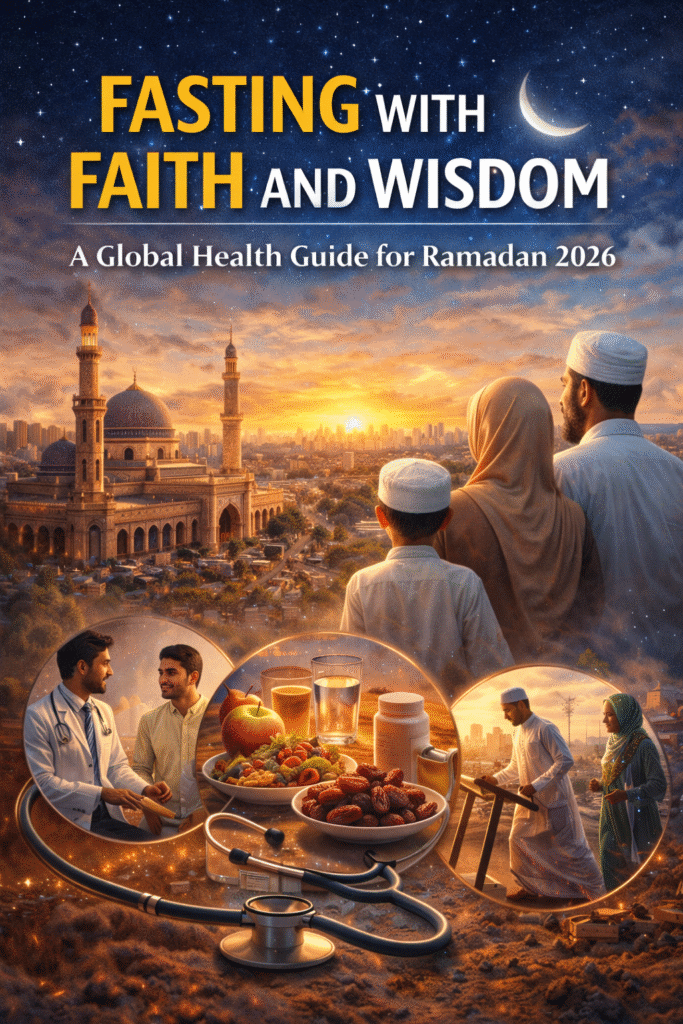
As the crescent moon was sighted on the evening of February 17, more than two billion Muslims across the globe embarked upon the holy month of Ramadan . For the next 29 or 30 days, the faithful will fast from dawn until sunset, abstaining not only from food and water but also engaging in deep spiritual reflection, prayer, and community connection . Yet, as the World Health Organization and medical experts across continents consistently emphasize, this profound act of worship is most fulfilling when approached with mindfulness of the body’s needs.
This is the state of global health for Ramadan today: a month where spiritual devotion and physical wellbeing are not opposing forces but complementary pursuits, best harmonized through preparation, knowledge, and balance.
The Global Landscape of Ramadan 2026
This year, Ramadan began on February 18 and will continue until approximately March 19 or 20, subject to the official sighting of the moon . Across time zones—from the bustling suqs of the Middle East to the diverse Muslim communities of North America and Europe—families have adjusted their rhythms. The pre-dawn meal (suhoor) is taken in the early morning darkness, and the fast-breaking meal (iftar) is shared as the sun dips below the horizon .
For healthcare professionals, this period represents both a personal observance for many and a professional responsibility to support patients fasting safely. The British Medical Journal has highlighted that for Muslim doctors, “Ramadan fasting is not an added burden but a deeply grounding experience,” while also emphasizing that practical preparation is essential for those working clinically through the month .
The Cornerstone of Safe Fasting: Hydration
Across every authoritative health source, one message resonates clearly: hydration is paramount. The World Health Organization’s Eastern Mediterranean Regional Office specifically recommends drinking at least ten glasses of water during non-fasting hours and incorporating hydrating foods such as soups, fresh fruits like watermelon, and green salads into meals .
This guidance is not arbitrary. During the long daylight hours, the body loses fluids through normal metabolic processes. Replenishing adequately between iftar and suhoor prevents dehydration, maintains kidney function, and supports cognitive clarity throughout the fast.
Equally important is what not to drink. Caffeinated beverages—coffee, tea, and colas—increase urination and can paradoxically lead to dehydration . Health experts advise avoiding caffeine close to fasting hours and suggest gradually reducing intake in the weeks leading up to Ramadan to prevent withdrawal headaches during the first days of fasting . As one academic GP noted in The BMJ, “Gradually reducing caffeine can help avoid first week headaches” .
Structuring Meals for Sustained Energy
Suhoor: The Foundation
Skipping the pre-dawn meal is a common but counterproductive choice. Nutrition experts from Cornell Health advise that suhoor should include a mix of whole grains, protein, healthy fats, and fruits or vegetables . This combination helps sustain energy and stabilize blood sugar throughout the long fast.
Practical examples include whole-grain cereals or toast with eggs, yogurt with fruit and nuts, or brown rice with vegetables . The WHO also recommends that suhoor be “light but nutritious,” particularly for vulnerable groups such as elderly adults, adolescents, and pregnant or nursing women .
For those managing diabetes, the composition of suhoor becomes even more critical. Slow-digesting carbohydrates like oats or sweet potatoes, paired with lean protein, can help maintain glucose stability and prevent dangerous dips before iftar .
Iftar: Breaking the Fast Wisely
The tradition of breaking the fast with water and dates is not only spiritually significant but physiologically sound . Dates provide natural sugars that offer an immediate energy boost after hours of fasting, while water begins the crucial process of rehydration .
What follows should be a balanced meal, not a feast of indulgence. Health organizations worldwide caution against the common pitfalls of iftar: consuming large quantities of fried foods, sugary pastries, and highly processed carbohydrates . These choices can cause indigestion, fatigue, and rapid fluctuations in blood glucose.
Instead, experts recommend leaning into whole foods rich in fiber, lean proteins, and healthy carbohydrates . Vegetables, whole grains, grilled or baked lean meats, skinless chicken, fish, and legumes should form the foundation of iftar meals . Eating mindfully—starting with small portions before moving to the main meal—helps control appetite and prevents overeating .
For individuals with diabetes, the stakes are higher. The NHS warns that “eating particularly large meals at iftar (consuming more than 1500 calories per meal) may result in high blood glucose levels after eating and weight gain” . Structured meal planning and portion control are essential tools.
Medical Considerations: When Fasting Is Not Safe
One of the most important messages for Ramadan 2026 is that not everyone is required to fast. Islamic teachings explicitly exempt individuals whose health would be jeopardized by fasting, and medical authorities strongly reinforce this principle .
Diabetes: The Most Studied Condition
Diabetes has received extensive research attention in the context of Ramadan fasting. The EPIDIAR study, published in Diabetes Care and analyzing data from more than 12,000 people with diabetes across 13 countries, found that the risk of severe hypoglycemia rose sevenfold among people with type 1 diabetes and fivefold among those with type 2 diabetes during Ramadan .
For individuals with well-controlled type 2 diabetes, fasting may be possible under medical supervision with adjustments to medication timing and close blood glucose monitoring . However, those with poorly controlled diabetes, a history of severe hypoglycemia, or who require intensive insulin regimens are generally advised not to fast .
The NHS provides detailed guidance for different diabetes management approaches :
- Diet and exercise only: Generally safe, with potential for weight loss and improved glucose control
- Tablets (metformin, sulphonylureas, etc.): May require dose adjustments and timing changes; sulphonylureas carry particular hypo risk
- Insulin: Requires careful planning, frequent monitoring, and likely dose reduction; pre-mixed insulins are “not usually recommended during periods of fasting”
Crucially, testing blood glucose does not break the fast, and individuals should monitor regularly, especially if taking medications that can cause hypoglycemia . If blood glucose drops below 4 mmol/L or rises above 16 mmol/L, the fast should be broken immediately .
Other Chronic Conditions
Cardiovascular disease, chronic kidney disease, and respiratory conditions each carry specific considerations . For stable heart patients, fasting may be tolerated, but dehydration and blood pressure fluctuations pose risks for those taking diuretics or multiple antihypertensive drugs. Patients with recent heart attacks, unstable angina, or advanced heart failure are generally advised not to fast.
Similarly, individuals with moderate to severe kidney disease may experience accelerated decline due to dehydration, and those with severe asthma may struggle if fasting interferes with regular medication use .
The consistent message from WHO and Islamic authorities is that protecting health is paramount. Exemptions are not failures; they are accommodations that honor the spirit of the law .
Special Populations: Children, Pregnancy, and the Elderly
Children who have not reached puberty are exempt from fasting, though many may choose to participate partially as part of their religious education . Parents should ensure that any fasting undertaken by adolescents is done with attention to adequate nutrition and hydration.
Pregnant and nursing women are also exempt, though some may wish to fast if they feel able and have consulted healthcare providers . The WHO recommends that these groups pay particular attention to nutrient intake and hydration if they choose to fast.
The elderly, especially those with chronic conditions or frailty, are not required to fast. For those unable to make up fasts later due to illness, fidya—donating a meal for someone in need for each missed day—provides an alternative means of participation .
Physical Activity and Sleep: The Overlooked Pillars
Fasting does not mean complete inactivity. Health advisors recommend light movement during fasting hours—gentle walking or stretching—to support circulation without risking dehydration . More intensive exercise is best scheduled after iftar, when hydration and fuel are available .
Sleep disruption is almost inevitable during Ramadan, given the early morning meals and nightly prayers. Experts advise prioritizing rest ruthlessly, aiming for 7-8 hours if possible through a combination of nighttime sleep and short daytime naps (30 minutes or less) . As one emergency medicine consultant noted, preparation includes realistically assessing “how we’ll realistically weave this around shift work” .
A Note for Healthcare Professionals
For clinicians supporting patients during Ramadan, cultural sensitivity and proactive planning are essential. Nottinghamshire’s NHS training hub emphasizes several key considerations :
- Early conversations about whether fasting is safe for individual patients
- Risk stratification for conditions like diabetes
- Adjustment of medication regimens where appropriate
- Reassurance about permissible actions (blood glucose testing, eye drops, vaccines) that some patients may mistakenly believe invalidate the fast
The British Islamic Medical Association provides valuable resources, including the Ramadan Compendium, to support shared decision-making .
Conclusion
Ramadan 2026 is now underway—a month of profound spiritual significance observed by Muslims across every continent. As millions fast from dawn to sunset, the integration of faith and health becomes a daily practice.
The guidance from global health authorities is remarkably consistent: hydrate generously with water, structure meals around whole foods, avoid excessive sugar and fried items, prioritize sleep, and move your body wisely. Most importantly, recognize that fasting is not obligatory for those whose health would be compromised, and seeking medical advice is a sign of wisdom, not weakness.
For those fasting, the month offers an opportunity not only for spiritual renewal but also for resetting health habits. Weight maintenance or loss, improved glucose control, and greater mindfulness around food are all potential benefits when the fast is observed with intention and balance .
As the sun sets on this first week of Ramadan, families around the world will gather for iftar—sharing dates, water, and meals prepared with love. In that shared moment, the global Muslim community demonstrates that faith and health, when thoughtfully integrated, sustain both body and soul.
