

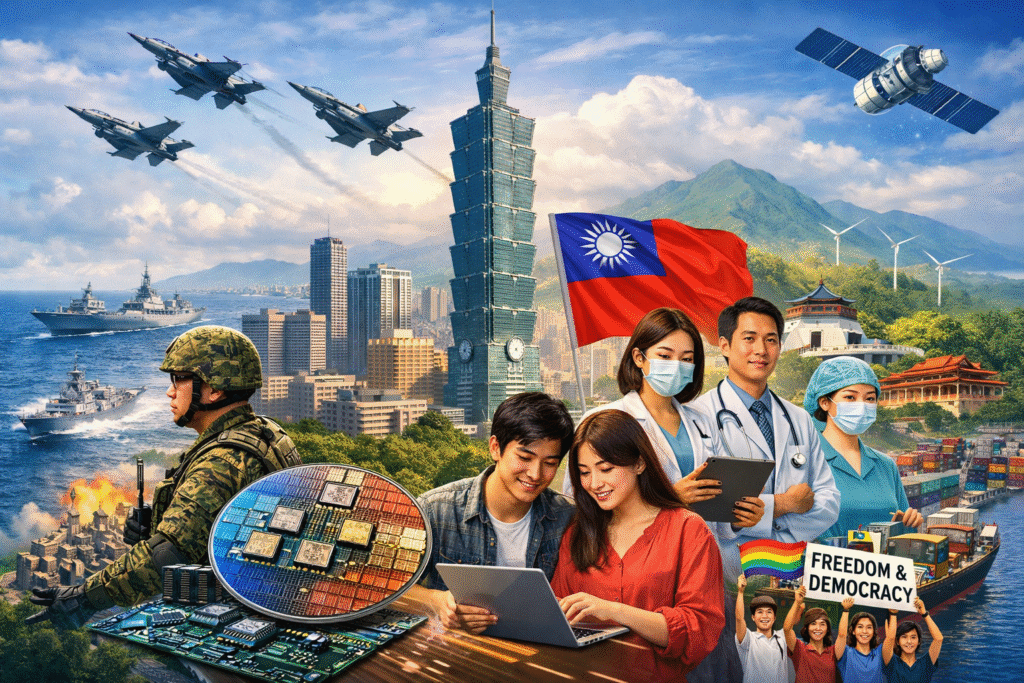
Taiwan Today: Politics, Economy, Society, and Global Relations
Taiwan is one of East Asia’s most dynamic and complex societies. Known for its advanced technology sector, democratic governance, and strategic geopolitical position, Taiwan today faces both significant opportunities and serious challenges. From domestic politics to international relations, Taiwan plays an increasingly important role in regional and global affairs. This article explores 14 key aspects of Taiwan today.
1. Political System and Democracy
Taiwan is a vibrant democratic society with regular multiparty elections, a free press, and strong civic participation. Power alternates peacefully between political parties, and democratic values are deeply embedded in society. Taiwan’s democracy is often highlighted as a model in Asia.
2. Taiwan–China Relations
Relations with China remain Taiwan’s most sensitive issue. China claims Taiwan as part of its territory, while Taiwan operates as a self-governing entity. Rising military pressure and diplomatic tension dominate cross-strait relations and heavily influence Taiwan’s domestic and foreign policies.
3. International Status and Diplomacy
Taiwan faces diplomatic isolation, with limited formal recognition globally. However, it maintains strong informal relations with many countries through trade, cultural exchange, and technology cooperation. Taiwan actively seeks greater international participation, especially in global health and security forums.
4. The Role of the United States
The United States is Taiwan’s most important international partner. While not officially recognizing Taiwan, the U.S. provides political support, arms sales, and economic cooperation. This relationship is central to Taiwan’s security strategy amid regional tensions.
5. Economic Strength and Global Trade
Taiwan has a strong, export-oriented economy. It is a major global trading economy, with strengths in manufacturing, electronics, and precision engineering. Trade with Asia, the U.S., and Europe is vital for Taiwan’s economic growth.
6. Semiconductor and Technology Leadership
Taiwan is a global leader in semiconductor manufacturing, particularly through companies like TSMC. These chips are essential to industries worldwide, giving Taiwan strategic economic importance and positioning it at the center of global supply chains.
7. Innovation and Startups
Beyond semiconductors, Taiwan is investing in innovation, artificial intelligence, renewable energy, and biotechnology. Government support for startups and research institutions encourages entrepreneurship and technological development.
8. Defense and Military Preparedness
Taiwan continues to strengthen its defense capabilities in response to regional security threats. Military modernization, reserve training, and defense cooperation with partners are central to national policy. Civil defense awareness among citizens is also increasing.
9. Society and Cultural Identity
Taiwanese society is diverse and open, blending traditional Chinese culture with indigenous heritage and modern values. A strong sense of Taiwanese identity has grown, particularly among younger generations, influencing politics and social attitudes.
10. Human Rights and Social Progress
Taiwan is recognized for its strong human rights record in Asia. It was the first in the region to legalize same-sex marriage, and it continues to promote gender equality, freedom of expression, and minority rights.
11. Education and Human Capital
Taiwan places high importance on education, science, and technical skills. Its universities and research institutions support innovation and economic competitiveness. Taiwan also attracts international students and researchers.
12. Public Health and Healthcare System
Taiwan’s healthcare system is highly efficient and affordable. Its response to public health crises has been widely praised, and the country continues to invest in medical research and healthcare technology.
13. Environmental and Energy Challenges
Taiwan faces environmental pressures such as pollution, climate change, and energy security. The government is promoting green energy, reducing nuclear dependence, and investing in sustainability initiatives to balance economic growth with environmental protection.
14. Future Outlook and Challenges
Taiwan’s future depends on managing cross-strait tensions, maintaining economic competitiveness, and strengthening international partnerships. While challenges are significant, Taiwan’s democratic resilience, innovation capacity, and global economic role position it strongly for the future.
Conclusion
Taiwan today stands at the crossroads of democracy, technology, and geopolitics. It is a thriving, innovative society facing complex external pressures and internal transformations. Through strong institutions, global economic integration, and resilient democratic values, Taiwan continues to shape its future and influence the world far beyond its size. How Taiwan navigates the coming years will have lasting implications not only for East Asia, but for global stability and technological progress.