

1. Introduction
Farming remains an essential part of Europe’s economy, environment, and cultural heritage. Although agriculture employs a smaller proportion of the population compared to the past, it continues to play a vital role in food security, rural development, and landscape management. Today, European farming is shaped by modernization, environmental concerns, and changing consumer demands.
2. Importance of Agriculture in Europe
Agriculture contributes significantly to Europe’s food supply and rural livelihoods. European farms produce a wide variety of food products for domestic consumption and export. Farming also supports related industries such as food processing, transportation, and retail, making it an important pillar of the wider economy.
3. Types of Farming Systems
Europe has diverse farming systems due to variations in climate, soil, and geography. These include arable farming, livestock farming, mixed farming, dairy farming, and horticulture. Mediterranean regions focus on fruits, vegetables, olives, and grapes, while Northern and Western Europe specialize in cereals, dairy, and livestock production.
4. Major Crops and Livestock
Key crops grown in Europe include wheat, barley, maize, potatoes, sugar beet, and oilseeds. Europe is also a major producer of fruits, vegetables, and wine. Livestock farming includes cattle, pigs, sheep, and poultry, with dairy products and meat forming important components of agricultural output.
5. Role of Small and Large Farms
European agriculture includes both small family-owned farms and large commercial operations. Small farms play an important role in maintaining rural communities and traditional practices, while large farms focus on efficiency, mechanization, and high-volume production. Balancing the needs of both remains an ongoing challenge.
6. Technology and Modernization
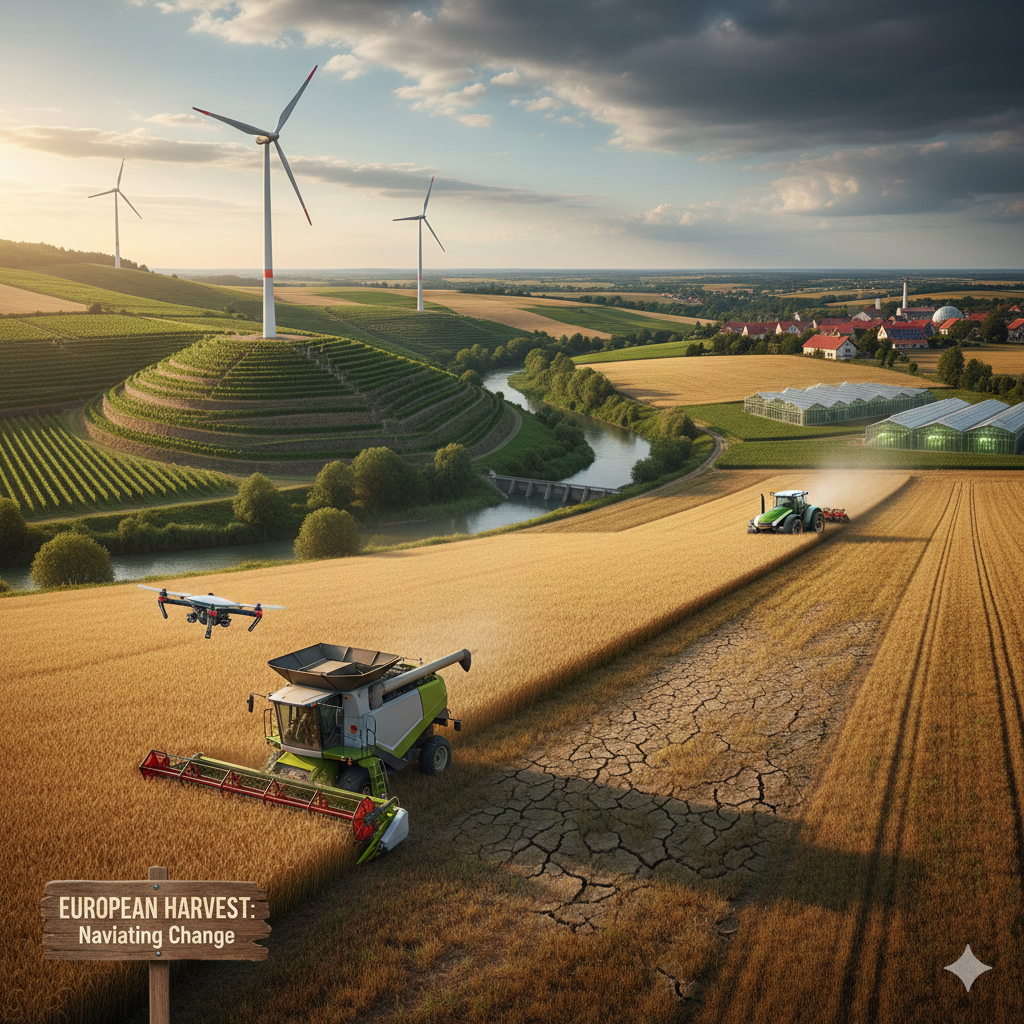
Technology has transformed farming in Europe. Modern machinery, precision farming, digital tools, and biotechnology have increased productivity and efficiency. Farmers use GPS-guided equipment, drones, and data analysis to optimize crop yields, reduce costs, and minimize environmental impact.
7. Government Policies and the Common Agricultural Policy (CAP)
The European Union’s Common Agricultural Policy (CAP) strongly influences farming across Europe. CAP provides financial support to farmers, promotes rural development, and encourages environmentally friendly practices. Reforms aim to make agriculture more sustainable, competitive, and resilient.
8. Environmental Sustainability
Sustainability is a major focus of European farming today. Farmers are encouraged to reduce chemical use, protect biodiversity, improve soil health, and conserve water. Organic farming, agroecology, and renewable energy use are increasing as Europe works toward climate and environmental goals.
9. Climate Change Challenges
Climate change poses significant challenges to European agriculture. Extreme weather events such as droughts, floods, and heatwaves affect crop yields and livestock health. Farmers are adapting by changing crop varieties, improving water management, and adopting climate-resilient practices.
10. Labor and Rural Development
Many European farms face labor shortages, especially during peak seasons. Migration, mechanization, and changing demographics influence the agricultural workforce. Rural development programs aim to improve infrastructure, services, and quality of life in farming communities.
11. Markets, Trade, and Consumer Demand
European farming is closely connected to global markets. Farmers respond to changing consumer preferences for organic, local, and sustainably produced food. Quality standards, food safety regulations, and certification systems play a key role in shaping production.
12. Conclusion and Future Outlook
Farming in Europe today is a balance between tradition and innovation. While facing challenges such as climate change, market pressure, and sustainability demands, European agriculture continues to adapt and evolve. With ongoing policy support, technological advancement, and environmental responsibility, farming will remain central to Europe’s future food security and rural development.