

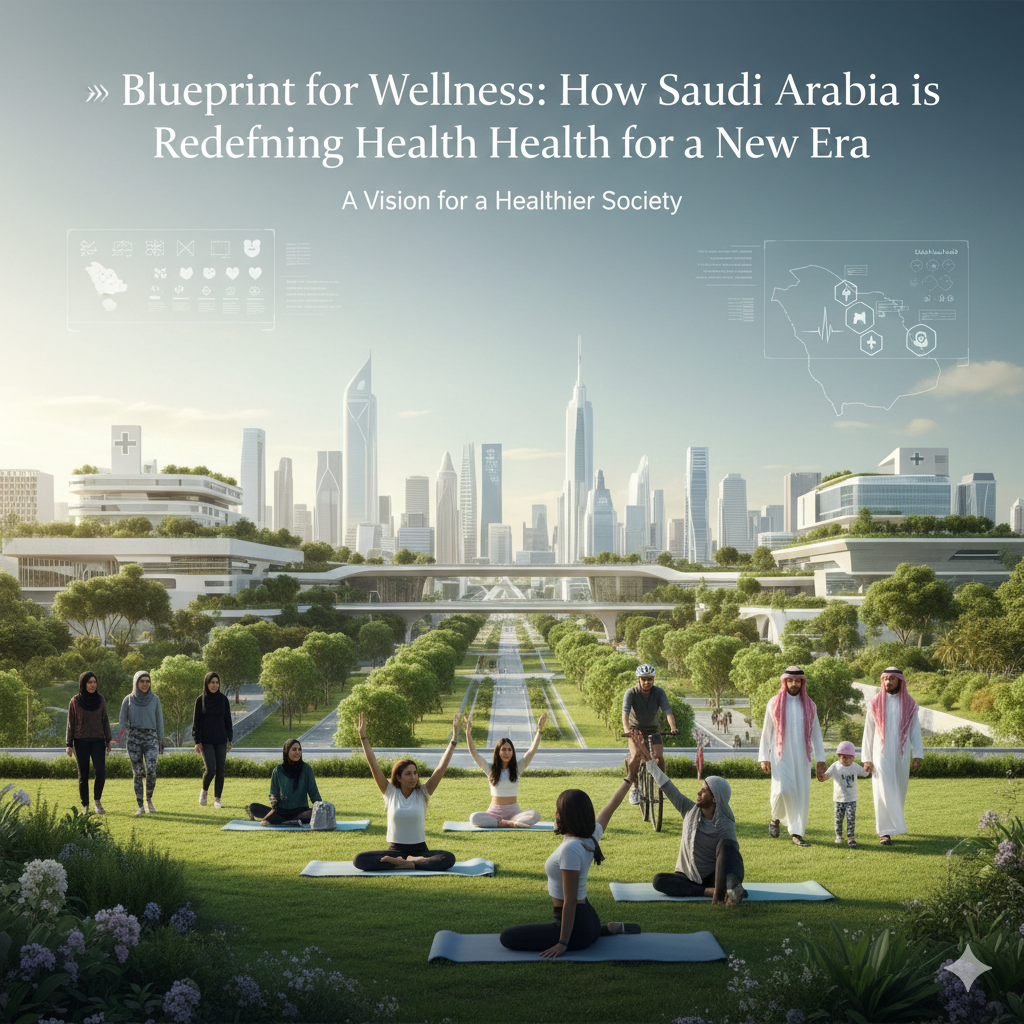
Part 1: Introduction – A System in Rapid Transformation
The landscape of health in Saudi Arabia today is one of profound and dynamic change. Driven by the ambitious Saudi Vision 2030 reform agenda, the nation is undertaking a historic shift from a publicly funded, hospital-centric model to a diversified, preventive, and privatized ecosystem. This transformation seeks not only to improve healthcare outcomes for its over 32 million citizens and residents but also to build a thriving health economy. The journey balances the challenges of rising chronic disease rates with the opportunities presented by massive investment and digital innovation, all within a unique cultural context.
Part 2: The Burden of Disease: Confronting a Dual Challenge
Saudi Arabia faces a significant epidemiological transition. While infectious diseases have been largely controlled, non-communicable diseases (NCDs) have become the paramount health challenge. Rates of diabetes, cardiovascular diseases, and obesity are among the highest in the world, driven by rapid urbanization, dietary shifts, and sedentary lifestyles. Simultaneously, the system must manage the legacy health needs of a young population alongside the emerging needs of a growing elderly demographic. This dual burden strains resources and demands a fundamental reorientation toward prevention and chronic disease management.
Part 3: Vision 2030’s Health Sector Transformation Program
At the heart of the change is the Health Sector Transformation Program (HSTP), a cornerstone of Vision 2030. Its key pillars include:
- Enhancing Access & Quality: Standardizing care across the kingdom through new models like “Care Pathways” and a focus on patient safety.
- Improving Population Health: Launching aggressive public health campaigns (e.g., against smoking and obesity) and promoting wellness.
- Enabling Digital Health: A massive push for electronic health records (EHRs), telemedicine, and AI integration.
- Privatization & Investment: Encouraging private sector participation to increase capacity, efficiency, and competition, epitomized by the corporatization of the Ministry of Health’s hospital network.
Part 4: The Privatization Drive: Corporatization and New Markets
A revolutionary step is the corporatization of Ministry of Health (MoH) services, creating a holding company to run public health facilities with corporate efficiency. This aims to reduce government spending, improve service quality, and attract private investment. Special Economic Zones, like Riyadh’s “Health Shield” zone, offer incentives for global pharma and med-tech companies. The goal is to localize manufacturing and innovation, making Saudi Arabia a regional health hub rather than a reliant importer of medical services and products.
Part 5: Digital Health Leap: From e-Health to AI Diagnostics
Saudi Arabia is betting big on technology to leapfrog systemic hurdles. The “Seha” Virtual Hospital provides telehealth access nationwide, while the “Wasfaty” e-prescription service digitizes pharmacy care. The unified national EHR platform, “Nphies,” is creating a powerful data ecosystem. Most ambitiously, Saudi is investing in AI for predictive analytics, radiology diagnostics, and personalized medicine, with institutions like the Saudi Data and AI Authority (SDAIA) playing a key role in deploying these solutions at scale.
Part 6: The Human Capital Equation: Educating Future Caregivers
Transformation cannot happen without skilled professionals. Historically reliant on an expatriate workforce, Saudi Arabia is aggressively “Saudizing” the health sector through education and training. Medical universities like King Saud bin Abdulaziz University for Health Sciences are expanding. Scholarship programs send thousands abroad to specialize. The challenge is immense—training enough Saudi doctors, nurses, technicians, and health administrators to lead the sector—but it is central to achieving long-term sustainability and leadership.
Part 7: Women’s Health: Progress and Persistent Frontiers
Women’s health has seen notable advances, particularly in reproductive care and hospital-based maternity services. Female labor force participation in healthcare is rising dramatically. However, challenges remain in areas like comprehensive sexual health education, mental health support, and ensuring equitable access to sports and preventive services in a society still navigating social reforms. The full integration of women’s wellness into the public health agenda is an ongoing and critical frontier.
Part 8: Mental Health: Emerging from the Shadows
Long stigmatized, mental health is now gaining unprecedented official attention. The National Mental Health Program is working to integrate services into primary care, train professionals, and launch public awareness campaigns. Digital platforms offering discreet counseling are seeing rapid uptake, particularly among youth. While societal stigma remains a barrier, policy shifts and increasing openness, especially post-pandemic, are creating the foundation for a more robust mental health infrastructure.
Part 9: Lifestyle in Focus: The War on Obesity and Sedentary Living
Recognizing lifestyle as the root cause of its NCD crisis, the government has launched a multi-front campaign. The Quality of Life Program, another Vision 2030 initiative, drives the creation of public parks, walking trails, and sports facilities. Regulations now include calorie labeling on menus, taxes on sugary drinks and energy drinks, and strict advertising controls. School-based programs aim to instill healthy habits early, marking a proactive, whole-of-society approach to changing behavioral norms.
Part 10: Conclusion: Ambition Meets Execution on the Path to 2030
Saudi Arabia’s health transformation is a bold experiment in systemic change. Its scale and pace are unmatched in the region. The ambitions—world-class care, a diversified economy, a healthier population—are clear. The success of this multi-trillion-riyal investment will hinge on effective execution: managing the privatization transition without compromising equity, truly shifting from treatment to prevention, and cultivating the national talent required to sustain it. If successful, Saudi Arabia will not only have transformed the health of its people but could also export a new model of health system innovation for the 21st century. The world is watching.
