

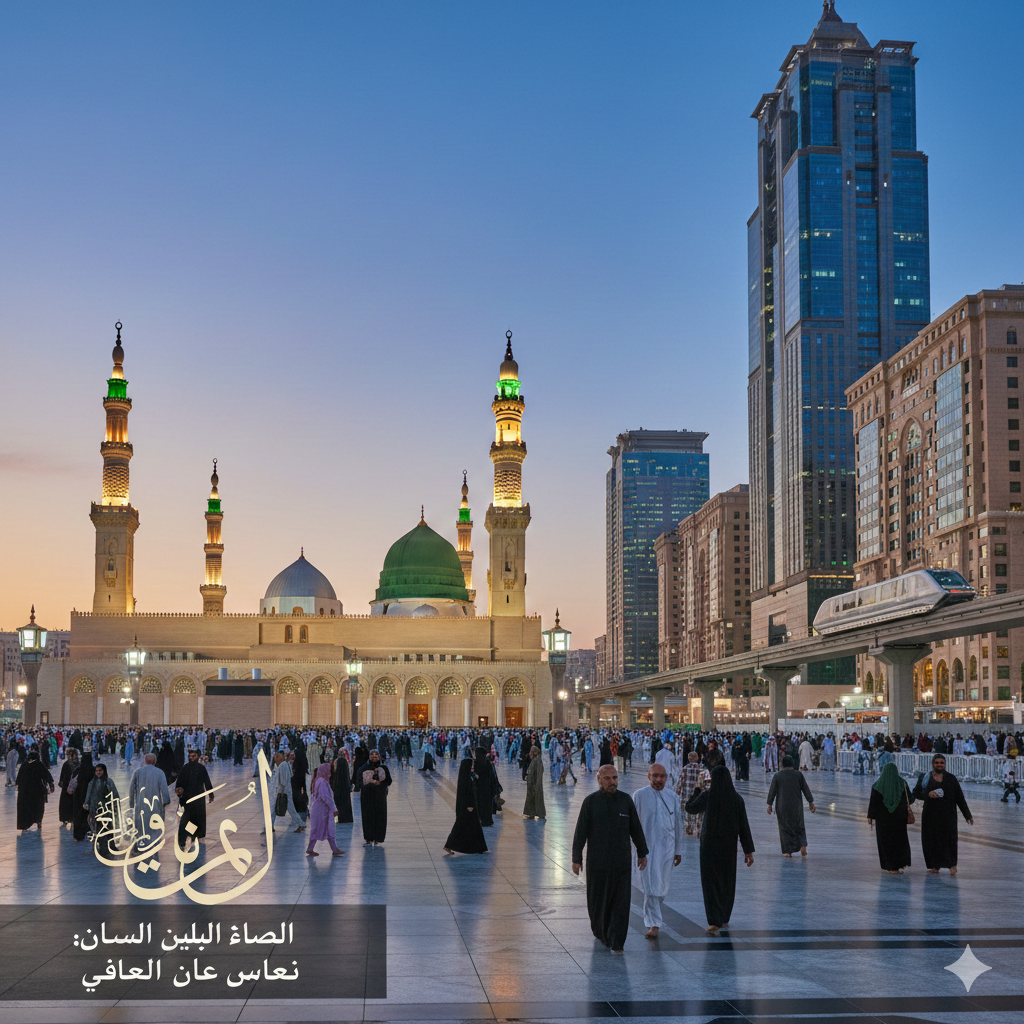
AL-MADINAH, SAUDI ARABIA – While Makkah pulses with the primordial energy of monotheism’s birthplace, its sister city, Al-Madinah al-Munawwarah (“The Illuminated City”), offers a different kind of sacred resonance. It is the city of refuge, community, and the Prophet’s final earthly home. Today, Madinah stands as a sanctuary of profound historical intimacy and scholarly gravity, undergoing its own transformative modernization, yet striving to preserve an atmosphere distinct from the overwhelming scale of the Hajj epicenter. It is a city where the past feels palpably close, even as it is meticulously managed for millions of global visitors.
The Prophet’s Sanctuary: The Heart of the City
The spiritual and geographic core of Madinah is, irrevocably, Al-Masjid an-Nabawi (The Prophet’s Mosque). Built by Muhammad (PBUH) and his companions upon his Hijrah (migration) from Makkah in 622 CE, it is the second holiest site in Islam. For Muslims, its significance is unparalleled; it contains the Rawdah ash-Sharifah (the Noble Garden), a small area between the Prophet’s minbar (pulpit) and his burial chamber, believed to be a garden from Paradise. The desire to pray here drives the deep emotional connection pilgrims feel to the city.
Beneath the iconic Green Dome lies the Prophet’s Tomb, alongside the resting places of the first two Caliphs, Abu Bakr and Umar. While theological debate continues on the permissibility of seeking blessings at graves, for the majority of Sunni pilgrims, visiting the mosque to send prayers upon the Prophet (As-Salatu was-Salamu ‘alaika ya Rasoolallah) is a pinnacle of spiritual devotion. The atmosphere in the mosque, especially during the night prayers, is one of intense, quiet reverence—a stark contrast to the powerful, swirling kinetic energy of the Haram in Makkah. Here, history is not just performed; it is visited and communed with.
The Modern Expansion: A Canopy of Comfort and Capacity
Like Makkah, Madinah has been reshaped by colossal engineering projects designed to accommodate the ever-growing numbers of Umrah pilgrims and visitors. The Ottoman-era mosque has been expanded into a staggering complex covering over 1.7 million square feet. Its most defining modern feature is the series of electro-hydraulic umbrellas or canopies in its vast northern and western courtyards. These 250 giant, white fabric canopies unfurl automatically to shade pilgrims from the fierce desert sun, transforming open plazas into cool, usable prayer space and allowing the mosque to hold over one million worshippers.
Surrounding the holy precinct is a ring of towering, luxury hotel skyscrapers, most notably the Clock Tower complex (a companion to Makkah’s) and others like the Dar Al Hijr Intercontinental. These offer breathtaking, direct views into the mosque’s courtyard, allowing pilgrims to pray in their rooms overlooking the sanctuary. This development has created a dramatic, fortress-like skyline encircling the Prophet’s resting place, a visual symbol of the immense resources dedicated to serving pilgrims, but also a subject of criticism regarding aesthetics and commercialization.
The city’s infrastructure has been completely overhauled. A high-speed Haramain Railway now connects Madinah to Makkah and Jeddah in a matter of hours, replacing a grueling bus journey. The entire center is pedestrianized, with a network of air-conditioned tunnels, moving walkways, and shuttle services guiding the often-elderly pilgrim population with efficiency and care.
The City of Knowledge and History
Madinah’s identity extends beyond the mosque. It is Dar al-Hijrah wal-Iman (the Abode of Migration and Faith) and Dar as-Sunnah (the Abode of the Prophetic Tradition). This is the city where the first Muslim community was built, where the Quranic revelation took on its legislative form, and where the Prophet delivered his final sermon. Key historical sites, though often modest in appearance, hold deep meaning:
- The Quba Mosque: The first mosque in Islam, where the Prophet laid its first stones. Visiting and praying here holds immense reward.
- The Qiblatain Mosque: Where the command was revealed to change the direction of prayer (qiblah) from Jerusalem to Makkah.
- The Battle of Uhud Site: The mountain and graves of the martyrs of Uhud, including the Prophet’s uncle Hamza, serve as a somber reminder of the early community’s struggles.
The Saudi authorities, following a conservative interpretation that venerating sites can lead to shirk (idolatry), do not actively promote visitation to these locations. Many are subsumed within urban expansion, marked simply but preserved. This creates a tension for pilgrims seeking a tangible connection to history versus a state policy focused on ritual-centric worship.
Furthermore, Madinah remains a global epicenter of Islamic scholarship. The Islamic University of Madinah, founded in 1961, attracts thousands of students from across the world who come to study Quran, Hadith, and Islamic jurisprudence in a traditional setting. The city’s bookstores are treasure troves of classical and contemporary Islamic texts, and its atmosphere is infused with a quiet scholarly pursuit that complements the devotional focus of the pilgrims.
Life in the Illuminated City: Between the Global and the Local
For its permanent residents, modern Madinah is a city of two realities. There is the “Haram-centric” economy of hotels, pilgrim services, retail, and transportation that employs a significant portion of the population, including a large expatriate workforce. Then there is the traditional local community, with its own Najdi-Hejazi cultural fabric, which continues its life in the city’s outer neighborhoods. The influx of millions of pilgrims from every corner of the globe makes Madinah one of the world’s most internationally diverse cities for much of the year, yet this interaction is often transient and service-based.
The Saudi Vision 2030 blueprint impacts Madinah significantly. Projects aim not only to increase pilgrim capacity but also to develop the city’s cultural and historical offerings in a “regulated” manner. There is a push to improve the overall visitor experience with higher-end services, museums explaining Islamic history (like the recently expanded Madinah Museum), and curated “cultural zones.” The goal is to extend the average pilgrim’s stay and diversify the economic benefits of religious tourism.
Contemplations on Change: Preservation of the Sacred Atmosphere
The transformation of Madinah sparks a quieter, but no less significant, debate than that surrounding Makkah. The primary concern for many scholars and pilgrims is the preservation of sakanah (tranquility) and khushu’ (devotional awe).
The massive architectural scale, some argue, can feel imposing and distract from the simple humility at the heart of the Prophetic legacy. The commercialization of the immediate precinct, with its luxury hotels and shopping malls, is seen by some as incongruent with the spirit of the city that welcomed the impoverished Muhajireen (migrants from Makkah). The delicate balance is between providing necessary comfort and services, and allowing the spiritual essence—the sense of walking in the footsteps of the early Muslim community—to remain accessible and palpable.
Conclusion: The Abode of Peace in a New Era
Al-Madinah today is a city of profound spiritual gravity navigating the demands of the 21st century. It is a place where the past is both meticulously honored and carefully managed. The pilgrim’s journey here is one of completion—after the cosmic submission of Makkah, Madinah offers a connection to the human embodiment of that message.
It remains, as the Prophet called it, a sanctuary. Its borders are still respected, its peace guarded. Whether one prays in the vast, cool expanse under the automated canopies or in a quiet corner of the old Ottoman section, the core experience endures: a connection to the luminous legacy of the man who changed history. The cranes on the skyline are building for the future, but the heart of Madinah continues to beat to the rhythm of Salawat (blessings upon the Prophet) and the quiet rustle of pages in its ancient libraries. In a world of relentless change, Madinah’s challenge—and its miracle—is to evolve without obscuring the illumination at its core. It stands as a testament not to imperial glory, but to a community’s enduring love for its guide, a city forever illuminated by the memory of its most beloved resident.
